
How to Make your French Holiday Home Guest-ready
How to add authentic touches and give your guest rooms that je ne sais quoi, by Susannah Cameron…
Being a guest in a French home is unlike staying anywhere else. It is not concerned with formality, but with a considered balance of comfort and intention. Nowhere is this felt more keenly than in Provence, where old farmhouses, village houses and converted barns share hallmarks shaped by the region’s architecture: thick walls dampen sound, timber beams hold centuries of life, and light changes with the progression of the day. In this setting, a guest room becomes more than a place to sleep. It offers welcome, rest and a sense of belonging.
What makes such a room feel so instinctively right is rarely opulence. Instead, it is the thoughtful coexistence of old and new, the presence of objects with history, and the confidence to mix them without self-consciousness. The Provençal guest room lets each piece breathe – an antique armoire beside a simple writing desk, a boutis quilt against time-worn wood, the fragrance of fresh stems or a candle. These gestures feel effortless, though they are the result of choices made with care.
This atmosphere can be created anywhere, but it draws its richest cues from Provence. Here, interiors evolve over generations rather than seasons, and the rooms guests occupy often hold traces of the people who have used them before: a stack of books, a framed engraving, a lamp converted from an oil burner, or a confit pot planted with narcissus Paperwhite on a bedside table. Such details anchor the room in its setting. Here are a few aspects that help shape a guest room with genuine warmth and depth, rooted in Provençal sensibility.
BESIDE THE BED
The bedside provides a clear starting point for the room. It sets scale, establishes light and signals whether the space leans towards rustic, elegant, or an instinctive blend of both. In Provence, mismatched bedside cabinets feel entirely natural. A simple farmhouse table paired with a more refined guéridon can be far more charming than a matching pair. The contrast brings structure and character, as though the furniture has been gathered over years rather than purchased all at once.
Lighting is crucial. Lamps should give a gentle, amber glow that feels calm rather than clinical. Provence is a region where lamplight is favoured over strong overhead lighting, and your bedside lamps should reflect that. A switch that can be reached from the bed is a courtesy your guests will notice immediately.
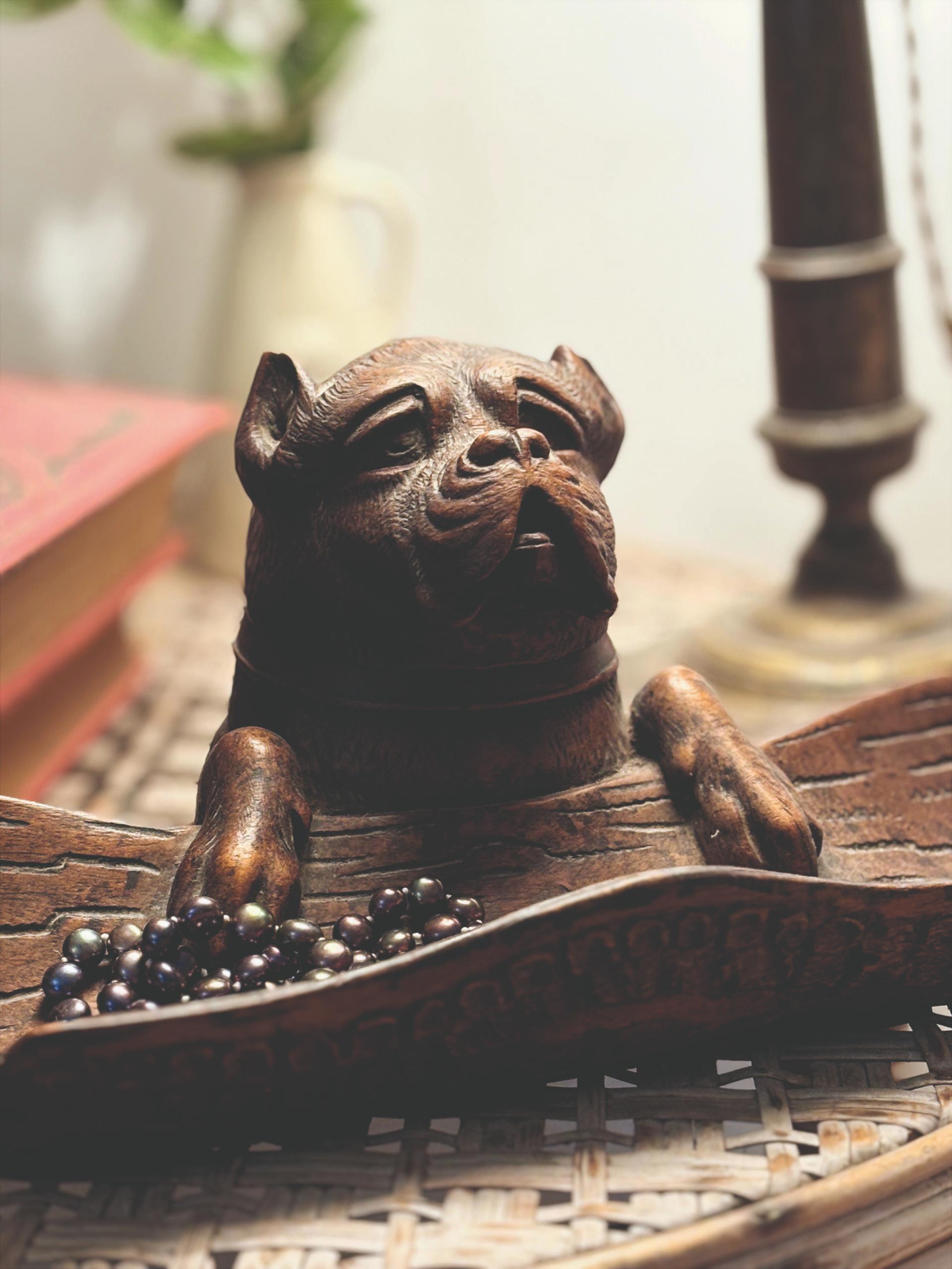
Small, functional details reinforce the welcome. A vide-poche for jewellery or a watch saves guests from balancing items on the edge of a book or leaving something behind. Fresh stems enliven the room, especially when picked from your own garden: narcissus, a single rose, a few stems of dried lavender or immortelle. A confit pot makes an ideal vessel, its glazed upper half and earthy clay base grounding the arrangement in local tradition. If your guest room has an en suite, echo the same flowers or scent there, creating a subtle connection between the different spaces.
THOUGHTFUL SEATING
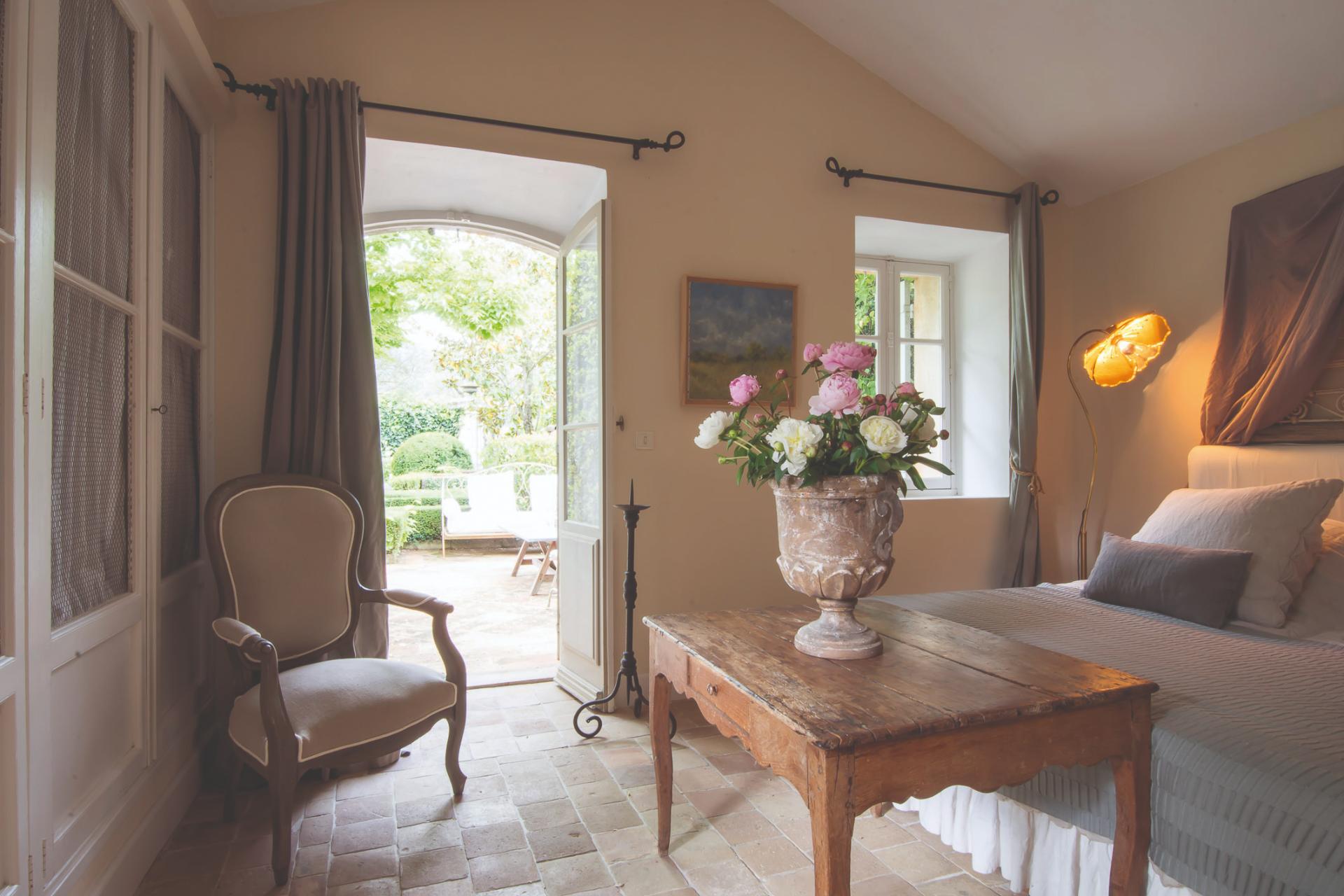
A room feels more coherent when there is a place to sit apart from the bed. Even a modest French guest room benefits from a bench or trunk at the foot of the bed or under a window, offering somewhere to set a folded blanket or to perch while dressing.
If the room allows, a comfortable armchair gives your guests a spot to read or make a phone call. Pair the chair with a small guéridon or tripod table – marble-topped, gilt-edged, or plain wood -somewhere to rest a glass of water, morning coffee or evening book. A well thought-out guest room offers both practicality and invitation: a place to sit, a place to set things down, and a place to retreat. These touches help the room feel considered, as though time has been taken to anticipate what a visitor may need.
PRIVATE CORNER
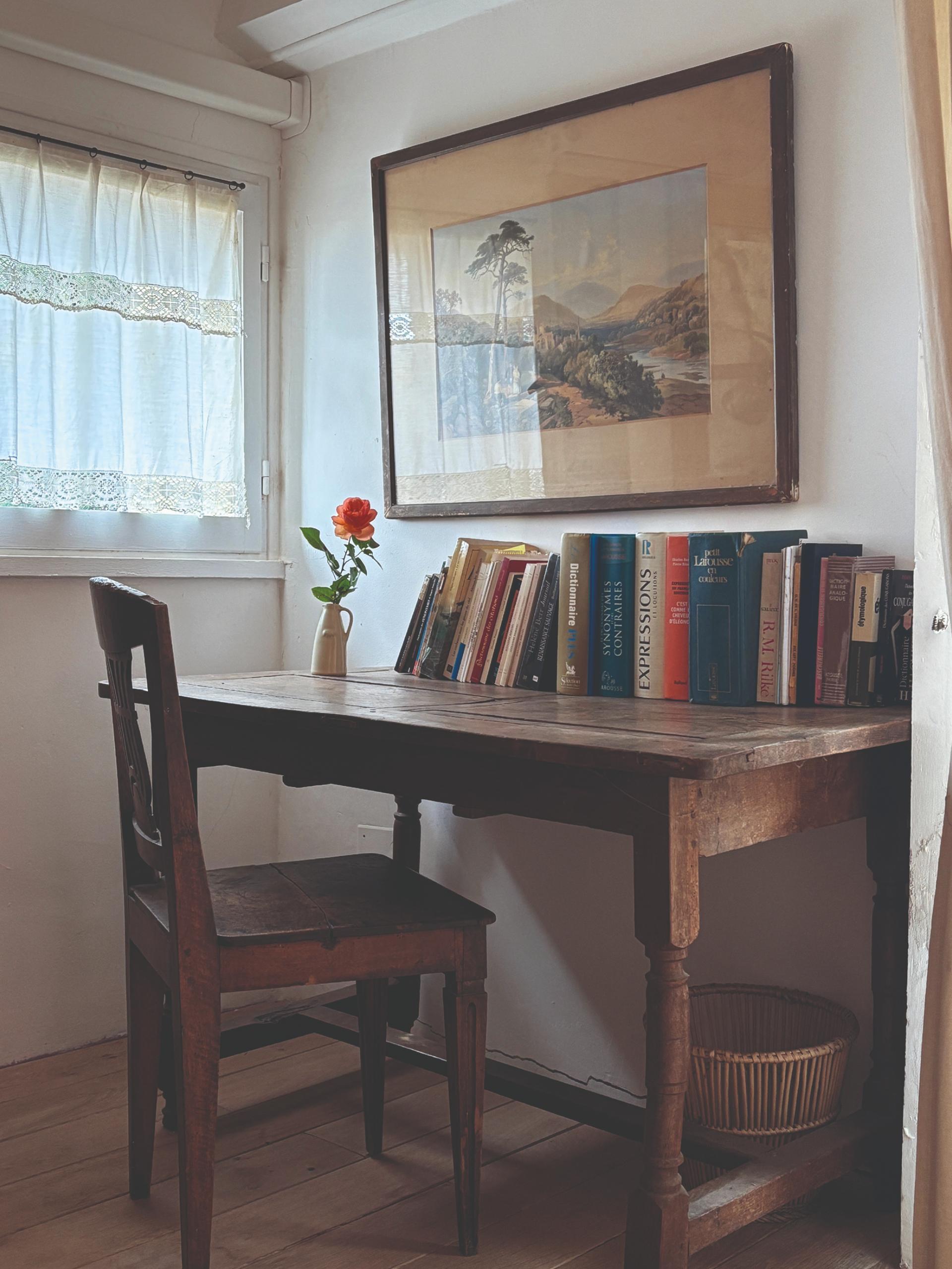
Many French homes include a small writing desk in the guest room, and it is a custom that deserves revival. A secrétaire à abattant or simple oak writing table gives guests a private corner to write a postcard, read the newspaper, or check emails. When open, the desk offers a small world within the room; when closed, it contributes its patina and proportions to the overall aesthetic to the space.
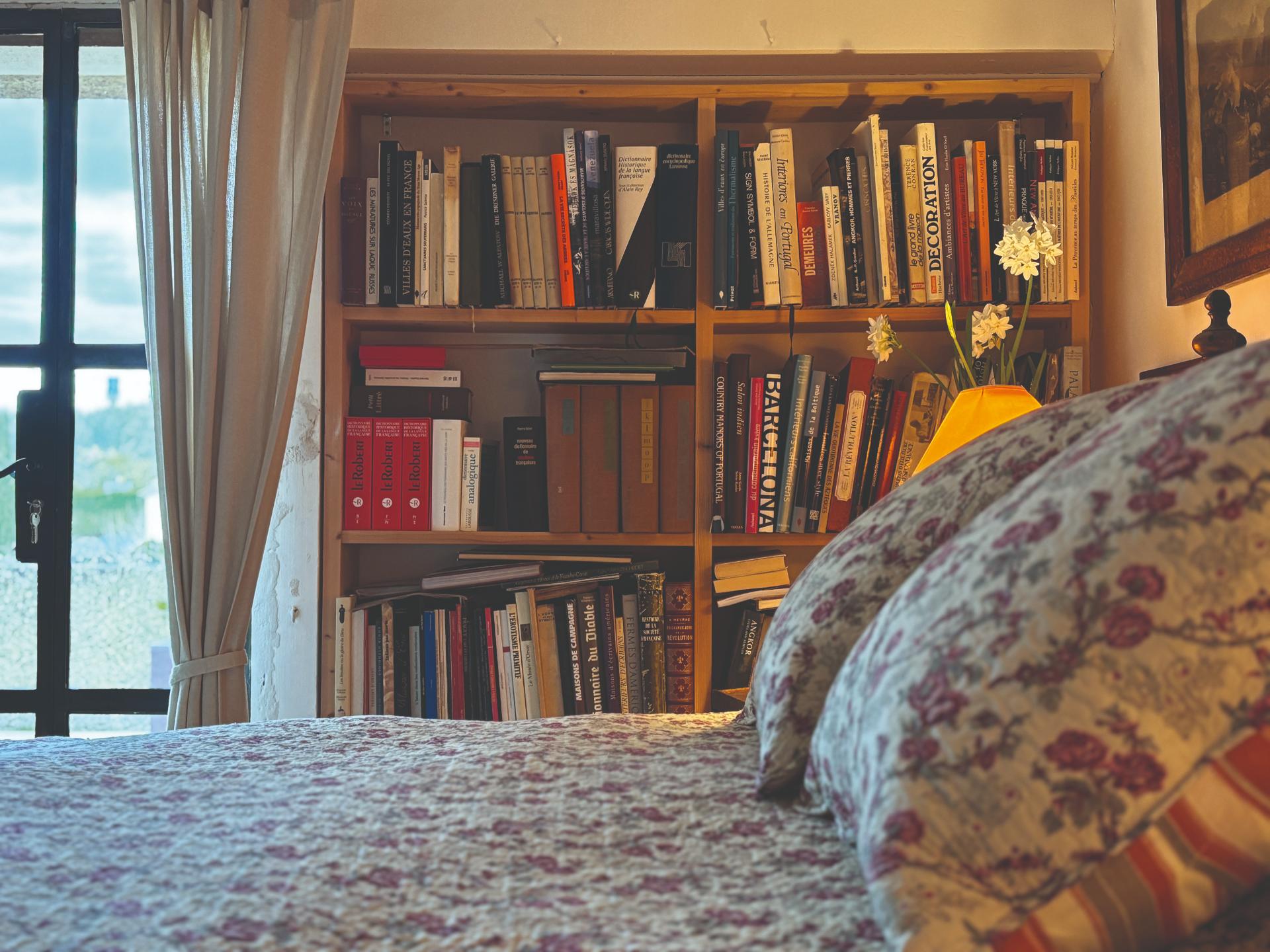
Keep the surface uncluttered. A notebook, two or three postcards and a pen are enough. The aim is not to stage a desk but to make it usable. Books placed nearby – on Provence, art, gardens, local history or architecture -provide an immediate sense of place and will allow guests to engage with the region in their own time.
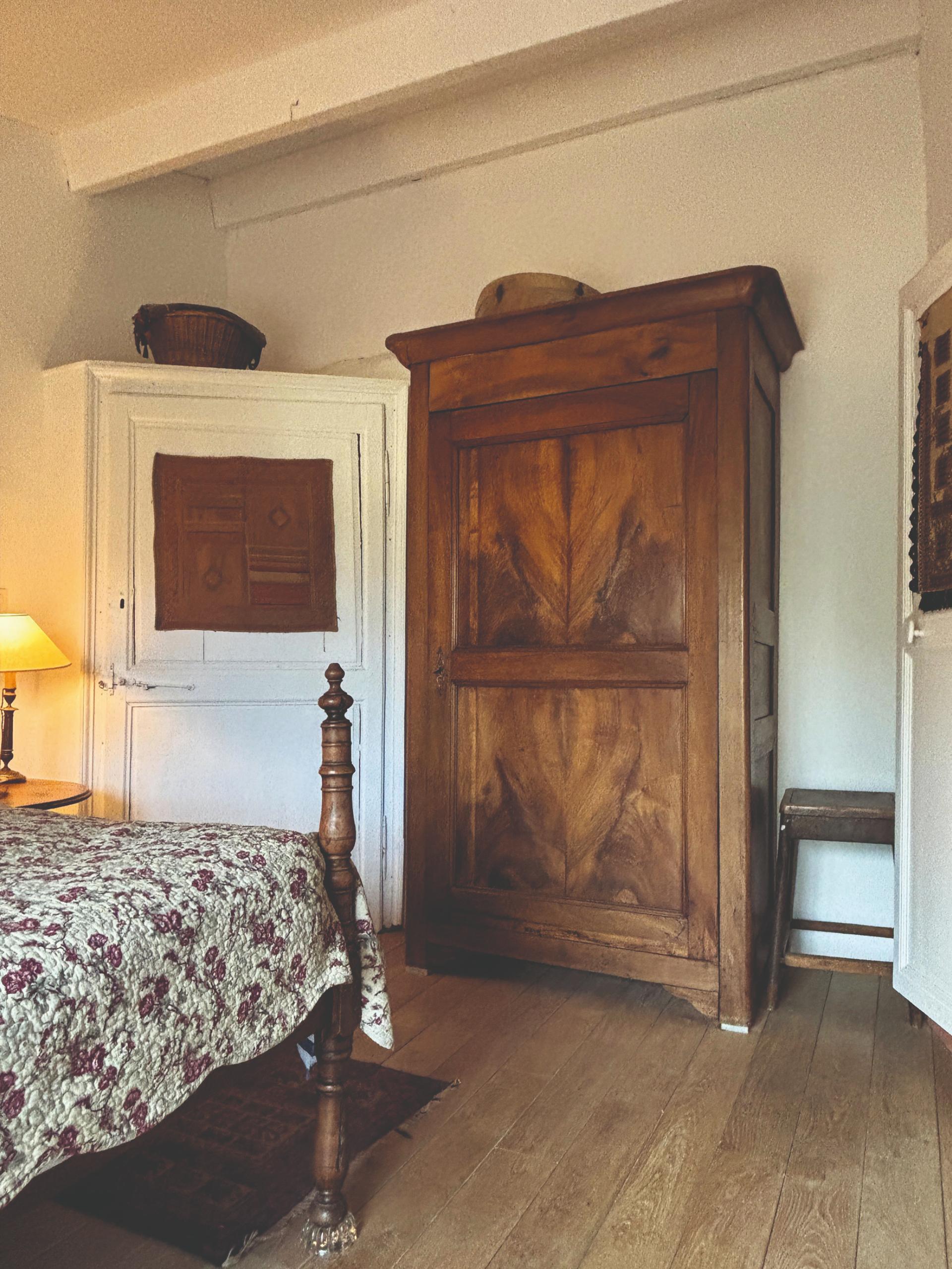
Storage is equally important. A solid walnut armoire, typical of the region, gives guests the opportunity to unpack and settle in. Even if they are are staying only briefly, a few empty drawers, wooden hangers and a blanket basket make the room feel prepared for them specifically, not hastily arranged.
DECORATIVE DETAILS
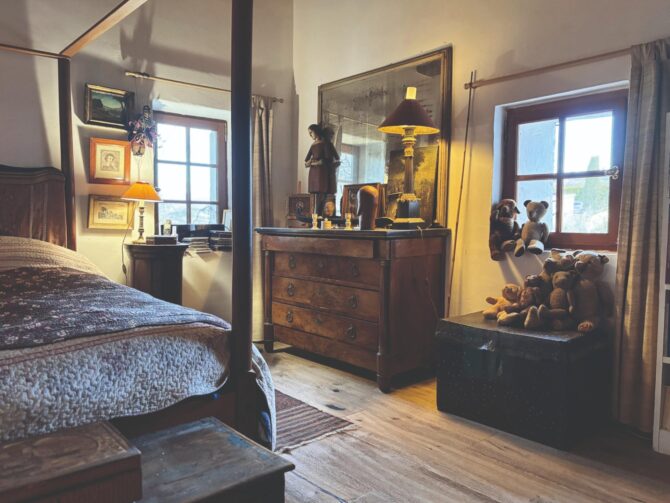
A Provençal guest room is defined by the pieces gathered within it, rather than by symmetry. Artwork is rarely hung in strict alignment; instead, portraits, engravings and landscapes accumulate over time. They can be arranged informally, some hung and others resting against furniture. This creates a composed, collected character that complements the room’s antique pieces.
Portraits in salvaged frames, 19th-century landscapes and engravings softened by age bring nuance and distinction to the space. A large, foxed mirror over a commode can widen the space and bring in shifting reflections from a nearby window. These are not decorative additions so much as pieces that serve to tell the story of the house.
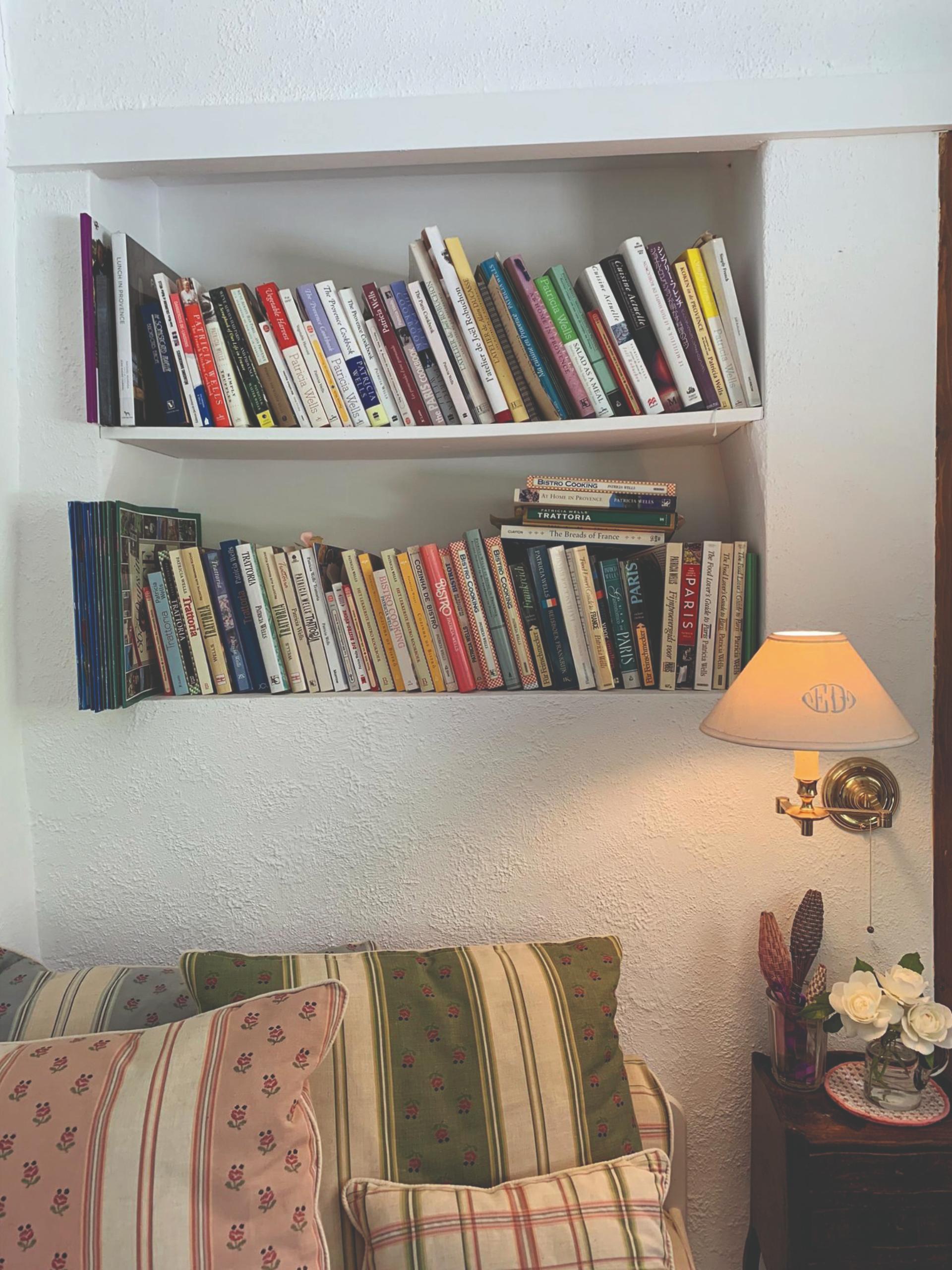
Books add similar warmth. A library wall beside the bed, or a stack of books on a table, suggests that guests are welcome to explore the intellectual life of the home. Volumes on local history, art or French writers sit ready for guests to browse at leisure.
Decorative accents, too, play a role. A carved wooden figure, a sculptural fragment or an old oil lamp converted for electricity all contribute to the atmosphere of a room that has grown organically. Provence has a tradition of using what is at hand, preserving objects with purpose and allowing them to continue their usefulness. A guest room that follows this ethos feels grounded rather than styled.
SENSORY EXPERIENCE
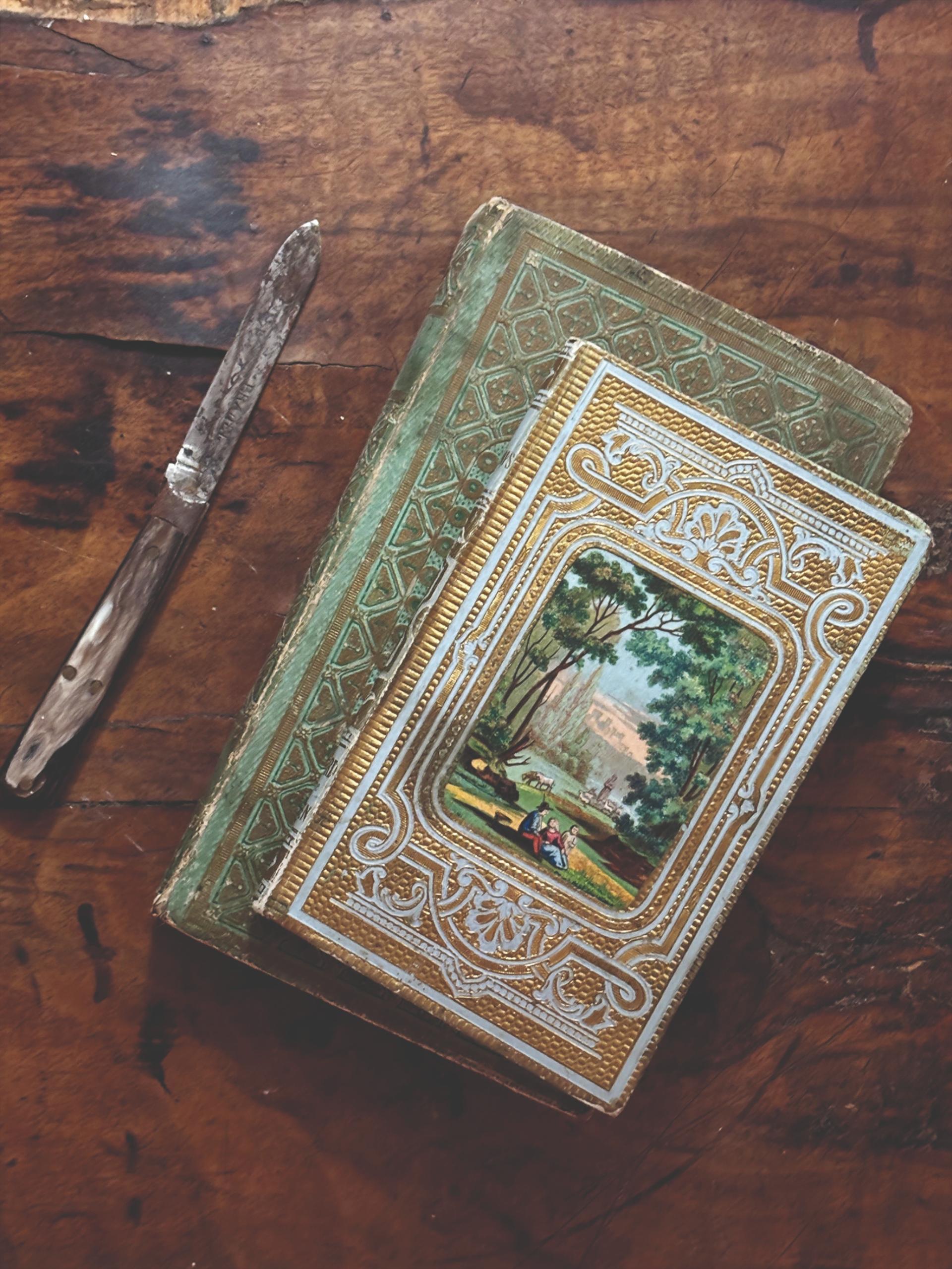
Much of Provence’s charm lies in how it appeals to the senses. A guest room should do the same thing. Textiles matter deeply here. Crisp linen sheets feel cool in summer and insulating in winter. A boutis – a lightly padded Provençal quilt, stitched in intricate motifs adds softness and pattern without weight. Its origins in Marseille and surrounding towns give it cultural resonance as well as beauty.
Fragrance should be natural and subtle. A small spray of lavender for the bed linen, a candle with herbal or resinous notes, or a vase with a single rose from the garden ties the indoors to the landscape. Lighting must be layered. Use a gentle overhead light only if necessary and allow lamps to take priority. Their warmth creates the intimate ambience typical of older Provençal houses, particularly those with smaller windows or thick stone walls. Guests often remember the glow of the bedside lamps long after they have forgotten other details.
THE FINISHING TOUCH
True hospitality is revealed in small observations. A carafe of water and two tumblers on a tray. A cosy wool blanket placed within reach. A basket for spare cushions. A handwritten note that welcomes the guest. None of these gestures seek attention, yet each contributes to a sense of ease and belonging. The most accommodating Provençal guest rooms feel neither staged nor newly arranged. They are simply shaped by the life of the house and offered generously to the people who enter it.
Antiques play a central part in this. Artisanal workmanship combined with years of use gives these pieces a substance far beyond anything newly made. More importantly, they carry continuity. Every scratch, every notch, every worn surface reflects its age, allowing guests to feel part of something enduring. When these elements come together – textiles chosen for comfort, furniture chosen for use, objects chosen because they matter – the room finds that particular je ne sais quoi. It is not found in perfection or excess. It comes from generosity, intention and the assured ease of a home that has matured over time. In Provence, that feeling is almost second nature, but it can be created anywhere. All it requires is attention to the details that make guests feel welcome: not only into a room, but into the life of the house.
Susannah Cameron is the Director at Chez Pluie Provence, an online boutique selling French antique and vintage pieces
Tel: 0033 (0)7 84 56 02 37
The unique mix of legal, financial and tax advice along with in-depth location guides, inspiring real life stories, the best properties on the market, entertaining regular pages and the latest property news and market reports makes French Property News magazine a must-buy publication for anyone serious about buying and owning a property in France.

Share to: Facebook Twitter LinkedIn Email
More in Gite owners, Holiday rentals in France
Related Articles


Leave a reply
Your email address will not be published. Required fields are marked *