
Alpes-Maritimes: French Property Location Guide

Golden sunshine, dazzling blue seas and majestic mountains: the Alpes-Maritimes makes the most of its natural assets. Annaliza Davis outlines how you can find a pad here – whatever your budget…
Who hasn’t heard of the Côte-d’Azur? Almost all of this glorious coastline in southeast France sits in the department of Alpes-Maritimes which, as the name suggests, is dominated by the Alps and the sea. Looking at a map, the region extends inland from Nice and either side, across to Théoule-sur-Mer in the west and the Italian border in the east. Its name conjures up images of glamorous casinos, movie stars and red carpets in Cannes and, of course, year-round sunshine. MétéoFrance reports that in Nice, you can expect 2,760 hours of sun per year, compared to Brest or Rouen in the north, where this figure drops to 1,500.
This is not an area with a single identity. Inland, you have traditional towns such as Gourdon, Èze, Utelle and Peille, many of which are perched on cliffs, where narrow, flagstone streets are lined with stone houses that are centuries old. In rural areas, you find plenty of examples of the regional farmsteads known as mas, situated in acres of ground, built to stay cool and to house livestock as well as families.
Then, of course, you have glitzy coastal resorts dotted with palm trees including Nice, where high-rise apartment blocks are commonplace; or Cannes, with its mix of coastal villas, skinny townhouses and modern architecture. Along this coastline you’ll also find Monaco, a tiny independent state that’s not strictly part of Alpes-Maritimes, but shares its neighbours’ desirability. One of Europe’s most exclusive resorts, Monaco is renowned for its Monte-Carlo casino, sports cars and luxury superyachts.
Whether you’re drawn to the sea-view apartments with tiny balconies, rambling farmsteads with overhanging roofs or stone-built village houses framed by the Alps, the Alpes-Maritimes has an incredibly diverse range of properties and indeed landscapes. You can drive for only 30 minutes and believe you’re in a completely different part of France.
To give you an idea of the region’s diversity, a budget of €300,000 could buy you a one-bedroom apartment with a balcony in either Nice, Antibes, Roquebrune-Cap-Martin or Menton, but it could also buy a four-bedroom house with 1.5 acres in Collongues, a two-bedroom townhouse in Cannes or a stone home with mountain views and Alpine style in Peïra-Cava. From rustic and rural to coastal and contemporary, you’ll find it here.
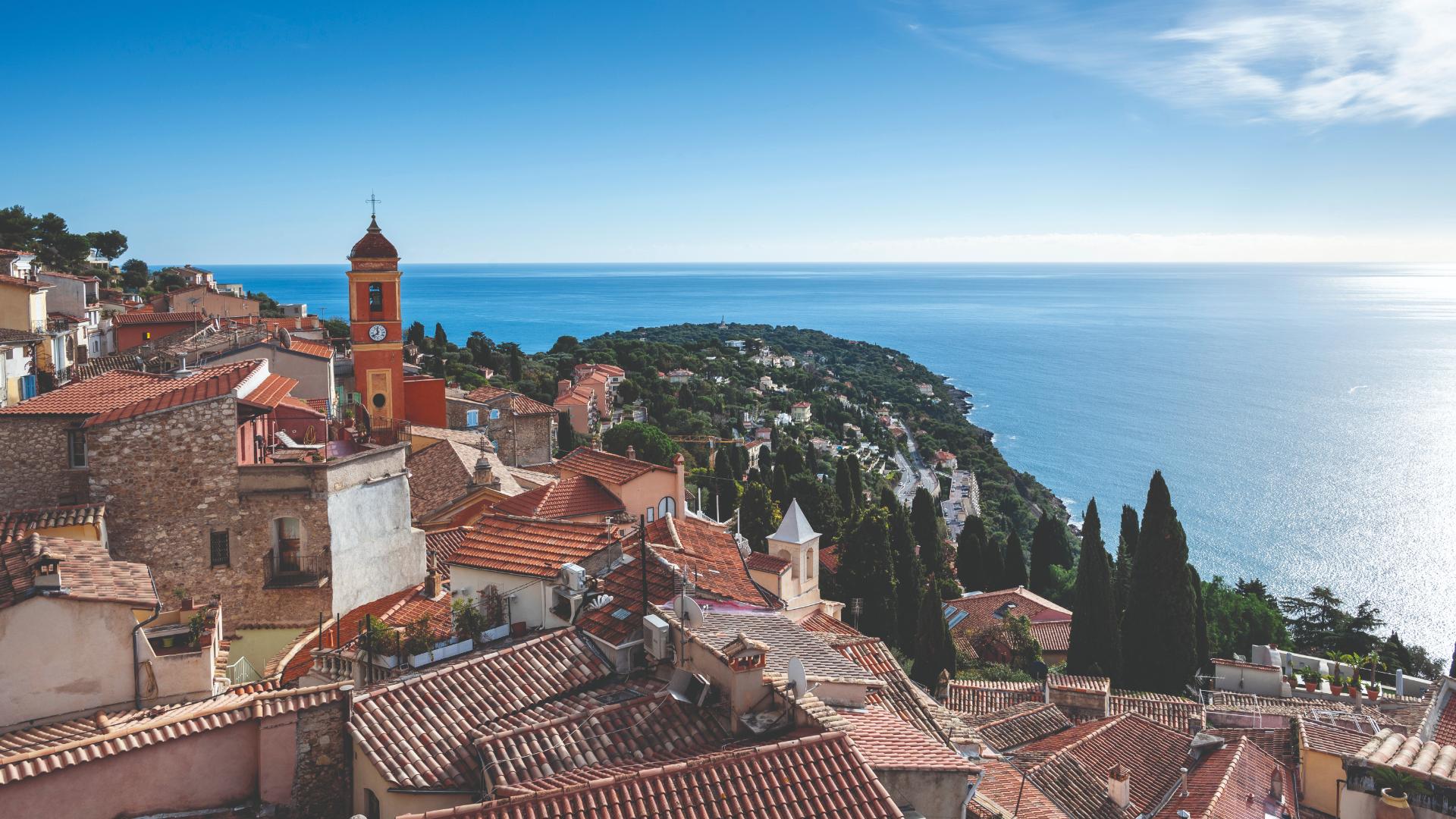
Roquebrune-Cap-Martin -shutterstock
MATCH THE PLACE TO YOUR POCKET
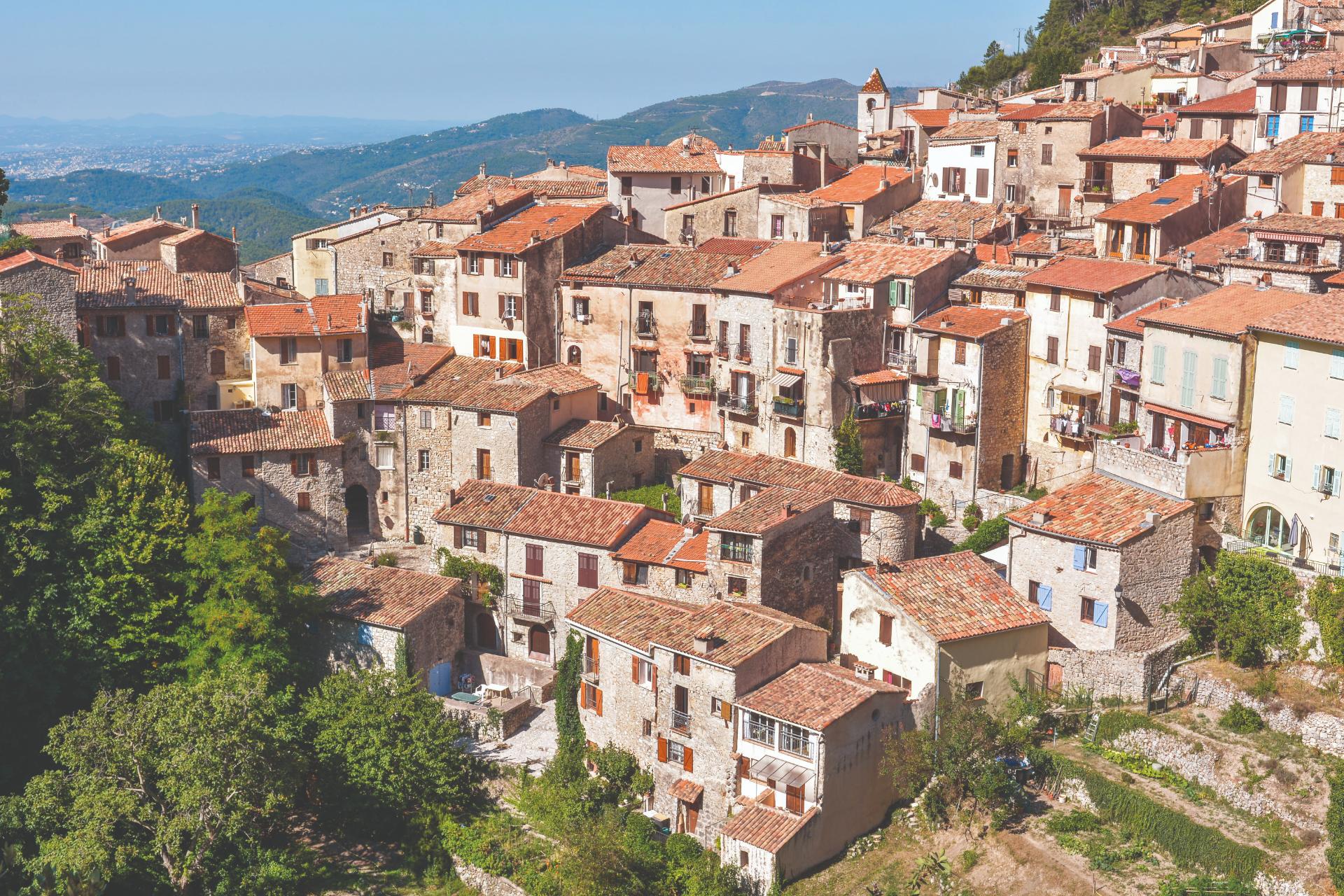
Peille -shutterstock
As you might expect from the ever-popular south of France, property is not cheap. In 2025, the average house price in Alpes-Maritimes stands at €5,218/m²- well above the national average of €3,108/m², but you can still find homes here for less if you know where to focus your search. If you look inland, away from the costly coastal areas, you’ll find a southern location that still offers great value for money. Head northwest towards Le Mas, St-Auban, Andon and Amirat, and you’ll find properties that are priced around €1,900/m². It’s an even better story to the northeast of the region, heading up from Breil-sur-Roya to Tende, with homes here costing as little as €1,425/m².
These inland, mountainous areas are a complete contrast to the Côte-d’Azur, but you’ll find terracotta-topped homes at reasonable prices that often have a breathtaking backdrop of mountains, gorges, rushing rivers and waterfalls.
The most costly areas are those closest to the coast, particularly either side of Monaco. Prices in the highly sought-after seaside resort of St-Jean-Cap-Ferrat are an eye-watering average of €17,754/m², so even a studio apartment the size of a single garage here fetches €500,000. In Cannes, the price per square metre ranges from €3,774 to €9,445, so a 50m² apartment will cost between €188,700 and €472,250, depending on its location.
LOCATION: WHERE TO FIND WHAT YOU WANT
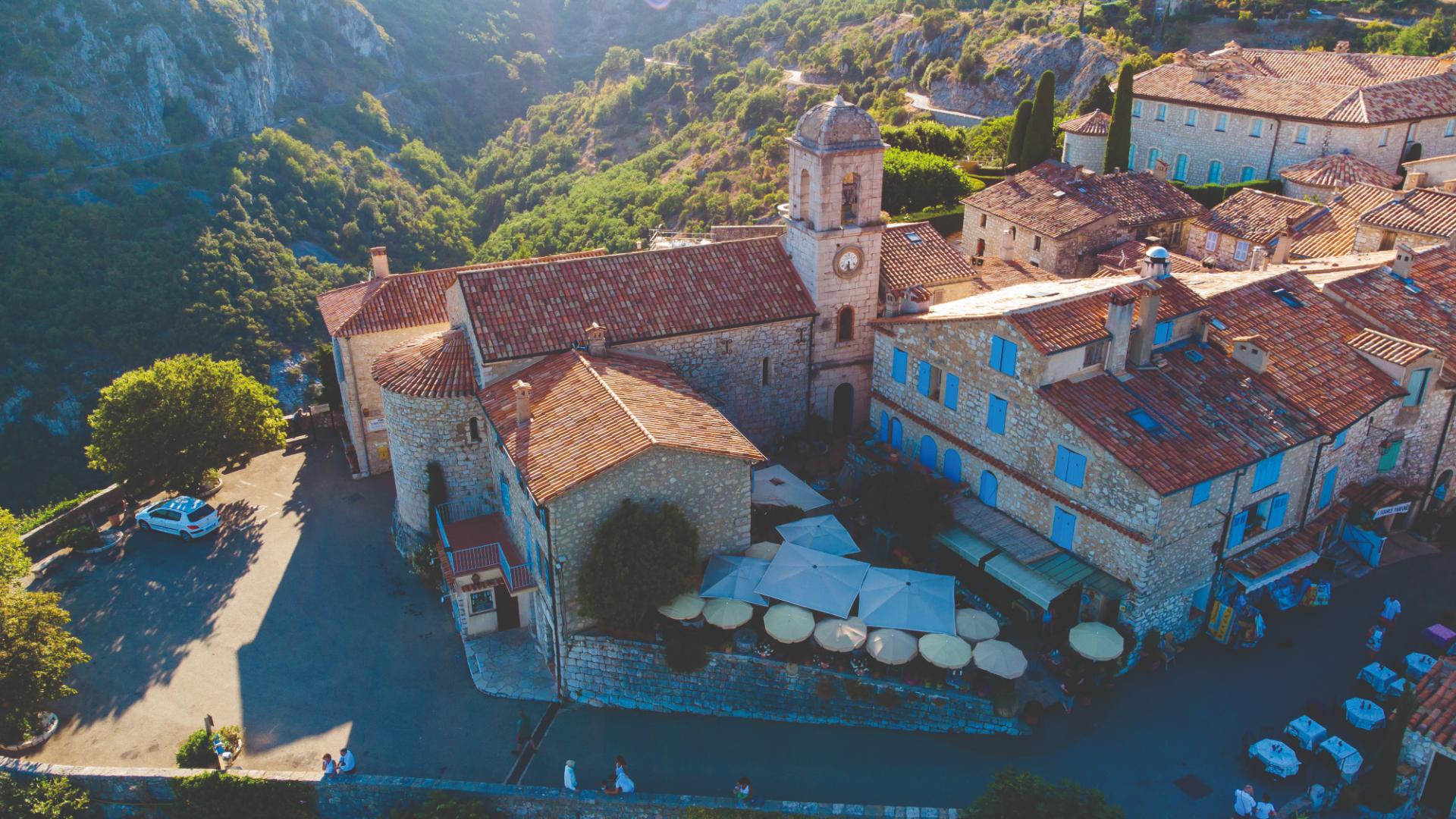
Gourdon -shutterstock
Nice is France’s fifth-largest city (353,701 residents) and has great transport links including an international airport. It’s not the most expensive spot on the Côte-d’Azur, but it is the most intensely populated, with 4,918 residents per square kilometre, which is about 46 times the national average and almost matches London (5,854/km²).
It does have beaches although these get extremely crowded, and its old town has shady streets of baroque-style buildings whose red and yellow facades add to the warmth, but the abiding image of Nice is one of high-rise apartment buildings. Over 73% of properties here are main residences, and nearly 93% are apartments. If you see a central ‘apartment’ here for €60,000, it’s likely to be a minuscule 9m² room up in the eaves with a sofabed and miniature shower room. That said, these tiny dwellings can rent out for more than €300 a month, as there are about 40,000 students in the city at any given time.
Also a seaside resort, Cannes has fewer than 75,000 residents although it’s still quite densely populated (3,773/km²). Here, one-bedroom apartments start at €80,000, and for €100,000 you could get your own sunny balcony with a sea view – although an apartment with parking, a balcony and a swimming pool is likely to cost more than €225,000.
Antibes Juan-les-Pins became popular with the Americans in the 1930s, drawing writers such as Hemingway and Fitzgerald, as well as great jazz musicians including Sidney Bechet and Count Basie. This is a chic resort with 25km of beaches, seafront promenades, smart dining spots, cocktail bars and nightclubs, plus a large marina. In Antibes, a 25m² studio is likely to fetch over €175,000, houses start at €350,000 and modern villas at €600,000 with a 10-bedroom villa in Le Cap fetching €13m.
If you’d like to be on the Italian border, Menton offers clusters of pretty ochre and pink buildings with mountains behind and a marina or beach in front. It has 30,000 residents (population density of 2,158/km²), and apartments in a period building start at €95,000, while a €150,000 budget will give a wide choice, and houses start at €300,000.
Moving inland, Grasse is 30 minutes north of Cannes, perched in the hills with gardens of jasmine, roses, lavender and mimosa flowers. Famous as the home of perfume, Grasse has some beautiful architecture including mansions from the 1600s and 1700s, and properties here cost an average of €3,712/m² (about half that of Cannes), so you get more for your money. A budget of €80,000 buys you a basic apartment, €250,000 opens up a wide choice of apartments over 65m² (some with a pool), while €350,000 can buy you a house here.
For a traditional mountain town, head about an hour from the coast to Gourdon, Utelle or Peille. These inland towns have a medieval feel and a completely different atmosphere from their glitzy counterparts on the coast: the mountains are much more present and the pace of life much slower. A three-bedroom apartment costs from €90,000, and for €500,000 you can buy a five-bedroom home complete with generous gardens and pool, glorious Alpine views and potential to run a B&B or gîte.
You can still find renovation projects in Alpes-Maritimes, be that an apartment in need of a makeover, a townhouse that requires renovation to reach its full potential or a rural chalet. If you’re flexible on location, you’ll find all these types of properties from €45,000. There are few building plots in Alpes-Maritimes, but €50,000 would buy you a generous 2,400m² plot inland in St-Léger, 90 minutes north of Nice. Beware of terrain de loisirs, as this is ‘leisure land’, and these plots have restrictions on what you can construct there.
TRANSPORT
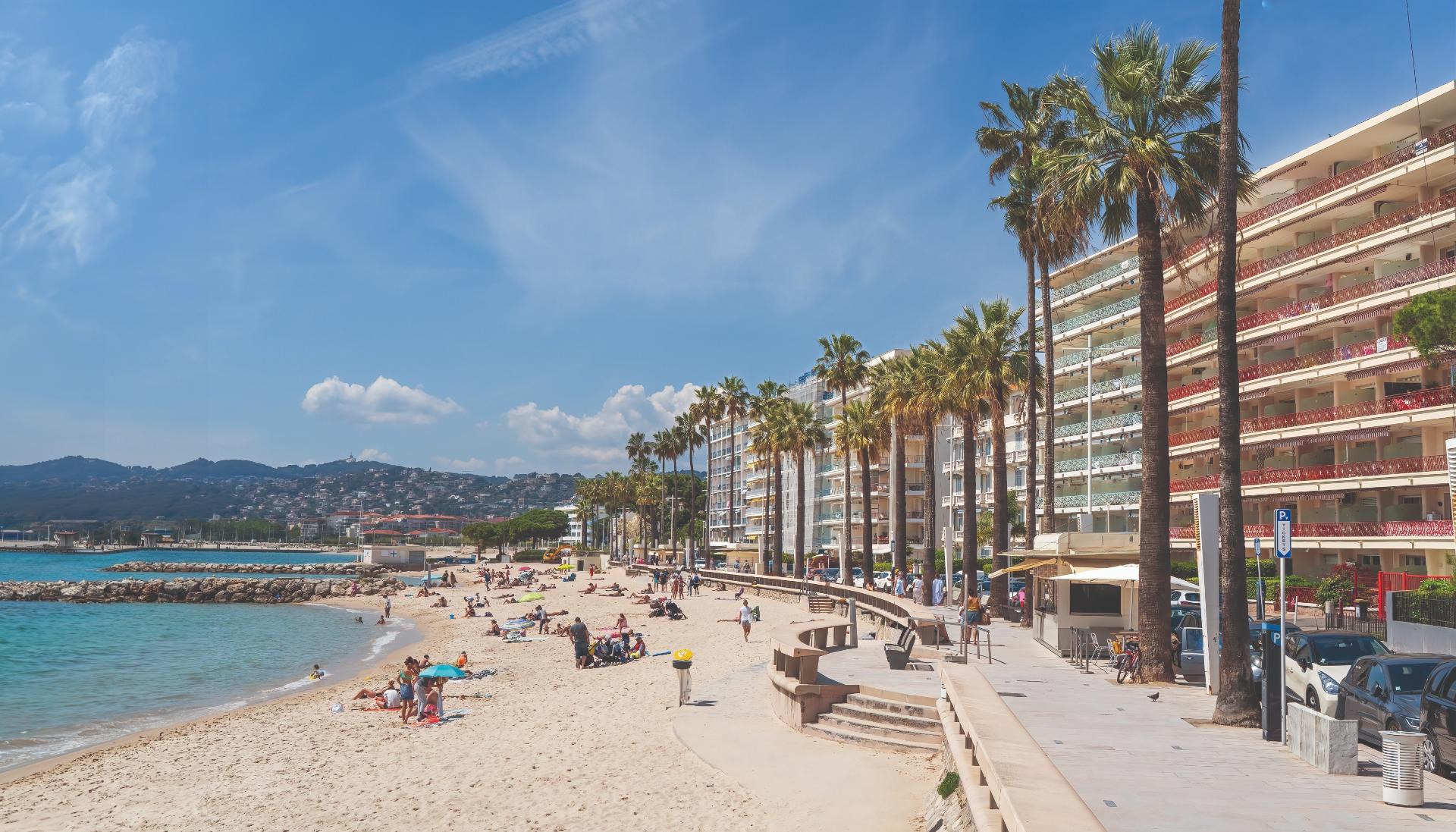
Juan-les-Pins beach -shutterstock
By air, Nice Côte-d’Azur airport is an hour-and-a-quarter from Paris, and around two hours from Birmingham or London. The airport has a tram line (ligne 2) that takes you to the centre of Nice in 30 minutes. By car, Nice is nine and a half hours from Paris or 11 and a half hours from Calais – both travelling via toll roads. If you take the train, you can get from Paris to Nice in under six hours, thanks to a direct service from Gare de Lyon.
It’s worth knowing that the regional TER trains link all major towns along the coast, from Hyères to Menton, including Monaco. From 1 June to 30 September, you can also buy a Pass Touristique for €16 per person, and travel all day throughout Alpes-Maritimes on the TER lines.
EMPLOYMENT AND THE ECONOMY
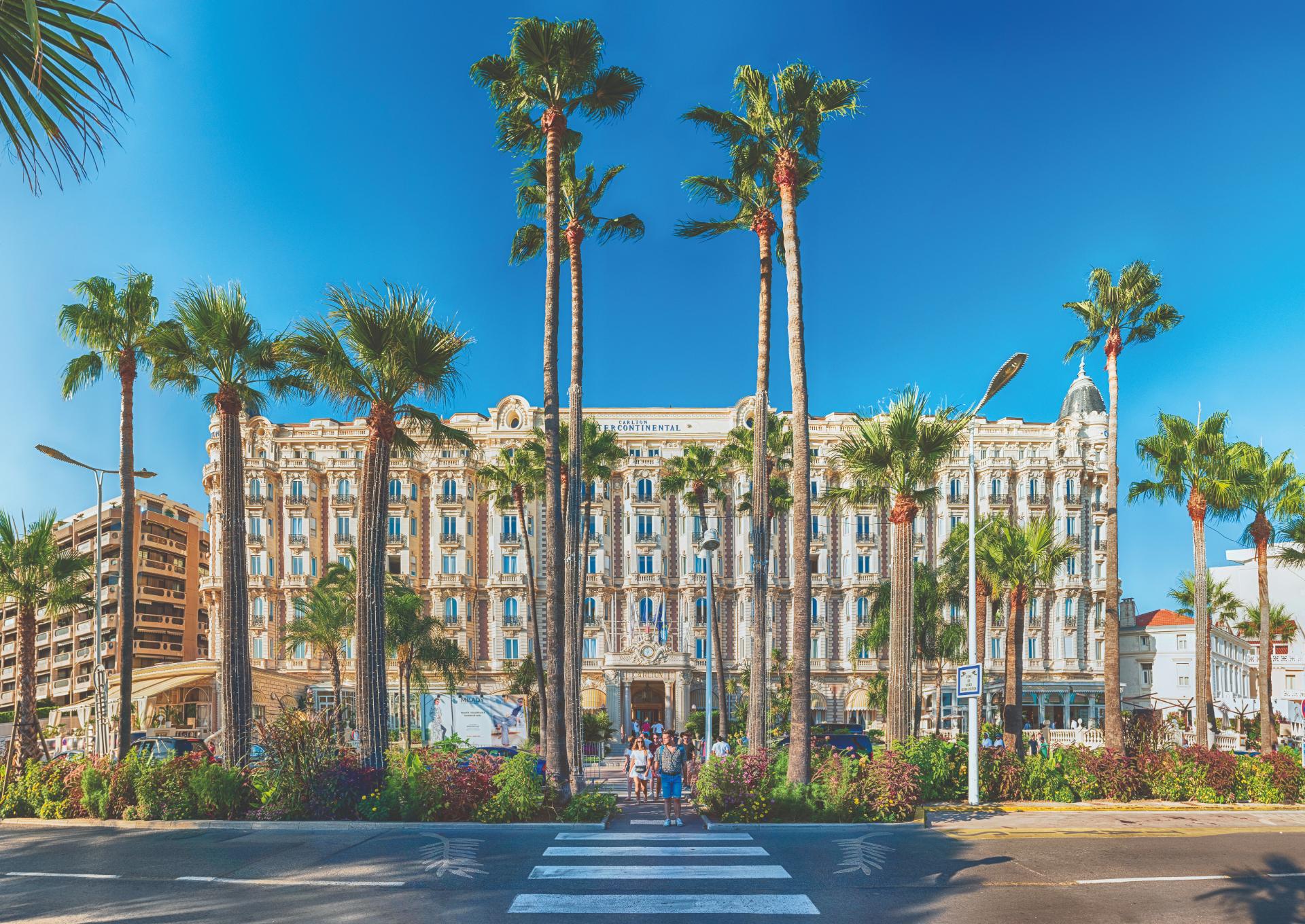
Cannes Intercontinental Carlton Hotel on Croisette -shutterstock
The region’s Chamber of Commerce states that, based on 2024 figures, Alpes-Maritimes has 153,974 economically active establishments, generating a pre-tax turnover of €78bn (up €3bn on 2023). Tourism and real estate dominate the economy, although 18% of businesses are specialist scientific and technical services, 22% are commercial/retail, 10% are construction and 6% industry, including big technology firms. More and more Americans are visiting the Côte-d’Azur and moving here permanently, particularly New-Yorkers.
The area continues to benefit from investment, notably in the new ‘multimodal’ transport project for Nice airport. Started in June 2025 for a planned opening in 2028, this project has a budget of €271m and aims to provide a single transport hub at the airport to include high-speed trains, regional trains, trams, cars and bikes.
The unique mix of legal, financial and tax advice along with in-depth location guides, inspiring real life stories, the best properties on the market, entertaining regular pages and the latest property news and market reports makes French Property News magazine a must-buy publication for anyone serious about buying and owning a property in France.

Lead photo credit : Antibes -shutterstock
Share to: Facebook Twitter LinkedIn Email
More in alpes-maritimes, Location guide, provence
Related Articles

Leave a reply
Your email address will not be published. Required fields are marked *