
The Main Reasons Your Long-Term French Visa Application May Fail – You Might Be Surprised!
Sponsored Content
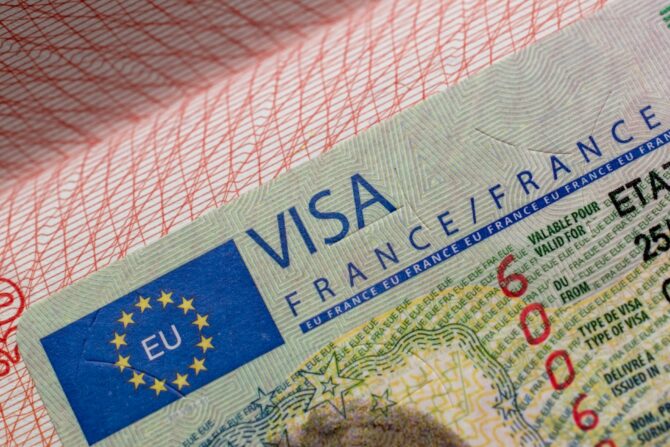
Applying for a long-stay visa for France can feel like jumping through administrative hoops, but if you’re well prepared, it’s absolutely achievable. That said, visa refusals still happen frequently, and many of them are due to the same avoidable mistakes. Your application is reviewed by trained agents who are there to guide you, but their job isn’t to fix your paperwork. You need to show up with a clear, complete, and compliant file.
One of the most popular types of visa is the ‘long-term visitor visa’; this visa covers situations such as retirement in France, a sabbatical year or a multi-year stay in France, and there are two main reasons for this type of visa being declined: inadequate proof of income and/or lack of visa-compliant health insurance cover. So, what can you do to avoid your application failing on these points?
Let’s break it down.
Inadequate Proof of Income
This remains one of the most common reasons long-term French visa applications are denied, particularly for visitor visas. To be approved, you’ll need to demonstrate that you have enough financial means to live in France without working or relying on state support.
In 2025, the minimum required income generally matches the French SMIC, the minimum wage, which is currently around 1,430 € per month for a single person.
You don’t necessarily need a regular salary. In fact, most applicants provide a combination of:
● Pensions (state or private)
● Dividends
● Rental income
● Interest from savings
● Annuities or trust income
If your monthly income is below the required threshold, you can make up the difference by showing sufficient savings. These must be readily accessible, not locked into property or long-term investments. The consulate wants to see that you could draw the equivalent of the SMIC each month if needed.
Tip: Present your financial documents clearly. Translate them if needed, highlight relevant figures, and use currency conversions if accounts are in a foreign currency. Make it easy for the visa officer to understand your financial situation at a glance.
Visa-Compliant Medical Insurance
This is where many applications hit a wall. The French government requires that your insurance policy meets the equivalent of public healthcare coverage (la Sécurité Sociale), but the exact standards aren’t always clear to applicants or insurers.
To avoid rejection, make sure your Certificate of Insurance (COI) includes the following non-negotiable elements:
✅ Coverage for both inpatient and outpatient medical care
✅ A minimum of 30,000 € in coverage (although 100,000 €+ is strongly recommended)
✅ No excess, deductible, co-pay, or co-insurance, policies must cover you from the first euro
✅ Clearly stated repatriation coverage
✅ Dates of coverage that match your visa duration, or clearly show automatic renewal
✅ No listed exclusions for common medical conditions
✅ Proof of payment to confirm that the policy is active
If you’re relying on an S1 form (available to UK pensioners), make sure you also bring proof of eligibility from the NHS. This is not always accepted in advance of your move, so double-check with your visa centre before relying on it.
Travel insurance, Schengen insurance, emergency-only plans, and repatriation-only policies are routinely rejected. If your policy has any form of deductible or only covers emergencies, it won’t be accepted, and you’ll need to reschedule and repay for another interview.
👉 FAB French Insurance specialises in visa-compliant private health insurance designed to meet France’s exact requirements. We work with over 30 insurers and know what documentation consulates expect to see.
Pro Tip
Even if you’ve found a great insurance policy, your application can still be denied if your documentation isn’t crystal clear.
Here’s how to ensure your Certificate of Insurance won’t cause a hiccup:
● Clearly show the start and end dates of cover
● Use simple language where possible or ask your insurer for a bilingual certificate
● Include a separate line confirming repatriation is covered
● Bring proof of payment (such as a paid invoice or receipt)
Visa officers at visa centres often don’t have time to decipher complex policies or dig through fine print. If the insurance certificate doesn’t explicitly list the required elements, they may reject it without explanation.
Some policies that meet the criteria still fail because they don’t communicate that clearly. Make their job easy, and your chances of success go way up.
What’s Next?
If your visa application is rejected, don’t panic, but do prepare for delays. In most cases, you’ll be allowed to reapply, but you’ll need to:
● Book a new appointment
● Pay the visa fee again
● Provide a fully corrected file, including compliant insurance and updated documents
That’s why getting it right the first time is so important.
Once your visa is approved, don’t forget to:
1. Activate your visa online within 3 months of arrival in France via the official OFII website
2. Start preparing your application for residency (carte de séjour) and French social security registration (CPAM) after arrival
Need help finding the right insurance? At FAB French Insurance, we’ve helped thousands of expats navigate this process. Our policies are battle-tested with real clients across the UK, US, Canada, Australia, and beyond.
Use FAB French insurance online tool to compare only the policies that work for your visa type, age group, and health profile, with instant certification and fast support in English.
Your dream life in France starts with getting the paperwork right. Let’s make it happen.


Share to: Facebook Twitter LinkedIn Email
Related Articles




Leave a reply
Your email address will not be published. Required fields are marked *