
Real Life as a Carpenter: From Home Projects to Restoring the Notre Dame
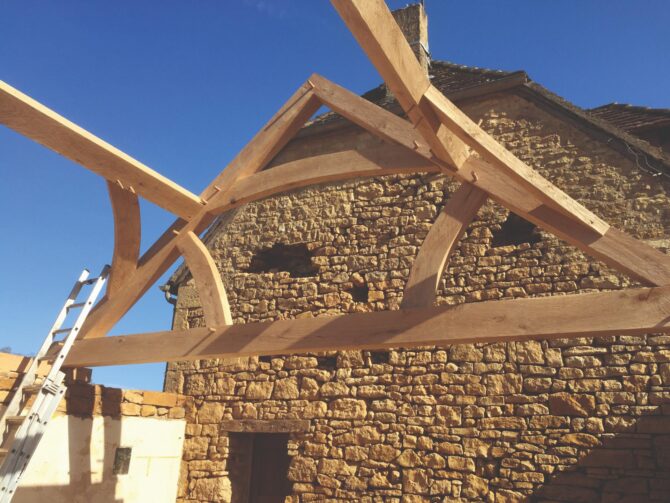
Restoring the past with old-school skills, carpenter Mike Dennis has worked on everything from small home projects to the Notre-Dame restoration, as he tells Julia French…
Many of us have watched one of the myriad of property programmes on TV in wonder and delight as a characterful old building is restored. Original oak beams, gorgeous patinated wooden floors, quirky doors and hidden treasures all warm our hearts. Some are brave, lucky or mad enough to undertake such a challenge and are fortunate to live in a piece of history. There is so much to learn and appreciate from these old buildings. They have evolved from dwellings that were may once have been shared between humans and animals to become charming homes with the original craftsmanship positioned front and centre. Working features such as an old stone sink or a bread oven once a necessity-may not be used, but are much admired.
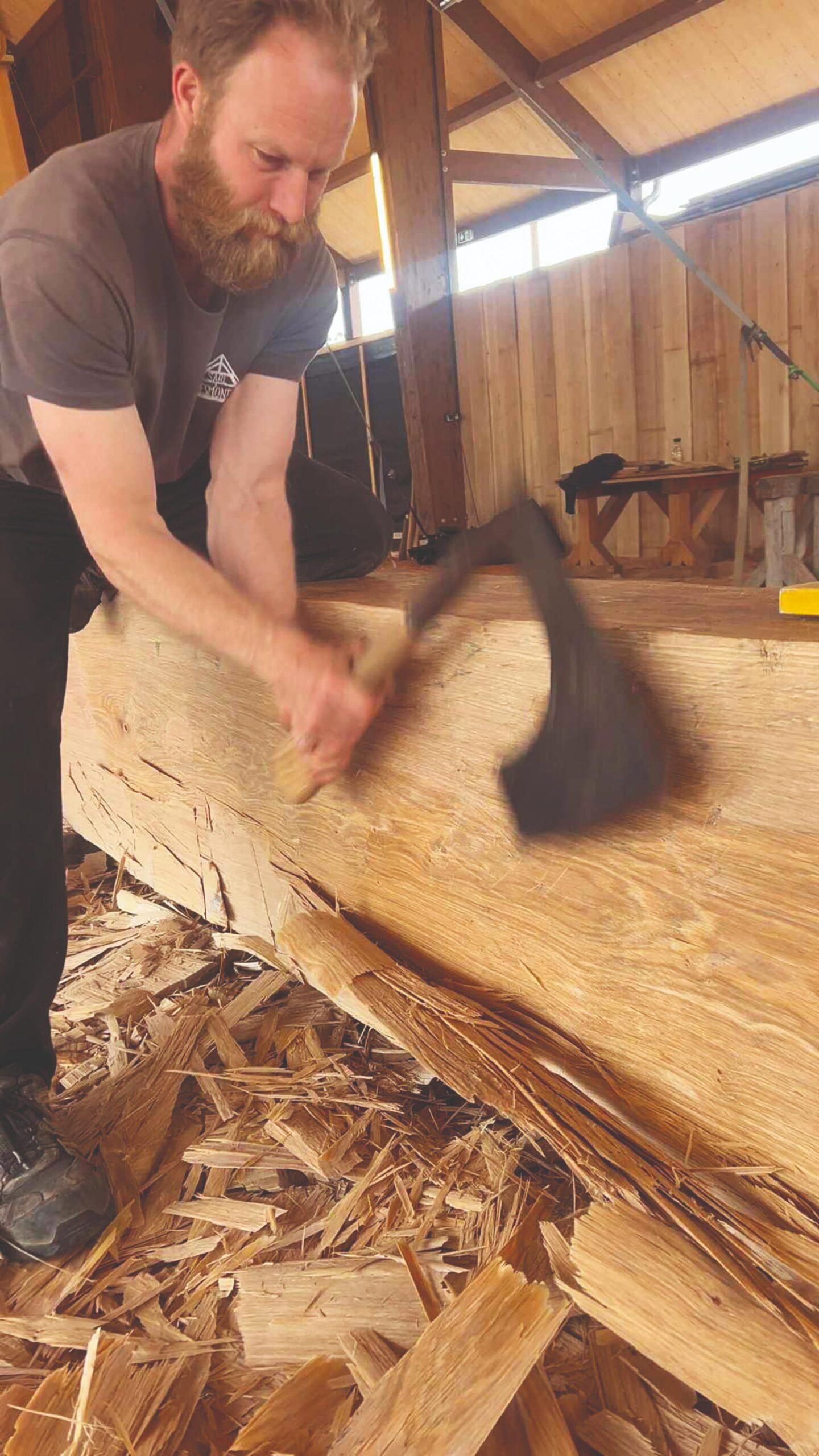
Mike 2CC
PASS THE HAMMER
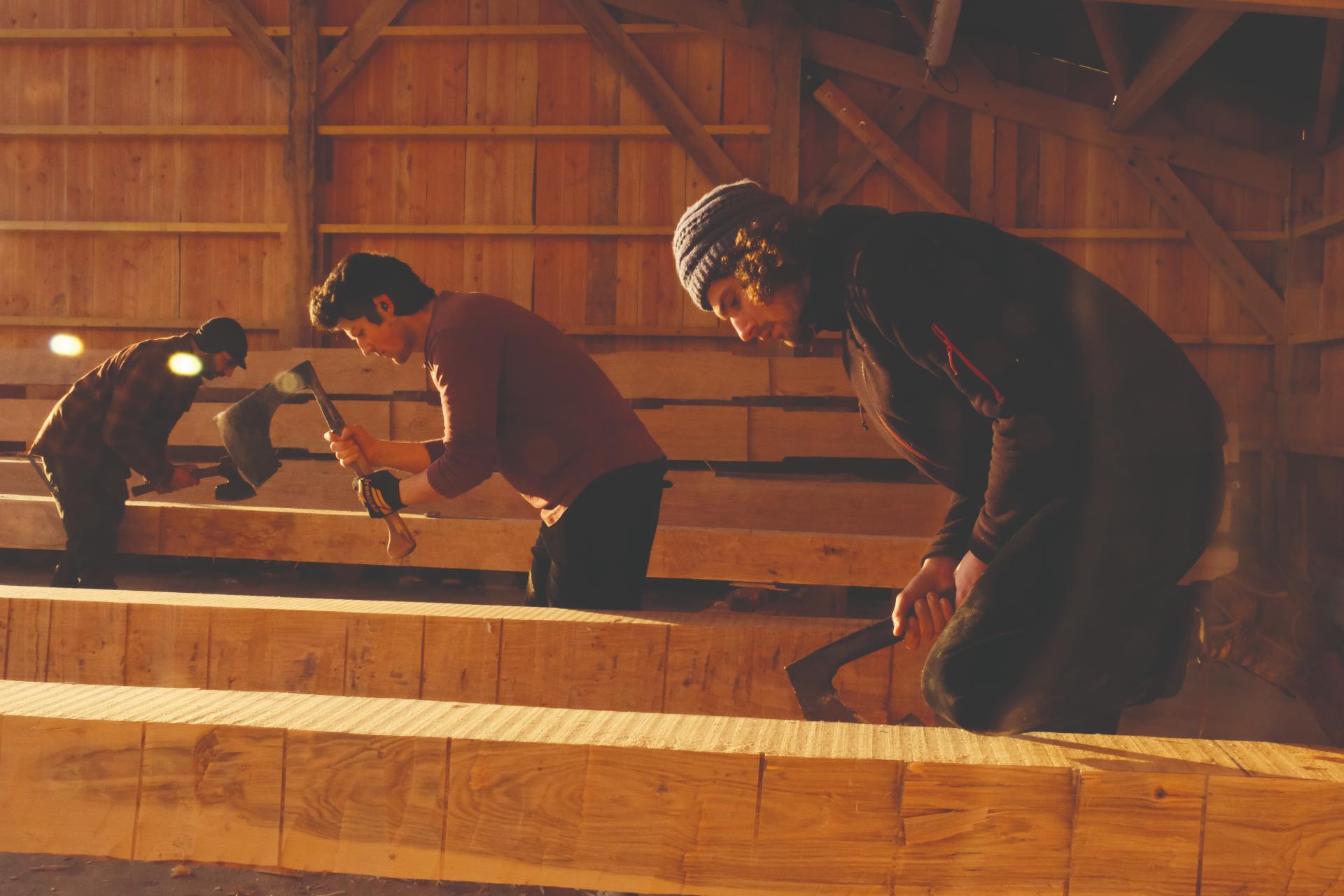
L-R. Hank Silver, Zakari LeBlanc and Martin Degalier hewing timber for the nave of Notre Dame at Ateliers Desmonts – credit Mike DennisCC
Mike Dennis, a traditional carpenter, is championing heritage crafts to prevent many historical houses and buildings falling into disrepair, or worst-case scenario, being demolished. A former Royal Marine in his previous life, he might seem an unlikely candidate to have more than 100,000 followers on Instagram supporting his cause.
Mike lives in a small hamlet. in the Dordogne, which is steeped in medieval history, buildings and monuments. In seeking a vocation after the Marines, he became disenchanted with the modern carpentry course he was doing and found solace in the world of traditional carpentry where he became an apprentice. Alan Ritchie, a craftsman in Wales, took him under his wing.
With the aid of a National Lottery Heritage Grant, Mike completed his training and has since undertaken many projects, from barn and bridge restorations in Canada, to the construction of a 200m³ yoga retreat in France.
Mike admits to being obsessed with the medieval period and is committed to raising awareness about building preservation far and wide. “Both the younger and the older generation are key. The older generation are generally the ones with the money and we need them to be able to fund the upkeep of their properties or invest in their renovation. Equally as important, we need the young to be trained with the traditional skills necessary so that these centuries-old working methods and knowledge are not lost.”
RAISING THE ROOF

Notre Dame fire, Photo: Shutterstock
A good example of this is the rebuilding of Notre-Dame cathedral in Paris. Following the fire in 2019, Mike was one of the 25 master carpenters selected to work on the initial project. “As a team, we had to prove that the restoration could be done using traditional methods. We had to show that it was possible to build, using the same tools and by hand. With a fabulous stroke of luck, architect Rémi Fromont had researched Notre-Dame as part of his PhD thesis in 2014, studying the building in depth. His drawings and plans were incredibly detailed, which enabled us to rebuild the monument as near as possible to the original.”
It wasn’t just the timber construction that the team was able to replicate, it was the tools they used too. “We had to study the marks on the timbers. Tool shapes evolve and even the simple axe changes over time.” Using the photos and reference books, the team designed and forged their own ‘tool kit’ including saws, planes and chisels and they’re not the sort of things you would find in your local bricolage! The wood itself wasn’t sawn in a mill, but by cutting it from the round tree to a square timber by hand, in a process known as ‘hewing’.
For this specific project, 60 axes were made of different sizes. “Having these traditional zools allowed every cut and mick to be replicated to provide the look of authenticity. The attention to detail went as far as making sure the timber marks had the exact same indentations. These appear on all timbers to aid the assembly. of the frame. It’s essentially a form of medieval flat pack. Although they seem minor, these details give the structure a personality, a history, which was exactly our aim.”
It isn’t just historic monuments that have these symbols; if you have an old building with exposed timbers you should be able to see the marks that were there to help in the assembly process.
GLOBAL AFFECTION
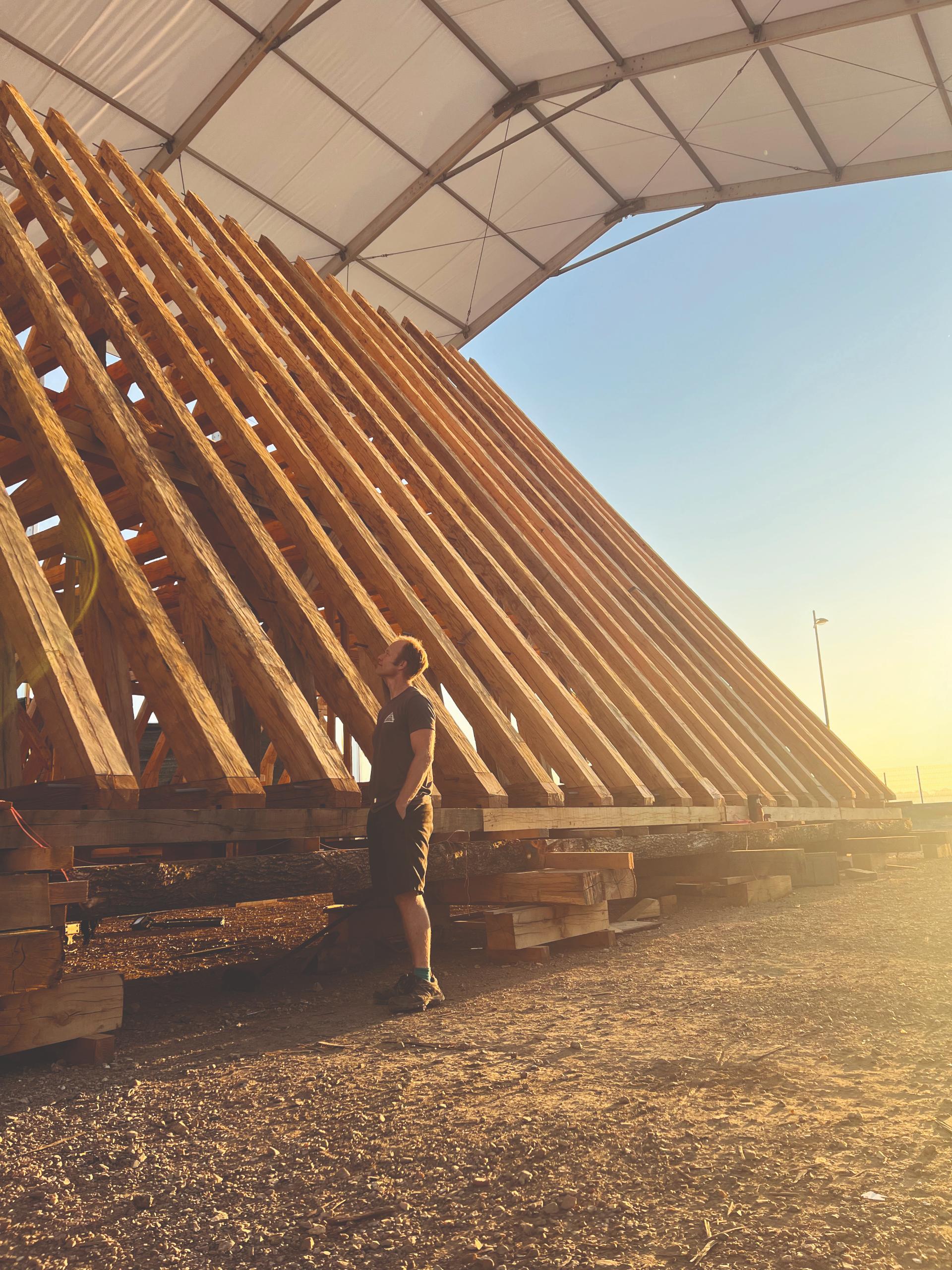
Mike standing with the assembled frame in the yard of Ateliers Desmonts before it was dismantled and sent to Paris – credit Tim ClarkCC
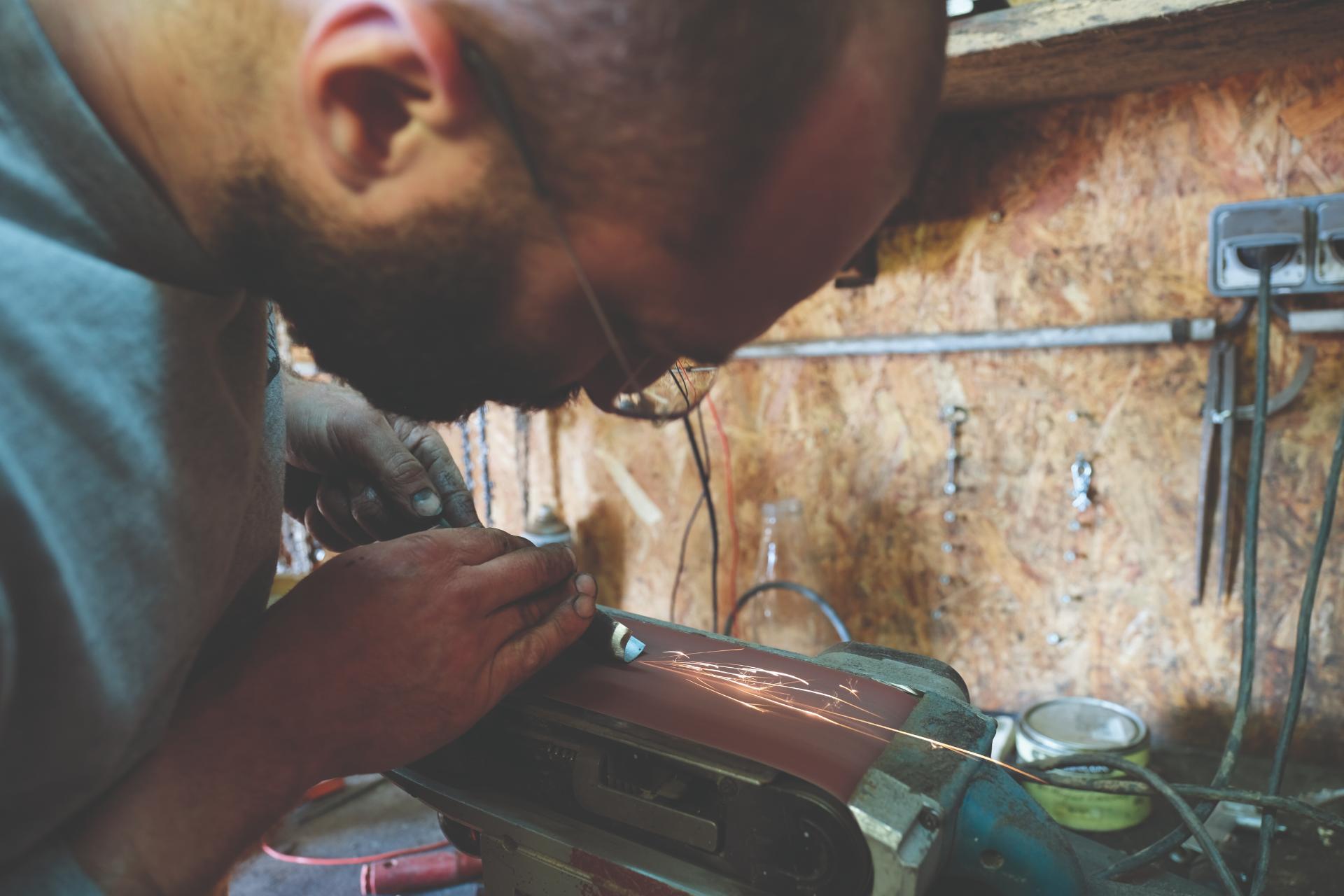
Mathieu Larigot making a gouge to match the original carpenters assembly marks on the Nave of Notre Dame – credit Mike DennisCC
The Notre-Dame fire demonstrated that there was a deep affection for this historical monument, testament to this was that many were prepared to give money to aid the restoration not just in France, but around the world.
Mike was honoured with not only a mention in King Charles address at the State Banquet, but the proud satisfaction. of having played a part in the history of the building. which he wouldn’t have able to do without the skills and knowledge he gained through his apprenticeship in Wales.
“Training and passing knowledge on to the next generation is so important. If not, these precious skills will be lost. One of the biggest threats to our old buildings is water infiltration directly from up above, or on the ground due to ineffective drainage. Once water finds its way, it’s only a matter of time for damage to take hold. This can result in rotting timbers, crumbling masonry and a large repair bill.
“Keeping an eye out for signs like a leaky gutter or a loose tile can save time and money in the long run,” says Mike. “Make sure that the water leaves your gutters effectively. Guttering is a new thing for some old dwellings. Ensure that whatever rainwater goods you have, that they work effectively. The last thing you want are puddles of water building up against the walls of your house.
“In some cases, the surrounding land levels change over the course of time, leaving small dips where water can sit, which could compromise the wall structure.
POINTING IN THE RIGHT DIRECTION
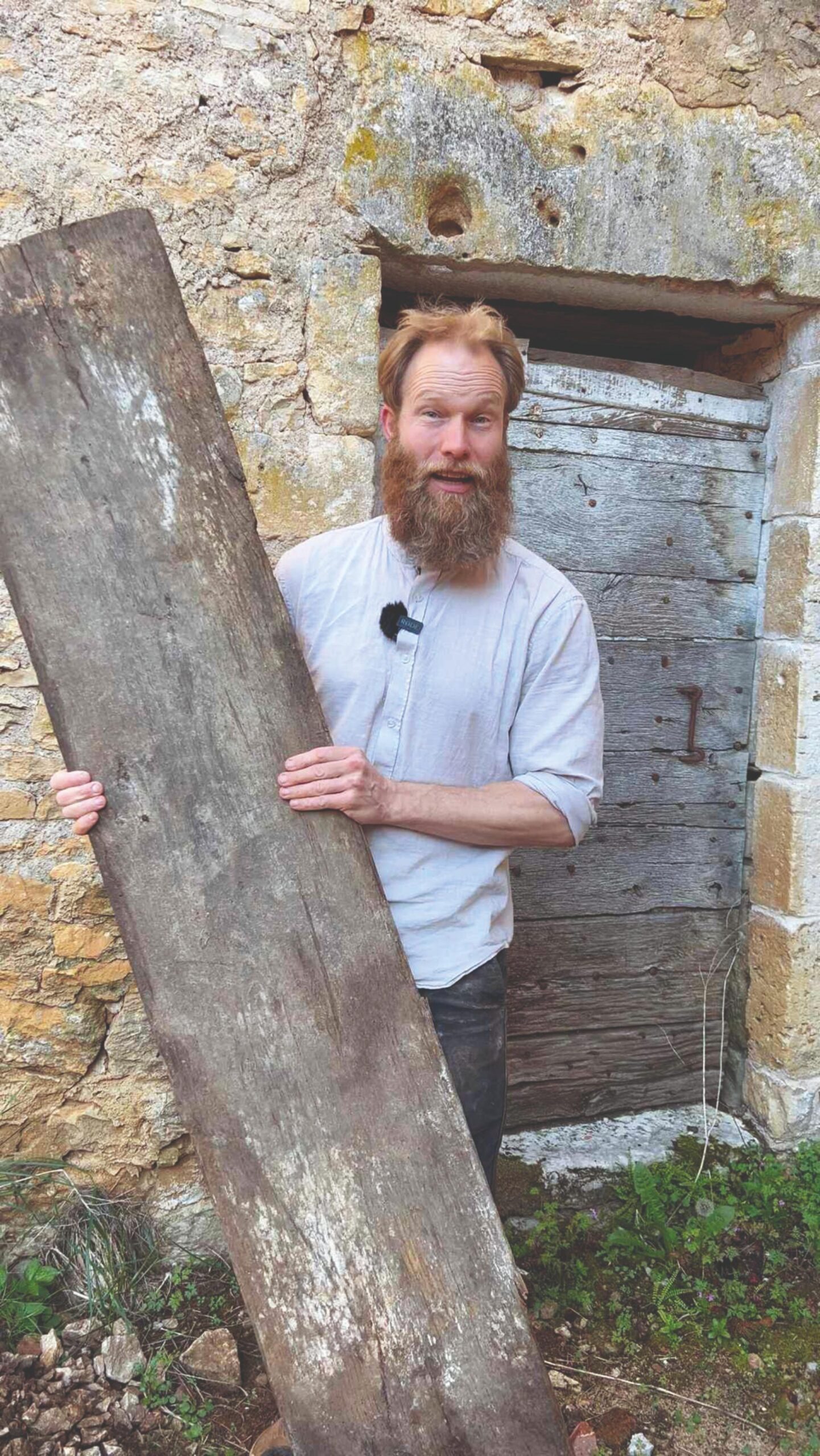
Many modern products are not conducive to older buildings and can cause damage in the long term. Mike has seen his fair share of mistakes being made. Some simple quick fixes can lead to bigger problems along the line. “Using cement when repointing, for example, can lead to the decay of the brick/stonework. Moisture can’t pass through it and the water has no other choice but to pass through the brick or stone. Traditional non-hydraulic lime mortars are permeable, allowing the moisture to escape.”
SELF-PRESERVATION
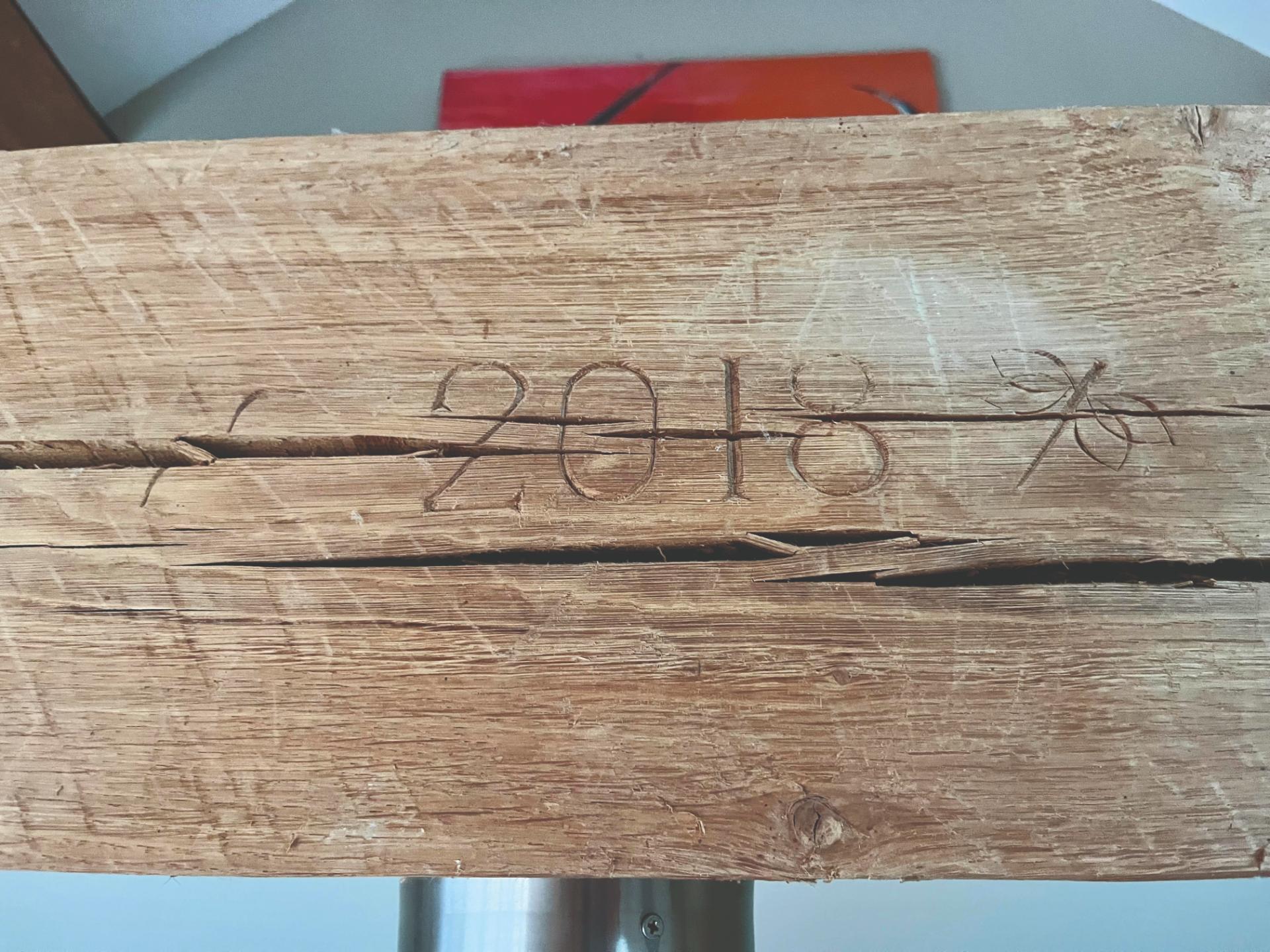
dated timber markCC
Whether you have an old home, or simply have an interest in historic buildings and building practices, you can do your bit. “Being aware of the complex and amazing built environment in which we live is all part of building preservation,” Mike says.
“Questioning and understanding how things work, is a great start. Once there is an understanding of the traditional methods and why they were used, the less likely they are to be forgotten.” “Many of us appreciate the thickness of the stone walls and the small windows that keep us cool in summer and keep out the cold in the winter, but there are so many other valuable practices and techniques that need to be passed from one generation to the next.”
Mike is continuing to broaden his skills and is in the process of studying for an NVQ in traditional plastering. He is learning age-old practices like using wattle and daub and lime render to help restore historical buildings for our future.
“My mission is to build a community, mainly of young people, to show them what they can do and get them interested. This has meant that I have had to join social media, but that is all part of our future too!”
If you’d like to know why there are holes in your door jamb or a trap door in your cellar, follow Mike on: Instagram, Facebook, or YouTube
Julia French runs Pristine Pools in southwest France, which offers swimming pool installation and renovation pristinepiscines.fr
The unique mix of legal, financial and tax advice along with in-depth location guides, inspiring real life stories, the best properties on the market, entertaining regular pages and the latest property news and market reports makes French Property News magazine a must-buy publication for anyone serious about buying and owning a property in France.

Share to: Facebook Twitter LinkedIn Email
More in Carpentry, french property, real life, renovation, restoration
Related Articles



By Julia French
Leave a reply
Your email address will not be published. Required fields are marked *