
Real Life: The Brits Who Moved to France to have Alpacas, Horses & Poultry
Real life stories
For some, having extra space to keep animals is one of the drivers for moving to France – Gillian Harvey meets three such people…
WE WANT EVERYONE TO ENJOY OUR ALPACAS
Ken and Jane Walker, Manche, Normandy
When Ken Walker, now 64, and his wife Jane, 63, moved to Normandy in 2001 with their four children Lucy, then 13, Katy, 11, Jack, 7, and Ben, 5, they were already animal lovers. “We had a small three-bedroom semi in the UK, but still managed to have chickens, rabbits and two dogs: a poodle and a golden retriever.”
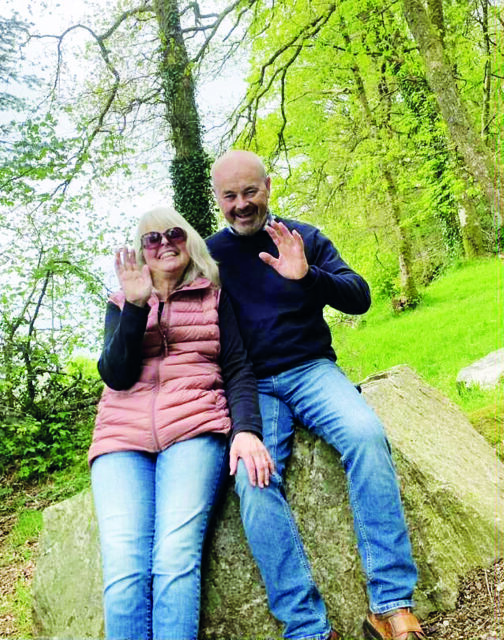
While the move was made largely for lifestyle reasons they wanted a quieter way of life and a more traditional upbringing for their children – having a large house and five acres of land also meant they could fulfil Lucy’s dream of owning a horse. “My mum had always had ponies and we promised we’d get Lucy one when we arrived,” says Jane.
When they got there, qualified builder Ken soon started his own business, while Jane worked on the house when she could. They also acquired two milking goats and later investigated creating a cheese-making business. “I learned to make cheese, and began tackling the legislation involved in starting the business, but it proved harder and more expensive than we’d thought. In the end we had to abandon the idea.”
Then, in 2012, the family acquired a rather different type of animal. “We saw two llamas for sale. They’ve always fascinated me, and we decided we’d buy them – almost on a whim. Initially they were just for pleasure and for walks with family and friends.
“In 2021, we decided to purchase some alpacas – three at first, as they are herd animals. Shortly afterwards, a local man got in touch to say he was retiring and wanted to sell his own flock of alpacas. There aren’t many people keeping alpacas in this area, so he’d been pointed in our direction.
“We said yes, as they are such lovely, tranquil animals,” says Jane. “They give out such a peaceful energy.”
The couple came to love their animals so much, they felt it was only right to share them with more people: “We decided to open things up so people can come and visit, and enjoy a bit of tea and cake when they do!” Bisou d’Alpaga opened in 2023.
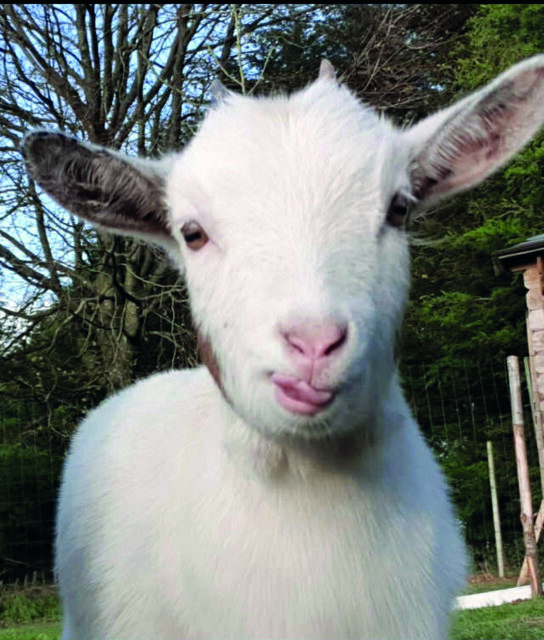
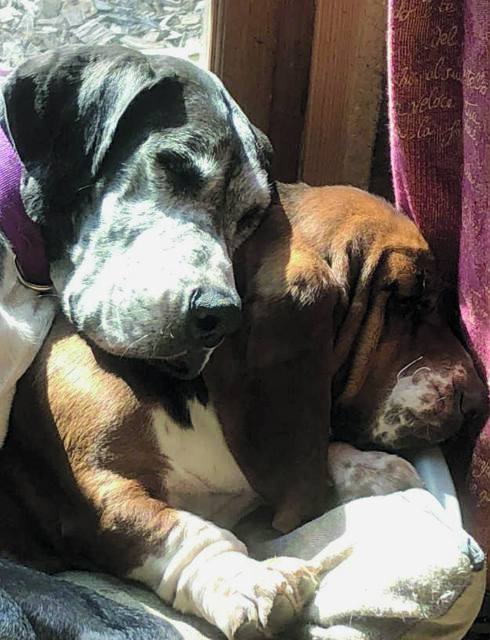
As well as their nine alpacas and four llamas, the pair also have four pygmy goats, a cat, a Great Dane and a Basset-and lots of time is spent each day caring for them. “To actually keep the alpacas in good condition, including feeding them and cleaning their field, takes two to three hours each morning and another two at night,” says Ken.
The business is continuing to evolve and the couple are looking into different ways to support the local community. “We get a lot of enquiries from nursing homes, and we’re looking at getting disabled access organised so that we can cater for everyone. We’ve had some children’s parties here and also get a lot of enquiries from schools.”
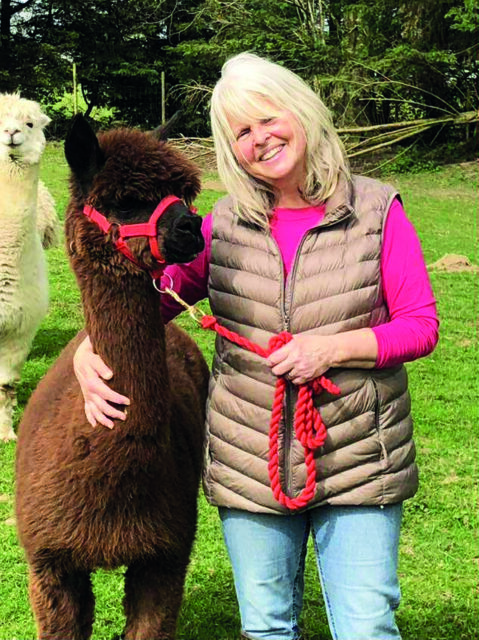
Jane also makes hats and scarves, which she knits from alpaca wool, to sell at Christmas markets as the business is closed for a period over the winter.
While it may not have been their initial plan to keep a herd of alpacas, the couple are more than content with their choice.
“We’ve realised our dream. Many people who visit say how much they’d love to do it. It’s such an escape, so tranquil, no passing traffic, no urban noise. It’s great being able to give people this experience.”
OUR CHÂTEAU HOME HAS PLENTY OF ROOM
Andrew and Sunita McDonald, Haute-Garonne, Occitanie
When Andrew, 45, and Sunita McDonald, 42, moved to France with their three children – Josh, now 13, Austyn, 11, and Annalise, eight – things didn’t quite go as planned. “We’d been looking at properties close to the Spanish border for over a year and bought a run-down château close to Toulouse in 2019,” says Sunita. “We had builders in to make it more liveable, but were not yet ready to move. However, we came for a short holiday in March 2020 and got locked down!”
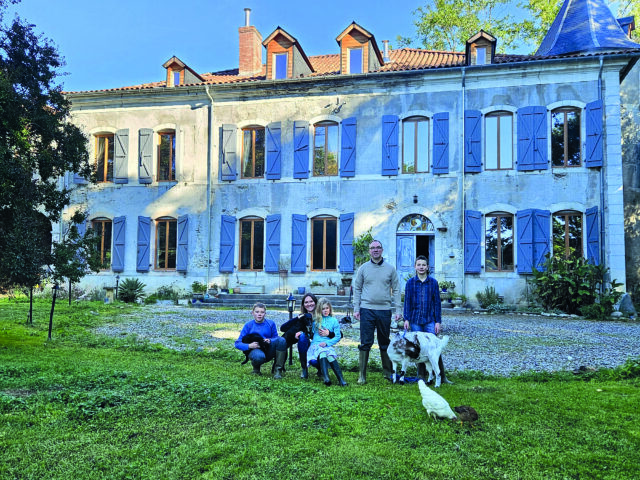
With only a week’s worth of clothing each and a house that wasn’t yet complete, Sunita and the children made do with camping equipment as Andrew, a key worker, travelled to and from the UK. The family cat was still at their house in the UK, but luckily a friend house-sat and looked after her, until Andrew was able to drive over with her in June.
Missing their cat, the family began to put food out for a wild tomcat they’d seen in the driveway. Until, there was a surprise. “Andrew called me and said, ‘You know the cat? It’s female, not male’,” says Sunita. “How do you know?” I asked. “”Come and see’, he replied.”
The builders had discovered two kittens under a floorboard, being cared for by their mother. Five more followed a few months later. “We wanted to get the cat spayed, but could never catch her,” said Sunita.
Since that time, the family has become used to seeing lots of furry felines. “I also acquired a kitten who fell pregnant before I could get her sterilised,” says Sunita. “She had six! It was a bit of a shock. But the château is so big, it doesn’t feel like too many.”
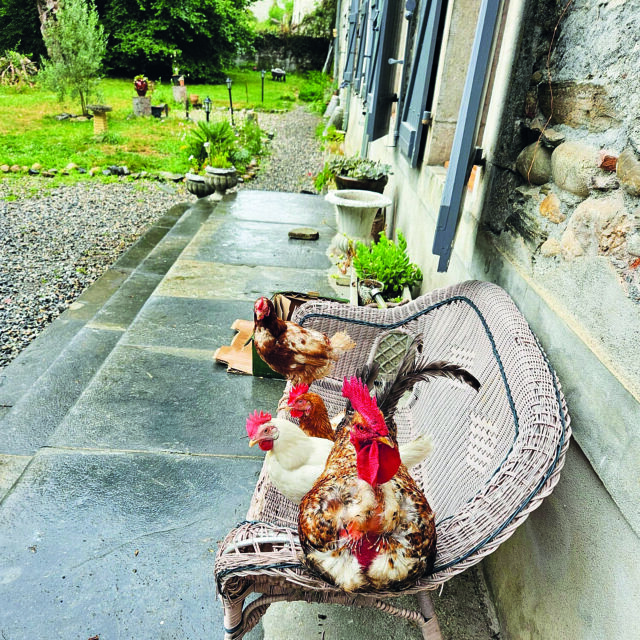
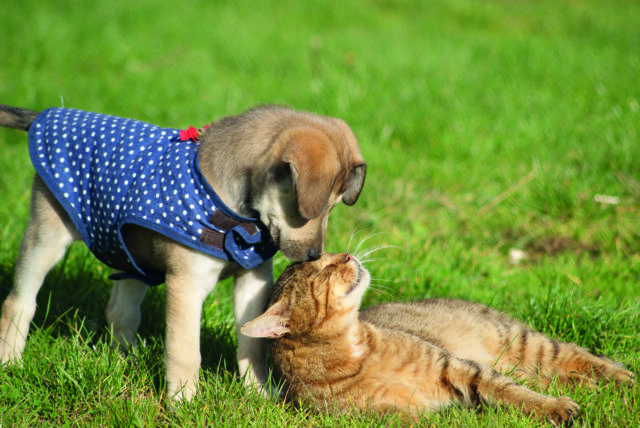
Over time, the family have further increased the headcount with a rescue puppy and now rehome ex-battery hens too. They also recently acquired a goat, quite by chance. “When you have space, people offer you animals,” says Sunita. “But he’s been quite good, eating the brambles on the land.”
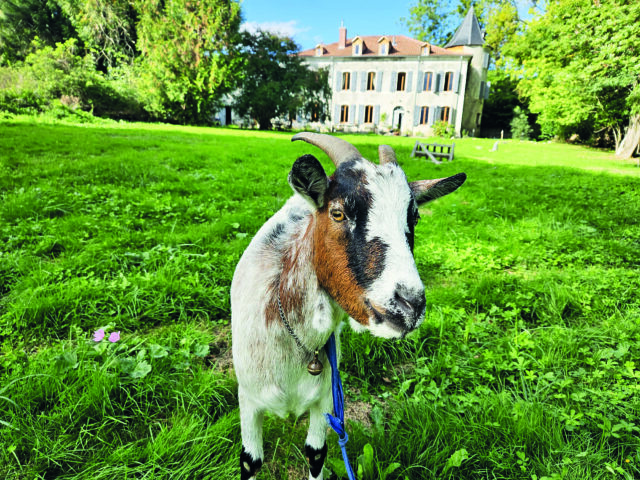
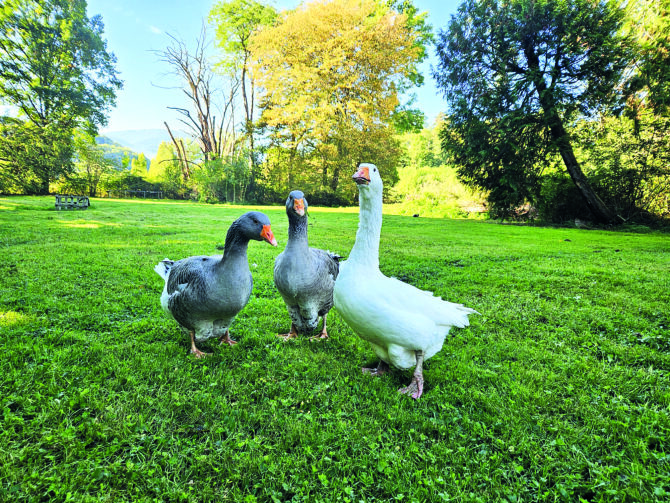
In fact, all the animals on site have a role to play. “Cats keep the mice at bay and the dog protects the home. The goat eats the brambles and the chickens lay eggs. We also have some geese now and they guard the chickens from foxes and other predators.”
While their youngest, Annalise, would love to add a horse or pony to the family’s menagerie, for the time being mum is drawing the line. “It’s so much work. She’s been asking for the past three years but I’d prefer to take her horse riding somewhere else.”
Growing up with animals has had a beneficial effect on the children. “It’s lovely raising the kids with animals. They learn so much from it. They have their chores, they have to feed the animals, put out clean cat litter. If they do something wrong they clean the chicken house! I think it makes children more compassionate, and they learn responsibility from caring for animals.”
WE MOVED FOR THE HORSES!
Lauren Quiblier, Deux-Sèvres, Nouvelle-Aquitaine
In 2002, when Lauren Quiblier’s parents decided to move to France, one of the main draws was the fact they’d be able to own horses. Aged just 12 when her parents Kate, now 56, and Roly, now 63, opted to emigrate, Lauren has no doubt that the move was life changing.
“We lived in a house in High Wycombe, but my parents wanted more space. At the time, all I wanted was a little pony of my own – which wasn’t possible in the UK at all as it would have been far too expensive,” she explains.
The family eventually settled in a farmhouse in the Vienne near Poitiers that came with five hectares of land. They acquired their first horse almost immediately.
“We were always animal people. In the UK, we had geckos, a dog and a cat, although only the dog came to France with us,” says Lauren.
“But once we were here, we never looked back.” The family currently have five horses, a Shetland pony, 10 chickens, a cockerel, two dogs and several cats that live in the barn some of which are feral.
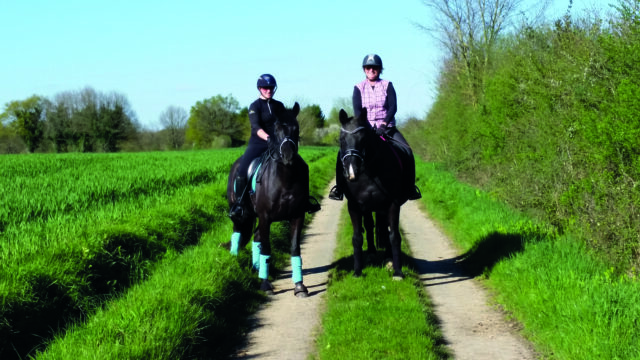
Still, the family’s main focus has been the horses. To be able to ride as much as she wanted has been life changing for Lauren, now 34. “I’ve competed at dressage to a decent level in France. I’ve had opportunities to travel to big competitions, grooming for a friend who’s an international dressage rider. In the UK, I never had the chance to compete as it wasn’t affordable. Here, because the horses are at home, there are many more opportunities. I also have three competition horses, which is unheard of for an amateur rider in England.”
While it’s afforded a lot of opportunities, having so many animals also comes with a great deal of time-consuming responsibility. While Lauren has now married and moved out of the family home, she still works with her parents to look after the horses every day. “Each day, I get up and feed my own dogs and cats, then spend an hour feeding the horses,” she says. “Doing groundwork and potentially riding takes another three to four hours. My parents do the evening at present, which is another good hour.”
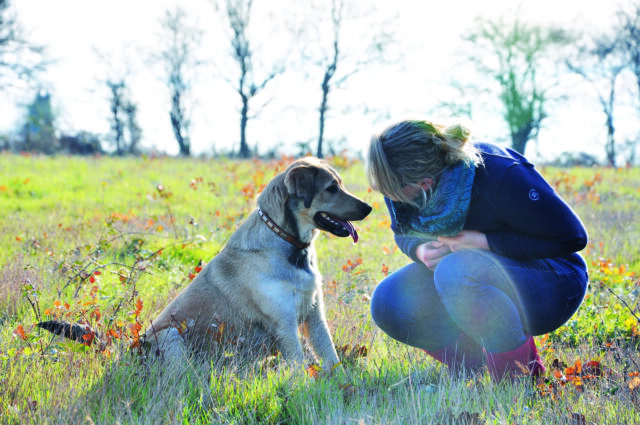
Lauren also juggles caring for the horses with her business as a distributor for a high-end horse supplement, and caring for her young baby, Scarlett. She and her husband Florian, 34, have also bought a house and are currently renovating it with a view to taking over the horses in the coming years.
Roly, Lauren’s father, who commuted to the UK for work as a structural engineer for many years, has now retired due to ill health. Her mother, who formerly worked locally in hospitality, has started her own horse-related business, washing and repairing horse rugs for local owners.
“The downside of having horses is that you can’t go on holiday or travel easily. But my parents are getting to the point where they might want to slow down and go on holiday more. The place Florian and I have bought has three hectares of land and will be perfect for the horses. And I’m looking forward to many years of riding in the future!”
Looking for more like this?
Every issue of French Property News delivers in-depth regional buying guides, sound and trusted advice from leading experts, inspirational real life stories, renovation tales and lots of lovely properties to browse.

Share to: Facebook Twitter LinkedIn Email
More in living in france, real life
Related Articles
Leave a reply
Your email address will not be published. Required fields are marked *