
The Census in France: How Often it Happens and What You Need to Know
Expert FAQs
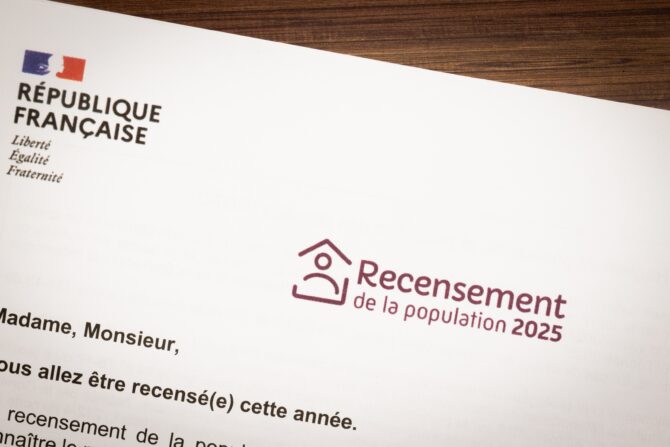
France runs a census every year, but it does not contact every household annually. Instead, it uses a rolling system where different areas (and, in larger towns, different addresses) are included on a rota. That is why you may hear about the census one year but not be contacted until a later year.
How often does the census happen?
The census takes place annually, but the method depends on the size of the commune.
In smaller communes (under 10,000 residents), the entire commune is counted once every five years. Each year, roughly one fifth of these smaller communes take part.
In larger communes (10,000 residents and over), census work happens every year, but only a sample of addresses is contacted in any one year (roughly around 8% of homes). This keeps population figures updated without needing to contact everyone annually.
When does it take place?
In practice, the census is carried out during a set campaign period early in the year (often across January and February), with exact dates and local communications handled through your mairie.
What is the census for?
The census is used to produce official population figures and to understand how people live in different parts of France. The results help guide local planning and funding, including services such as schools, transport, healthcare provision and housing needs.
What information does it ask for?
The questions are usually split into two parts: details about the home, and details about the people who normally live there.
Home questions are typically straightforward. They may include whether the property is a main home, second home or unoccupied, plus basic information such as the type of accommodation (house or flat) and simple characteristics like the number of rooms.
People questions focus on who normally lives in the household and broad background details such as age, work, education, commuting and household set-up (for example whether people live alone, as a couple, or as a family). The wording can vary, but it stays within these practical categories. Some questions may be optional and clearly marked as such.
Who needs to respond?
If you live in France at your main home and your address is selected that year, you are expected to complete the census. It is treated as an official request.
If you are only in France short term (for example on holiday or on a brief work trip), you are usually counted at your usual home rather than where you happen to be staying temporarily.
If you have a second home in France
A good rule of thumb is that people are counted where they normally live, at their main home.
If you own a second home in France, you are generally not “counted” there in the same way as you are at your main home. If contact is made about a second home, the focus is typically on recording the dwelling correctly as a second home and confirming basic property details, rather than completing full resident information as if it were your main address.
If you rent out your property, or it is empty
If you rent the property out on a long-term tenancy, the tenants normally complete the census household information, because the census counts where people actually live as their main home.
If the property is empty, it can be recorded as unoccupied. In that situation, the questions tend to focus on confirming the status of the dwelling rather than listing residents.
How the process works in practice
Most people are contacted locally and may receive information through their commune, followed by a visit from a census officer appointed by the town hall. A genuine census officer should be able to show an official ID card. If you are unsure, you can check by contacting the mairie.
Replying may be done online using access codes, or on paper depending on what is offered locally. The census is free. If anyone asks for payment or for bank details, treat that as a warning sign.
A quick “what should I do?” guide
- Main home in France selected: complete the home details and the details for everyone who normally lives there (adults and children).
- Second home: be ready to confirm it is a second home and provide basic property details if asked.
- Property let to tenants: the tenants normally complete the census, as they are the usual residents.
- Empty property: confirm it is unoccupied if contacted.
- Short stay in France: you are usually counted at your usual home, not your temporary address.
Useful French terms
- Recensement (de la population): census
- Mairie: town hall
- Agent recenseur: census officer
- Résidence principale: main home
- Résidence secondaire: second home
- Logement vacant: unoccupied/empty home
Looking for more like this?
Every issue of French Property News delivers in-depth regional buying guides, sound and trusted advice from leading experts, inspirational real life stories, renovation tales and lots of lovely properties to browse.

Lead photo credit : Shutterstock
Share to: Facebook Twitter LinkedIn Email
More in Census
Related Articles



Leave a reply
Your email address will not be published. Required fields are marked *