
What to do if you are stopped by the gendarmes while driving in France
Advice
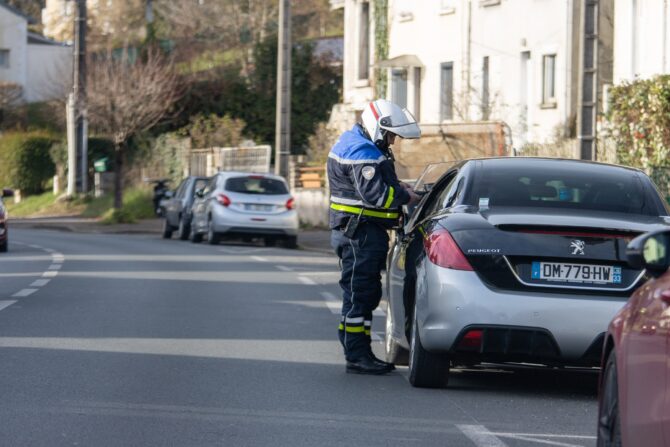
Being waved over by the gendarmes is one of those “heart sinks” of driving in France, especially if your French is rusty or you are in a UK-registered car. The reality is usually much less dramatic than it feels. Roadside checks are routine, the rules are quite clear and, provided you stay calm and organised, most stops are over in a few minutes.
We take a look at what actually happens, what you must carry in the car, how on-the-spot fines work and how French speed cameras catch you.
1. Being stopped: do they need a reason?
French police and gendarmes are allowed to stop drivers at random to check documents, vehicle condition, alcohol or drugs, and compliance with the Code de la route. They do not need to suspect you personally of anything in order to flag you down.
You will see them:
- At the side of the road or on a roundabout
- Around toll booths
- At organised checkpoints, often with cones and signs
- Sometimes hidden, monitoring speed or seatbelts, then pulling vehicles over further on
If you are signalled to stop, you must comply. It does not mean you have done anything terrible. Often they are simply checking a batch of vehicles.
2. How to pull over and behave
When you see a baton, a hand signal or a flashing sign telling you to stop:
- Slow down smoothly and indicate, so they can see you are cooperating.
- Pull over where directed, or, if they are behind you, find the nearest safe place on the verge or slip road.
- Handbrake on, engine off, hazard lights if appropriate.
- Stay in the car unless they clearly ask you to get out.
- Keep your hands visible, usually on the wheel, and wait for the officer to come to you.
Be polite, keep your voice calm and avoid sudden movements. If you do not understand something, it is fine to say:
“Je suis désolé, je ne parle pas bien français. Est-ce que vous parlez un peu anglais, s’il vous plaît ?”
Many officers have at least basic English, especially in areas with lots of foreign drivers.
3. Documents you must carry in France
At a roadside check you are expected to be able to show:
- Driving licence
A valid licence that covers the category of vehicle you are driving. For residents this will often be a French licence, for visitors their home country’s licence.
- Vehicle registration document
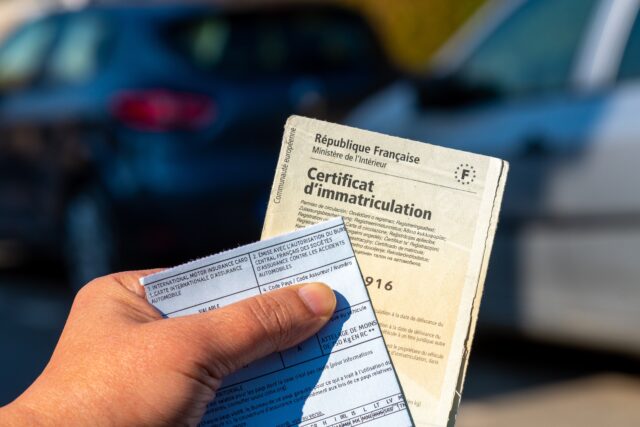
The carte grise (certificat d’immatriculation), or the V5C / VE103 equivalent if you are in a UK-registered or hire car.
- Proof of insurance
An attestation d’assurance or motor insurance certificate. In the past you had to display a green insurance sticker in the windscreen; since April 2024 checks are done electronically using your number plate.
You are also required in France to have:
- At least one high-visibility vest in the cabin
- A warning triangle in the vehicle
Photocopies and phone photos are not always accepted, so keep the real documents in the car, ideally in a simple folder you can reach easily.
If you forget something, you can be fined, and may be told to present the documents later at a police station. The fine for not producing papers is usually modest compared with more serious offences, but it is still an avoidable annoyance.
4. On-the-spot fines and how they work
For many routine traffic offences the gendarmes can issue a fixed penalty fine (amende forfaitaire), including most speeding offences, using a phone while driving, not wearing a seatbelt or failing to respect a stop sign.
Key points:
Speeding fines depend on how far over the limit you are, and where. For example, smaller excesses are often €68 on roads where the limit is above 50 km/h, but €135 in built-up areas or where the limit is 50 km/h or less. For larger excesses (20 to 49 km/h over), the fixed fine is typically €135. Since 29 December 2025, driving 50 km/h or more over the limit is a criminal offence (délit), not a standard fixed penalty contravention. The law sets penalties of up to 3 months in prison and €3,750, with further measures possible (for example licence suspension and vehicle confiscation) depending on the case.
Paying early usually reduces the bill, paying late increases it. A 4th class fixed fine (often €135) is commonly reduced to €90 if paid within the reduced period, and can be increased to €375 if you miss the standard deadline.
Foreign drivers may be asked to pay immediately or leave a deposit (consignation). If you cannot pay, your vehicle can be kept until the deposit is paid, and can be impounded if you do not pay it.
Challenging a fine: in many cases you will need to use the official contestation process and may have to pay a deposit first. Paying the fine can block your ability to contest it.
5. How speed cameras and roadside checks catch you
French enforcement is a mix of cameras and human checks.
Fixed and mobile cameras
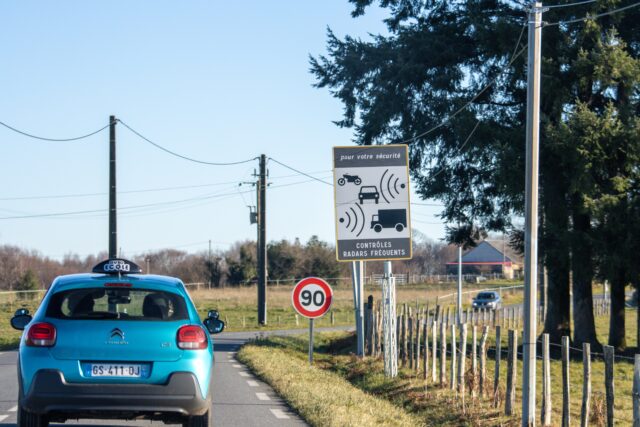
- Fixed cameras sit by the roadside, on gantries or at traffic lights. They read your speed and number plate and, if you are over the limit, generate a fine that arrives by post. You will be sent your notice and fine within 15 days, although this can sometimes take up to a month or longer.
- Mobile cameras can be in marked or unmarked cars or set up temporarily on tripods. They may be visible or completely hidden. If you are caught by a police roadside check, the police will show you evidence of your offence, and have the authority to require you to pay a fine immediately. This can usually be paid by credit card, cash, or cheque.
- There is an allowance for measurement error, but it is small, so do not count on it to “save” you.
Fine notices often reach foreign drivers too, thanks to cooperation between countries and rental companies. In other words, do not assume a French camera cannot find you just because your car is registered elsewhere.
Speed camera detectors and jammers are illegal in France and can be confiscated if found. Legal navigation apps use general ‘danger zone’ warnings rather than precise camera locations.
6. If there is a problem
If the officers find an issue, they will explain what is wrong and what happens next. Typical scenarios:
- Minor issue, no fine
- Paperwork missing
Small fine, and you may be told to present documents later.
- Offence detected
You will be told the nature of the offence and the amount of the fine. For foreign drivers, they may ask for payment or a deposit immediately.
- Serious offence
Very high speed, drink or drug driving, no insurance, or obviously dangerous behaviour can lead to licence issues, vehicle seizure or prosecution. That is rare for careful, sober drivers but it is worth knowing it exists.
Stay calm, listen carefully and ask politely if you do not understand:
“Pouvez-vous répéter lentement, s’il vous plaît ?” – “Could you repeat slowly, please?”
“Est-ce que vous pouvez l’écrire, s’il vous plaît ?” – “Could you write it down, please?”
7. Keeping it stress free
For most property owners and regular drivers in France, a roadside stop becomes just another minor part of life, like a boiler check or a tax bill. You can keep the stress level down by:
- Keeping a small “controle routier” folder in the glovebox with licence copy, carte grise and insurance certificate
- Checking that your high-vis vest and triangle are present and accessible
- Respecting limits, especially near villages, schools and roadworks
If your car is in good order, your paperwork is in the glovebox and you keep your temper and your manners, most encounters with the gendarmes are brief, businesslike and quickly forgotten.
Looking for more like this?
Every issue of French Property News delivers in-depth regional buying guides, sound and trusted advice from leading experts, inspirational real life stories, renovation tales and lots of lovely properties to browse.

Lead photo credit : Shutterstock
Share to: Facebook Twitter LinkedIn Email
Related Articles



Leave a reply
Your email address will not be published. Required fields are marked *
REPLY
REPLY