
What impact can exchange rates have on your property purchase in France?
Expert FAQs

What impact can exchange rates have on your property purchase in France? Mar Bonnin Palmer explains…
Buying a property in France is a dream for many, whether it’s a rustic farmhouse in the Dordogne, a chic apartment in Paris or a sun-drenched villa on the Côte d’Azur. But while the allure of French living is undeniable, one crucial factor often overlooked by international buyers is the impact of exchange rates on the final cost of their purchase.
When buying in a foreign currency, even small fluctuations in the exchange rate can significantly affect your budget. This article explores why exchange rates matter, how they can change during the property-buying process, and what tools are available to help you manage this risk effectively.
WHY EXCHANGE RATES MATTER
All property transactions in France are conducted in euros. For buyers holding funds in another currency – such as British pounds or US dollars -this means the real cost of the property is directly tied to the exchange rate at the time of transfer. Let’s say you’re purchasing a property valued at €300,000. If the GBP/EUR exchange rate is 1.21, the cost in pounds would be approximately £247,933. But if the rate drops to 1.14 by the time you complete the purchase, the same property will cost you £263,157 – an increase of over £15,000 due to currency movement alone. This is not a hypothetical scenario. Since January 2025, the GBP/EUR rate has fluctuated between 1.1444 and 1.2133.
It’s wise to start thinking about currency exchange early. Many buyers fall in love with a property on their first visit and want to move quickly. Having an FX account already set up means you’re ready to act without delay. Moreover, understanding how exchange rates work will help you make informed decisions. For example, if you know your budget in pounds, you can calculate how much that equates to in euros at different rates and how much wiggle room you have if the rate shifts. As we just discovered, there can be a substantial amount at stake enough to cover notary fees, legal costs or a renovation project. By using a forward contract, you could have locked in the original rate and avoided this unexpected expense.
TIMING AND VOLATILITY: A RISKY COMBINATION
The average property transaction in France takes around three months from offer to completion. During this time, the exchange rate can shift dramatically. The rate you saw when your offer was accepted is unlikely to be the same when you sign the final deed (acte de vente). This volatility introduces a laver of financial uncertainty that can complicate budgeting and planning. For example, if you’ve budgeted based on a favourable rate, a sudden drop could leave you scrambling to cover the shortfall – or worse, force you to reconsider the purchase altogether.
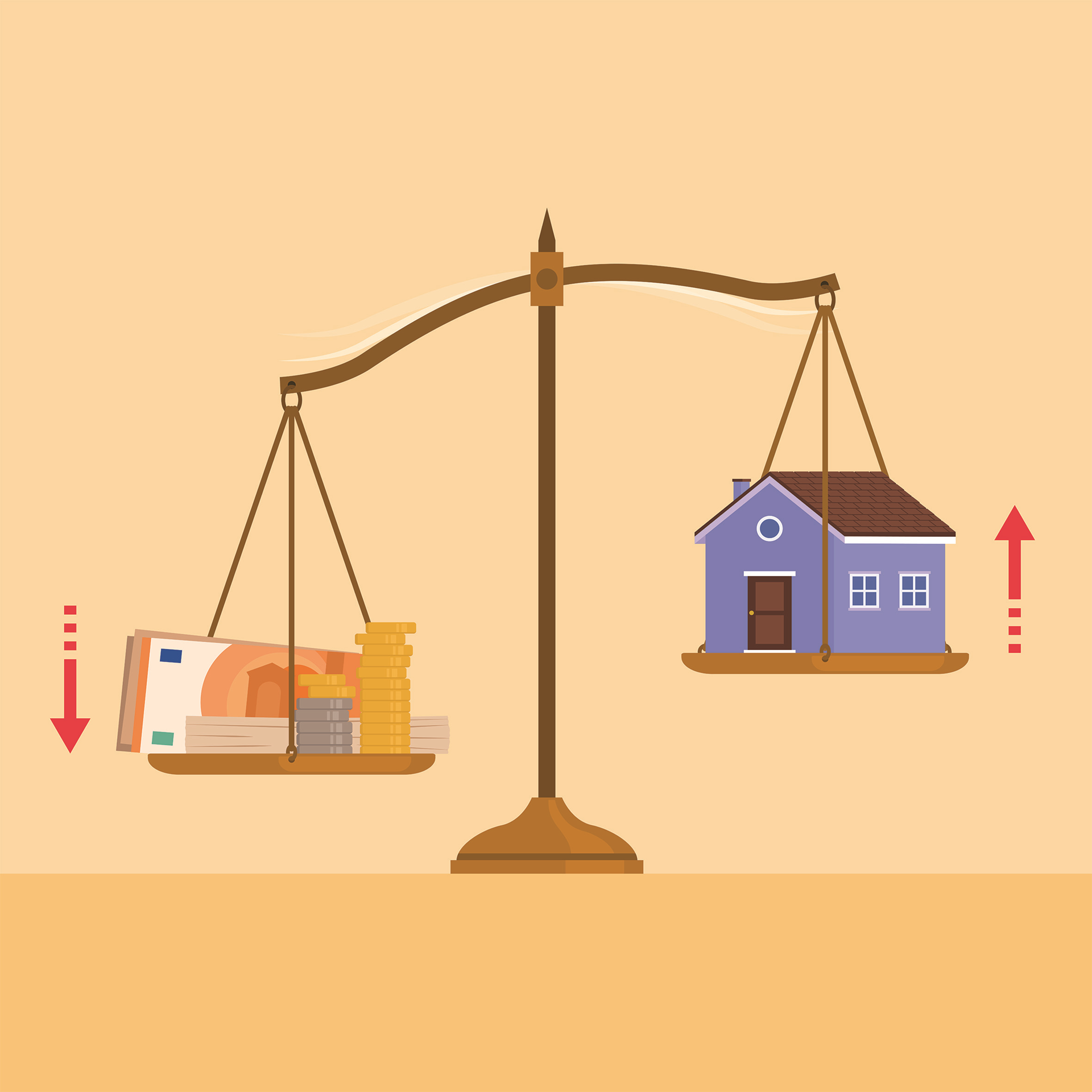
Photo: Shutterstock
WHAT MOVES EXCHANGE RATES?
Exchange rates are influenced by a wide range of factors, including:
- Interest rate decisions by central banks (e.g. the Bank of England or the European Central Bank)
- Economic indicators such as inflation, employment and GDP growth Political events, including elections, trade negotiations, or geopolitical tensions like the recent US tariff uncertainty
- Market sentiment and investor confidence.
Because these factors are often unpredictable, trying to ‘time the market’ is risky. Instead, buyers can use certain tools to manage the risk of currency volatility, rather than trying to outguess the market.
TOOLS TO MANAGE CURRENCY RISK
There are several tools and strategies available to help property buyers mitigate the impact of exchange rate fluctuations.
1. FORWARD CONTRACTS
A forward contract (which may require a deposit) allows you to lock in an exchange rate for a future date helping to mitigate the impact of exchange rate fluctuations. This means you can still make your transfer at today’s rate for the final payment, even if the market moves against you later.
The benefits include:
- Budget certainty
- Mitigate the impact of adverse movements
- Only a small deposit (often 10%) is required to lock in the rate
This is particularly useful in the French property market, where the time between signing the compromis de vente (preliminary contract) and the final acte de vente can span several months.
2. MARKET ORDERS
Market orders let you set a target exchange rate. If the market reaches that rate, your funds for your property purchase will be automatically exchanged. This is ideal if you’re optimistic about the rate improving but don’t want to monitor the market constantly.
You can also combine this with a stop-loss order, which sets a minimum acceptable rate to help you manage the risk of significant losses to your property budget if the market moves unfavourably.
3. REGULAR PAYMENT PLANS
If you plan to make ongoing payments such as mortgage instalments, maintenance costs or pension transfers – a regular payment plan can help you manage your exposure.
These plans can be automated and even fixed using forward contracts, giving you peace of mind and consistency.
WHY NOT JUST USE A BANK?
While high street banks can facilitate currency transfers, they often offer less competitive exchange rates and charge higher fees. In contrast, foreign exchange (FX) specialists typically provide:
- Access to competitive rates through multiple liquidity providers
- Personalised guidance and market insights
- A wider range of currency tools (e.g. forward contracts, market orders)
- No transfer fees
Opening an account with an FX specialist is free and can be done at any stage of your buying journey – even before you’ve found a property. This early step allows you to monitor rates, understand the real cost of your purchase, and set a realistic budget.
Buying a property in France is an exciting venture, but it’s also a significant financial commitment. Exchange rates are a critical part of the equation and ignoring them can lead to costly surprises. By understanding the risks and using the right currency tools, such as forward contracts and market orders, you can manage the risk of your investment and make the most of your money. Whether you’re just starting your property search or already have your eye on a dream home, it’s never too early to start planning your currency strategy. With the right preparation, you can navigate the French property market with confidence and clarity.
Why Moneycorp?
With a Platinum Trusted Service Award 2020 from independent review site Feefo and 40 years of experience in the industry, FrenchEntrée has been recommending Moneycorp for more than 15 years. During this time they have helped thousands of client planning the best way to pay for their property as well as supporting them afterwards with any further payment from paying bills, mortgages to repatriating UK pension payments for those who have retired to France.

Furthermore, we have worked with the same person at Moneycorp for more than a decade! You might be familiar with her as she often writes for our French Property News magazine. She has 13 years’ experience in foreign exchange, and is a qualified European lawyer with experience in European transactions. Mar will be happy to answer any questions or enquiries to support you through these difficult times
Opening an account is really easy and free of cost. You can register online or over the phone in a couple of minutes and for FrenchEntrée readers there are no transfer fees in any payment.

The unique mix of legal, financial and tax advice along with in-depth location guides, inspiring real life stories, the best properties on the market, entertaining regular pages and the latest property news and market reports makes French Property News magazine a must-buy publication for anyone serious about buying and owning a property in France.

Lead photo credit : Moneycorp staff portraits 2022. Pictured at the firms London based office by Jon Enoch.
Share to: Facebook Twitter LinkedIn Email
More in currency, exchange rate, moving to france
Related Articles




Leave a reply
Your email address will not be published. Required fields are marked *