Montcuq, Quercy: France’s Most Amusingly Named Village
Some place names might see us stifle a giggle – not least Montcuq in Quercy. Forget the jokes, though, it’s a beautiful village with a lot going for it, says Joanna Leggett…
Growing up in England, unusual town and village names weren’t uncommon, often raising a smile as we passed through places with evocative names like ‘Washaway’ in Cornwall. In France some place names are pure comedic gold. Condom in southwest France, also known as Condom-en-Armagnac, speaks for itself! This small town in the heart of Armagnac country is sited on the ancient pilgrimage Route de Compostela leading to Santiago in Spain. How it got its name is a convoluted story. Another classic is the Breton village Corps-Nud; who knows what you might glimpse as you pass through. In Moselle in eastern France there is a town called Bitche – its inhabitants called Bitchois – a name to live up to? Trécon in the Marne translates into English as ‘big idiot’. Seix in the Ariège doesn’t really match its name; it’s quite small although its inhabitants are called Seixoise. And let’s not forget the town named Anus in Burgundy, where the street signs keep getting stolen!
BUTT OF MANY JOKES
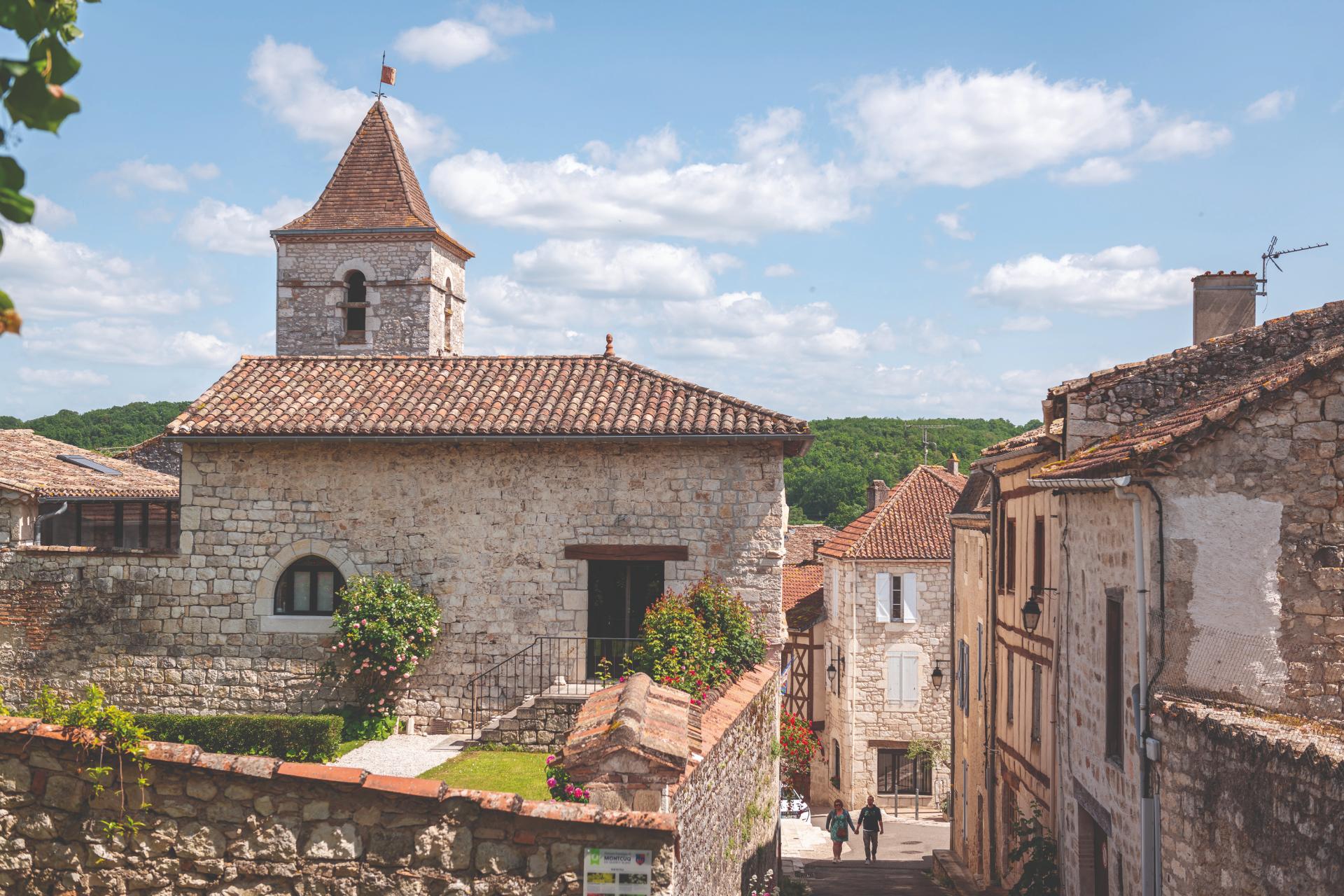
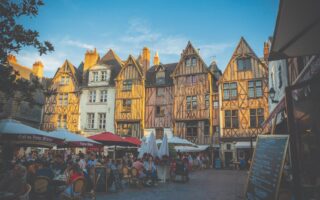
Dans les ruelles de Montcuq © Marion Carcel
Then there’s Montcuq in the beautiful region of Quercy (Lot). When its name is said with standard French pronunciation, it sounds as if you are calling the town mon cul, ‘my butt’ (the more accurate translation is slightly more vulgar). This lovely town achieved some notoriety back in the mid-1970s when a comedian on French TV pointed out that, when spoken aloud, Montcuq sounds exactly like mon culduring a ‘tasteful’ sketch in a comedy show called Le Petit Rapporteur. Emphasising this, he stood with his backside twitching next to the town’s sign in true Monty Python-esque style, something that has stuck in the collective memory. In fact, you can still find a link to this piece of TV history on YouTube.
However, the name Montcuq actually has its roots in the ancient Occitan language, which prevailed over this part of southwest France with its different emphasis on pronunciation. Its inhabitants are emphatic that the ‘q’ is pronounced as a ‘k’, clearly calling their hometown Mont-coooque. The name, it is said, could derive from the Latin Mont Circus Vallium, Mont Cuneus or montem cuci -‘cuckoo mountain’. Whatever its origins, it still sounds like mon cul. Either way, it’s absolutely charming!
Quercy itself is a rural delight boasting lovely countryside with some of the most attractive architecture in rural France. To me it has always seemed to be a name fit for a fairytale. To its west are the Périgord and Dordogne; Berry and Limousin mark its northern boundaries; Auvergne and Languedoc the eastern side with the Pyrenées to the south. It’s claimed that its white limestone houses are among the most elegant and graceful of all French country buildings with their external staircases, turrets and gables. Almost every era of history and invader seems to have left its mark on the region – as well as the local language. The name Quercy itself is thought to have derived from the Latin name for oak trees ‘quercus’, which carpet the hills and surrounding countryside.
A WONDERFUL LIFE
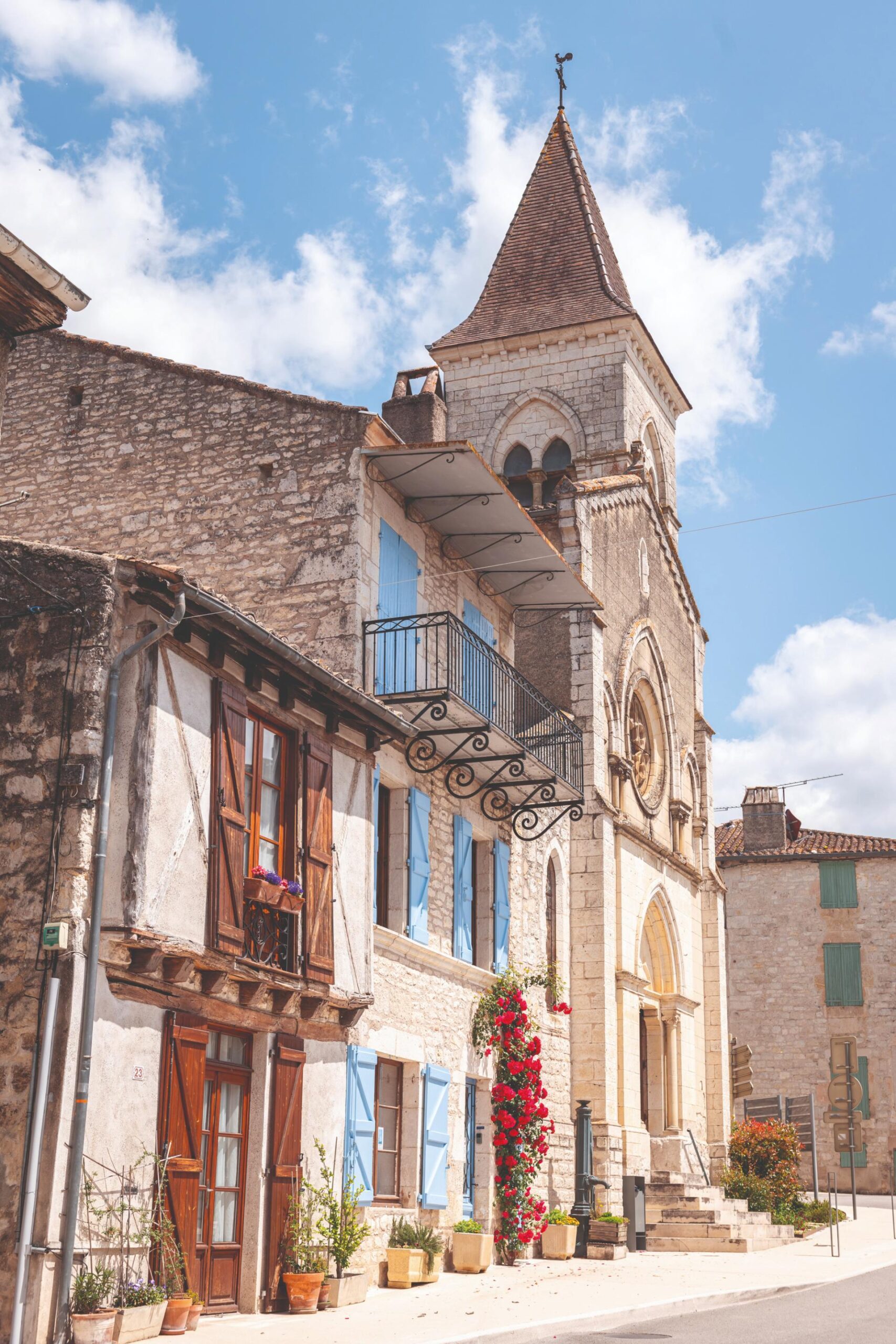
Découverte de Montcuq-en-Quercy © Marion Carcel
History abounds throughout with prehistoric dolmens, Roman villages and English bastides (this area was much fought over during the Hundred Years’ War). There are medieval castles, and every town and village has its own beautiful church, while remote caves and forests have provided perfect hiding places for refugees over the centuries.
It’s all set in some of the most stunning countryside with the wonderful climate of southwest France. The Lot and Dordogne rivers wind their upper reaches through the area – scenic and charming with wonderful local food and, importantly, wine. What a wonderful place to live!
Gorgeous towns and villages pepper the countryside, such as St-Cirq-Lapopie; half hidden among hills overlooking the River Lot, it’s listed as one of France’s most beautiful villages. Its steep, sloping medieval lanes are lined with colombage (half-timbered) houses, displaying Renaissance and Gothic details on their ancient façades. The Quercy capital is Cahors. Its approach is dominated by an impressive medieval bridge over the River Lot, adorned with three ancient towers. Redolent with history, in the old town you’ll find half-timbered houses, narrow alleyways and the cathedral, built in Gothic and Romanesque style with large domes and centuries-old frescoes.
Then there’s the local (and delicious) Cahors red wine. Was it the scenery or the wine that enticed Queen Margrethe and the Danish Royal Family to buy the Château de Cayx close to Luzech as their summer retreat? Dating back to medieval times, it was fortified in the 14th century and is well known for its wine, still in production. The château itself is not open to visitors although I believe it’s possible to visit its gardens in summer with their spectacular setting over the valleys and river… note to self: must include it on my garden tour list.
Rocamadour, famed for its amazing setting, clinging to the side of rocky cliffs in a gorge over a tributary of the Dordogne, has been a site of pilgrimage since the 12th century. Overlooking the river, it is located within the Causses du Quercy regional natural park, northeast of Cahors. The first time I visited here, we literally stopped in our tracks at the sight of a perfect double rainbow stretching from one side to the other of the rocky gorge walls, above the river far below – it was truly magical!
GREAT OUTDOORS
Causses du Quercy is at Lot’s unspoilt heart, a mecca for walkers, mountain bikers or horse riders, who come to explore the 1,000km plus of paths covering this vast terrain. Montcuq can be found to the west, in the region known as Quercy Blanc, 40km from Cahors. It’s a great base for all the delights this department has to offer, not least nearby Lauzerte, another on the list of Plus Beaux Villages de France. Despite its comedic name, Montcuq is much more than simply the butt of an old joke, this stunning village is incredibly beautiful.
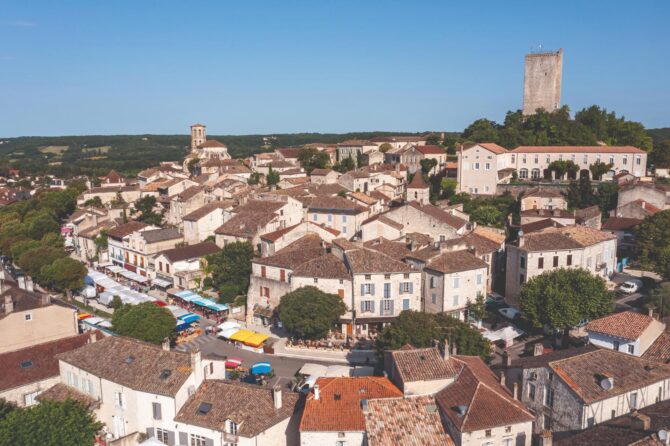
Dating back to medieval times, it’s dominated by an impressive 12th-century keep rising 24 metres high. It was built to protect the village and repel enemies – it must have been very handy during the Hundred Years’ War. The village developed around it, grew through centuries of markets, sieges, land grabs and, no doubt, the odd ecclesiastical dispute. Explore Montcuq on foot and you feel like you’re stepping back into more peaceful times – minus the slings and arrows of ancient conflicts of course. It’s one of those rare rural villages that seems able to retain a year-round buzz, with its weekly markets, restaurants, cafés, art galleries… the list of entertainments goes on. As well as being picturesque, it occupies the perfect location, in the centre of Quercy Blanc.
The area around Montcuq has its own rugged beauty: lovely villages, ancient towns, lots of open space, fewer people and cheaper property prices than its costlier neighbours. Summers are long here and winters are usually mild – you’ll be planning your summer garden from February. It has plenty of waterways too, on which you can take a boat and drift downstream, past castles, fortresses, waterfalls, natural wonders and rocky landscapes – stopping off to sample tasty food and the rich dark wines.
So forget all the jokes, add Montcuq to your househunting itinerary and step into your own fairytale.
Joanna Leggett is the Marketing Director at Leggett Immobilier – view the full portfolio of properties for sale in France at leggettfrance.com
The unique mix of legal, financial and tax advice along with in-depth location guides, inspiring real life stories, the best properties on the market, entertaining regular pages and the latest property news and market reports makes French Property News magazine a must-buy publication for anyone serious about buying and owning a property in France.

Lead photo credit : Vue drone du village de Montcuq © Lot Tourisme - Cyril Novello