
Côte d’Opale: French Property Location Guide
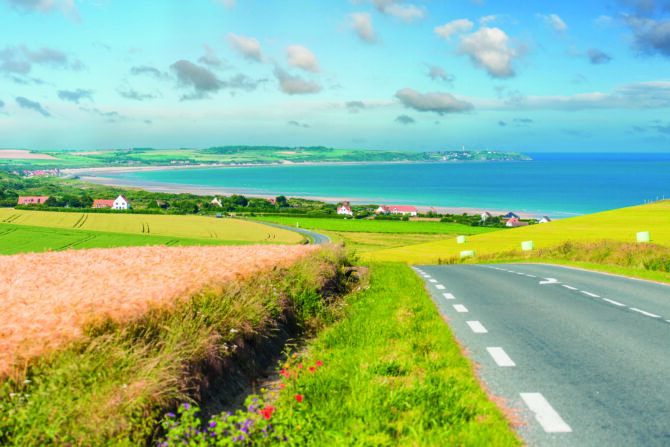
In search of a glittering coastline, packed with elegant resorts, Sarah Daly heads to the Côte d’Opale in Pas-de-Calais…
Every stretch of coast in France has an attractive and often evocative name. Originating in the late 19th century to attract tourists by means of the then new-fangled railway system, these still give a flavour of what to expect when you dip your toes in the water. The Côte d’Opale, or Opal Coast, is no exception: most of this shoreline faces west and, as you watch the sun begin to set in summer, you can pick out shimmering pinks, yellows and purples, while a moody winter seascape will offer opalescent greens, greys and blues.
Stretching from the Belgian border in the north to the Baie d’Authie in the south, the area is characterised by wide sandy beaches backed by acres of sand dunes and dotted with chic, elegant resorts. You’ll also find fishing ports, fabulous markets and interesting towns to explore. I must confess to bias: I moved here nearly seven years ago and have come to know and love this coast in all its many and various moods.
LET’S GO FLY A KITE
One of my favourite coastal towns is Berck-sur-Mer. Over the Easter period it’s home to a spectacular festival that draws competitors and crowds alike to its long, sandy beach to watch colourful kites perform aerial stunts in the spring breeze.
For a quieter experience though, the south end of the beach is famed for its grey seal population. A groyne allows you to walk out at low tide and admire these creatures as they bask on the sand banks. The town also houses a fascinating museum that brings alive the past of this whole coast and its inhabitants, from archaeological finds to the work of artists who were drawn to paint here from the 19th century (including Manet and Boudin). The sea air was believed to be so good for the health that many hospitals were built here over a century ago, often with rooms and balconies right on the beach. Some are still in use today, while others have been converted into luxury flats.
FISHING HERITAGE
Further along the coast, Étaples-sur-Mer centres around fishing. Known to Brits as ‘Eat Apples’ during the First World War, it was home to numerous hospitals behind the frontlines and now has a very moving military cemetery with more than 15,000 headstones. The town itself bustles. Its twice-weekly market was voted the best in France in 2021 and I can attest to the quality and variety of the produce on offer.
Along the waterfront, you can buy seafood direct from the boats on market days. or from two dedicated fish markets at other times. If you want to discover more about sea fishing, Maréis is the place to go. Its bilingual exhibitions explain what is caught and how it is sold and invite you onto the reconstructed bridge of a trawler. There’s even a chance to get up close and personal with rays and some of the other fish found along this coast. Exploring the Baie de Canche by boat tour from the quay nearby offers another perspective on the Opal Coast and its waterways.
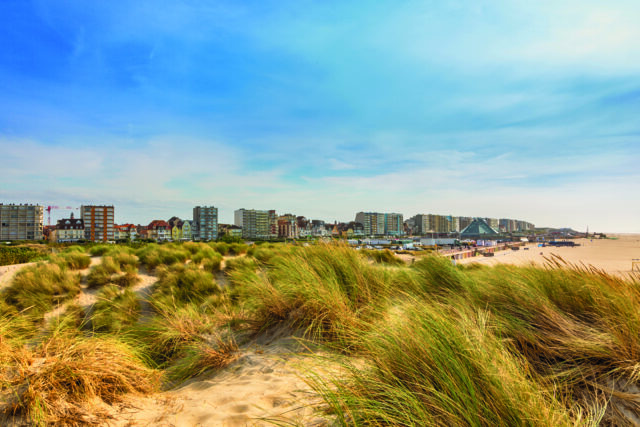
The best-known local seaside resort is, without a doubt, Le Touquet. Also known as Paris-Plage, this is very much a year-round playground for the well-heeled, but that doesn’t stop us mere mortals enjoying the beach, wandering the shopping streets or looking at the elegant homes tucked into its wooded hinterland.
JET-SETTERS
With its own airport, residents, second-home owners and tourists can jet in from Europe and a number of UK airports like Lyd, Southend and Biggin Hill. It’s also one of the few small airports in France to have permanent customs and immigration officials, making it a stop-off point for many aircraft en route elsewhere in France. Renamed recently as Aéroport International Le Touquet-Elizabeth II, it reinforces Le Touquet’s strong links with the UK. In 2024, the airport was bought by the town, which is breathing new life into it and planning to introduce commercial flights to the south.
We rented electric bikes here. You can easily follow La Vélomaritime north to Étaples or south to Berck, but instead we to headed into the town to explore. Le Touquet has a fascinating lighthouse, which is a surprisingly long way inland. We then passed the five-star Westminster Hotel. A meal here isn’t cheap but ordering a drink to watch the world go by from the terrace is a more affordable option.
FILM HISTORY
The hotel has seen hundreds of famous faces over the years, including Sean Connery, who famously signed the contract to play 007 here in the early 1960s.
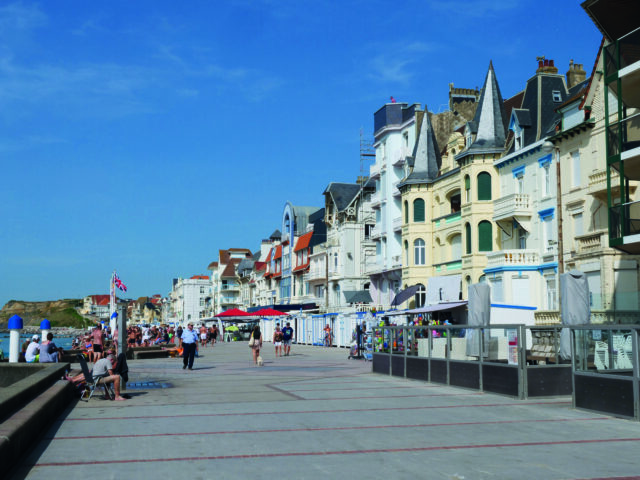
Ian Fleming was a regular at the hotel and he allegedly based Casino Royale on the town’s famous casino. North of the busy fishing port, bustling commercial area and historic city of Boulogne, is the elegant Belle Époque resort of Wimereux. Its colourful houses and the pretty blue and white beach huts along the town’s seafront give this town a very distinctive feel.
Like so much of this coast, Wimereux has strong links with England, which is visible on a clear day from its beach. Henry VIII stayed here during the first Siege of Boulogne in 1544 and the town’s Grand Hotel was home to the British Army Medical Corps hospital in 1916, when it was damaged by fire.
LOCAL KNOWLEDGE
New-Zealander Diana Hounslow has just retired after 38 years of working near Boulogne. She lives in Hardelot with her husband Jean-Paul. She says: “I was studying French at Newcastle University and imagined my year out would take me to the south of France. I ended up as an English assistant in a school in Calais, but I loved it straightaway.
People in this area are so easy to get on with and soon I was working in tourism, eventually becoming the director of Pas-de-Calais Tourism. “I’ve seen a huge number of changes and a real shift in attitude towards this coast since I started. This part of France was quite overlooked in the post-war rebuilding, but in the past few decades there has been a huge amount of investment in tourism and real political will to improve the towns and protect landscapes along the coast. Improvements are still happening and it makes it a very special place to be.”
Diana herself was instrumental in attracting substantial European funding. changing the area from somewhere that visitors pass through to a destination in its own right. She also set up a NYC-inspired system of “Greeters’ locals who befriend visitors, introducing them to the towns and villages in which they live. Hardelot was developed in the early 20th century by English architect John Whitley.
“He created the first golf course and the first tee was on a turret of his home, Château d’Hardelot in Condette,” Diana says. “He also planted hundreds of trees to stabilise the dunes and it gives the homes here a really distinctive feel. In summer the population is five times higher than winter, but the area has plenty of space for everybody.
“Jean-Paul and I recently bought fat bikes to make the most of the 15km-long beach, and horse-riding, sand-yachting and sea-walking are really popular. In the town itself, there are all sorts of activities and it feels very safe. Members of the royal family are also occasional visitors. “This is a small town, but it has everything we need and there’s a good motorway network connecting us to Paris, Belgium and Holland. Since 1 moved here, the preservation of the coast has increased dramatically with a lot of protection for nature.”
EXPERT OPINION
Julien Coutheillas owns Agence Hardelot estate agency (agence-hardelot.com) and has lived in the area for 15 years. He says: “You can really breathe here: we are surrounded by nature and it’s very peaceful. At the same time, we have three capital cities – Paris, London and Brussels -all within a couple of hours of this coast. People buy property here for the great quality of life and for that ease of access. Particularly since Covid, more people work remotely and it makes it viable to live, or spend a lot of time, here. The resorts used to be empty outside a few weeks in the summer, they’ve become year-round destinations.”
Property prices have risen steadily for the past 15 years, Julien tells me, making this a great place to invest. “If you want an immaculate home bordering the golf course in Hardelot, with an indoor pool, wine cellar and gym, you’re looking at over €2m, but prices vary widely along the coast. A detached three-bedroom house here in need of work could be €550,000, whereas a similar property a few miles inland would be €300,000.” If you want to buy in this area, Julien advises taking time to compare resorts, as each has its own identity, and to shop around in order not to buy too high.
As the climate warms and southern Europe becomes increasingly unbearable in high summer, this coast is gaining in popularity, with holidaymakers and property buyers looking for a more temperate and balanced way of life. Rarely freezing in winter and often escaping the worst of the heatwaves, it’s a beautiful place to live.
While the original 19th-century railway connecting its seaside towns disappeared a long time ago, much of this coast is still accessible by train. It retains the beauty and charm that first attracted visitors all those years ago.
Find out more about the Opal Coast visitpasdecalais.com
The unique mix of legal, financial and tax advice along with in-depth location guides, inspiring real life stories, the best properties on the market, entertaining regular pages and the latest property news and market reports makes French Property News magazine a must-buy publication for anyone serious about buying and owning a property in France.

Lead photo credit : Shutterstock
Share to: Facebook Twitter LinkedIn Email
More in Côte d’Opale, Nord, pas-de-calais
Related Articles

By Sarah Daly
Leave a reply
Your email address will not be published. Required fields are marked *