Paris: French Property Location Guide
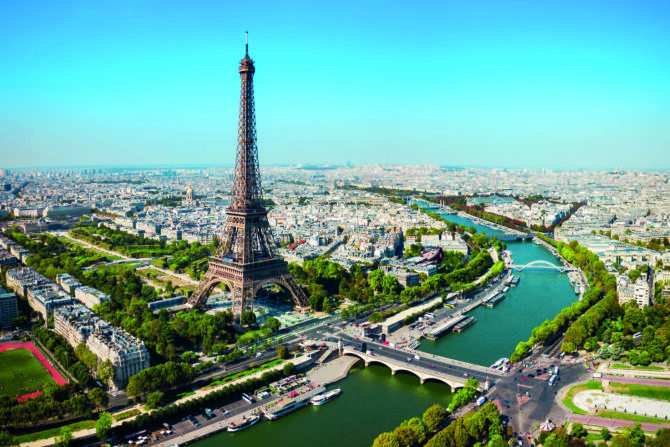
Famous throughout the world as the ‘City of Light’, a cultural centre and the home of high fashion, Paris is also a consistently good bet for property investment, as Annaliza Davis explains.
It has been said there is France, and then there is Paris; indeed, the city is so different from the rest of the country that it is often treated separately when it comes to statistics on population, property prices and incomes, and national averages generally don’t apply here. Paris exists almost like a country in its own right, with a core population of 2.05 million in the city itself, and a Greater Paris Metropolis encompassing 13.2 million.
It’s a dynamic city whose residents are generally younger than the rest of France, with nearly 40% of the population aged 15 to 39 and a further 19.5% aged 40 to 54. It’s also highly diverse, as around 20% of residents are first-generation immigrants and 40% of Parisian children are of mixed heritage. It draws people from all countries, and “is the most extraordinary place in the world”, as Charles Dickens once said.
As the city is so vast, it’s no surprise that it has divided itself into various administrative districts or ‘arrondissements’ that spiral out clockwise from the centre. The first were established in 1795 and there are now 20 such districts, each with its own town hall and mayor rather like separate towns with distinct characters.
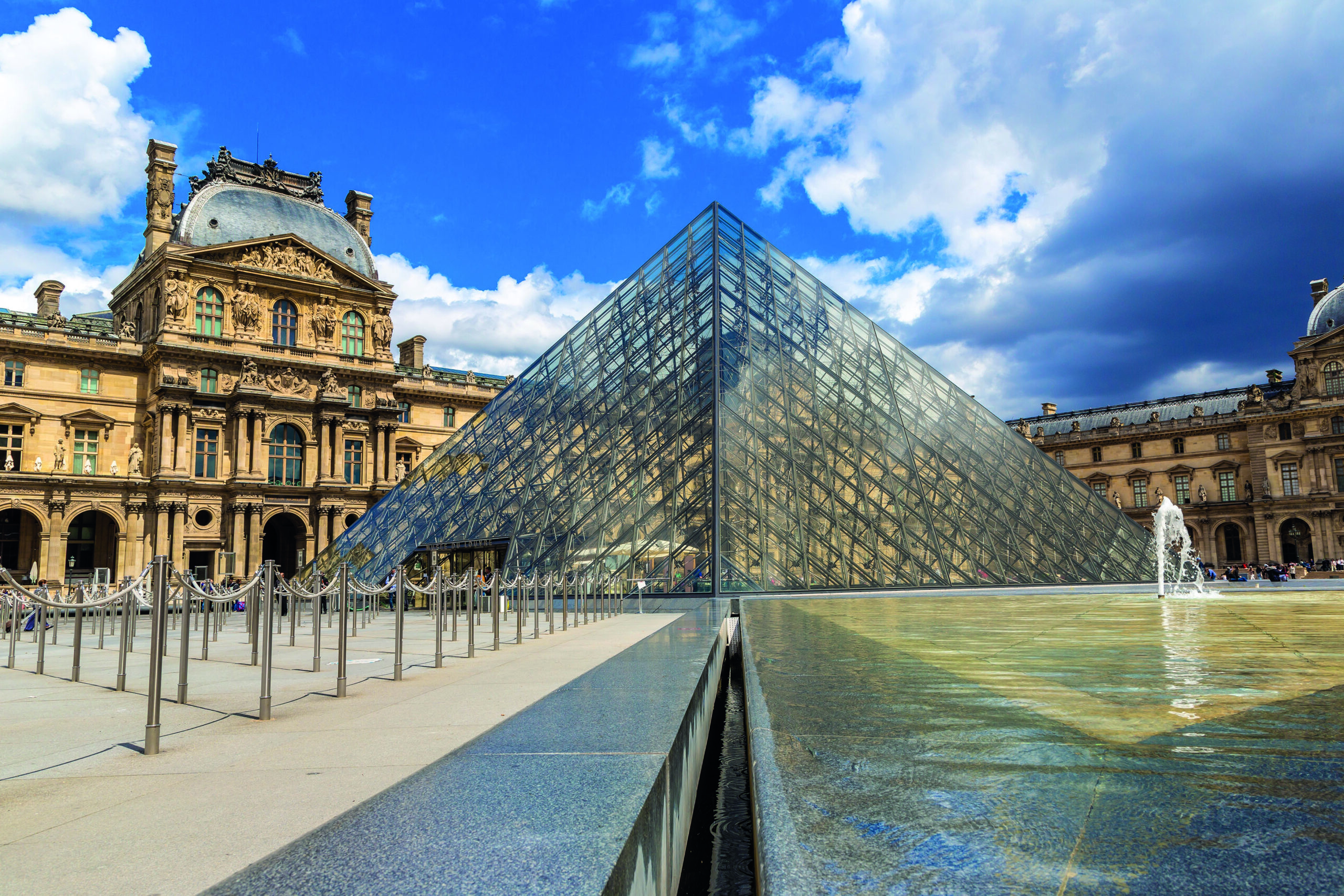
The iconic Louvre is on the Right Bank of the Seine in the 1st arrondissement
Match the place to your pocket
In 2026, Paris properties cost an average of €10,450 per square metre, but it can vary hugely depending on location, from €7,800/m2 in the 19th or 20th arrondissement to over €16,400/m2 in the ultra-prestigious 6th arrondissement. Even within the same street, prices uctuate according to the floor level, property condition and natural light. The most affordable home still costs a premium when you consider that across the rest of France (if you exclude Paris), propertie cost an average of €2,700/m2.
To buy, apartment prices average €9,628/m2 and houses are more expensive still at €13,291/m2, yet the monthly rental income is higher on apartments (€29.1/m2) than houses (€26.5/m2). High-end properties in sought-after areas can sell within 48 hours, so it’s best to be fully informed as whatever your budget, you will have to act quickly.

Amazing food, Paris Michelin star restaurant
Food and drink
Paris has a high concentration of Michelin-starred restaurants and gourmet experiences, amid countless tourist-trap eateries, and although there is no iconic Parisian dish, there are certain classics worth sampling.
Croque monsieur is a cheese-and-ham toastie boosted by béchamel sauce, and is one exception to the French disdain for sliced bread, a perfect snack for Parisian shopping, as is poulet frites (chicken and chips) or hachis parmentier, the French equivalent to shepherd’s pie – all classics that can be elevated to greatness in the right hands.
As for sweet treats, macarons have the understated elegance that typifies Paris, while le baba au rhum (rum baba) was created here by Nicolas Stohrer, and his pâtisserie from 1730 still off ers both the original and updated versions on rue Montorgueil (2nd arrondissement).
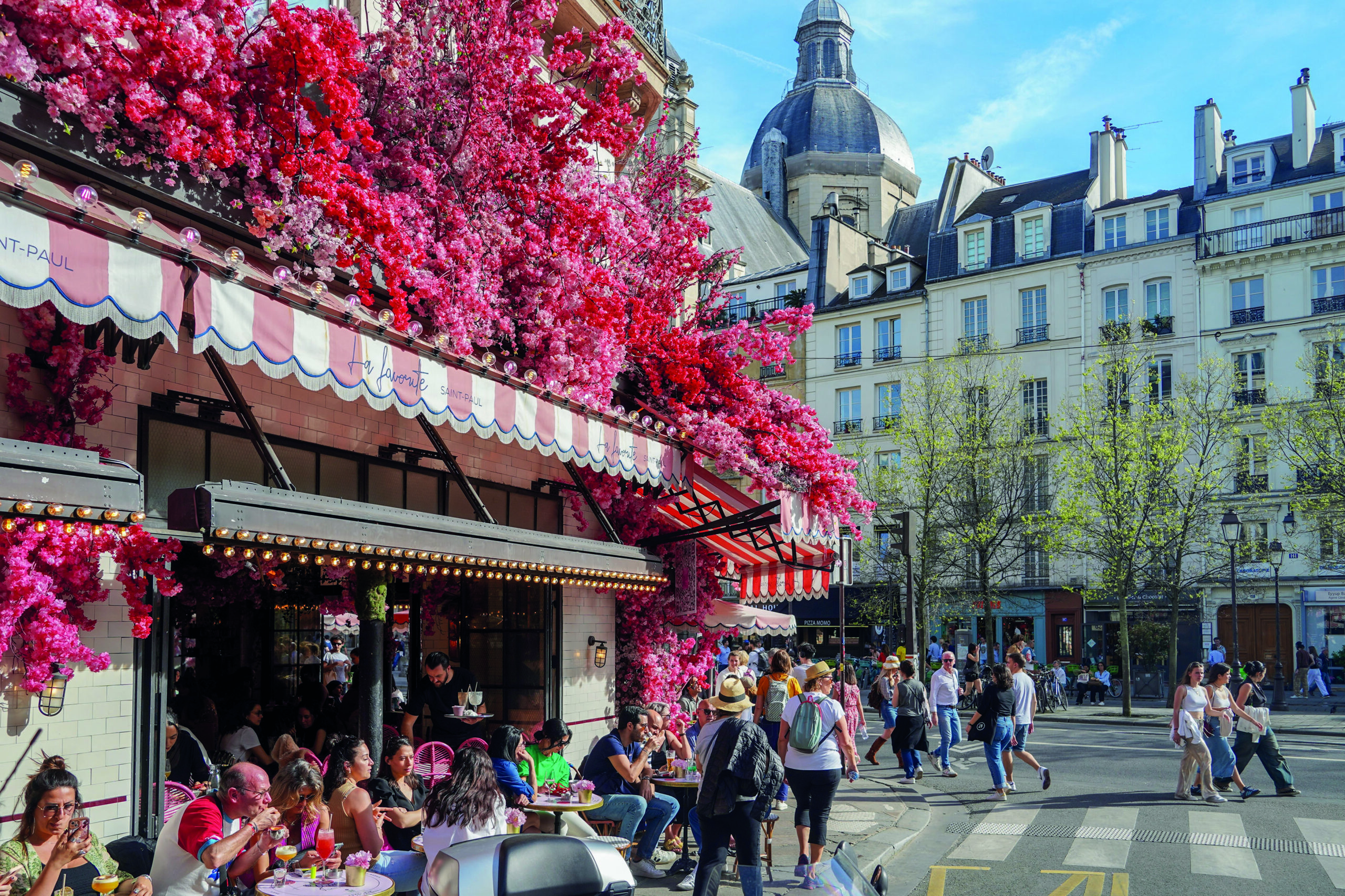
Le Marais is a bustling and fashionable district
Location: where to find what you want
For Parisians, your chosen arrondissement speaks volumes. Your decision depends on budget, constraints and culture, and the lower numbers aren’t necessarily the most expensive. The 1st arrondissement is the most central and crowded, where you’ll find the Louvre, the Tuileries Garden and walks along the Seine; here, prices average €12,238/m2 so a 50m2 apartment would cost you €612,000.
To the north, the quieter 2nd arrondissement features narrower streets, covered passages and a mix of shops, cafes and restaurants, with prices around €11,300/m2 so 50m2 could cost you from as little as €565,000.
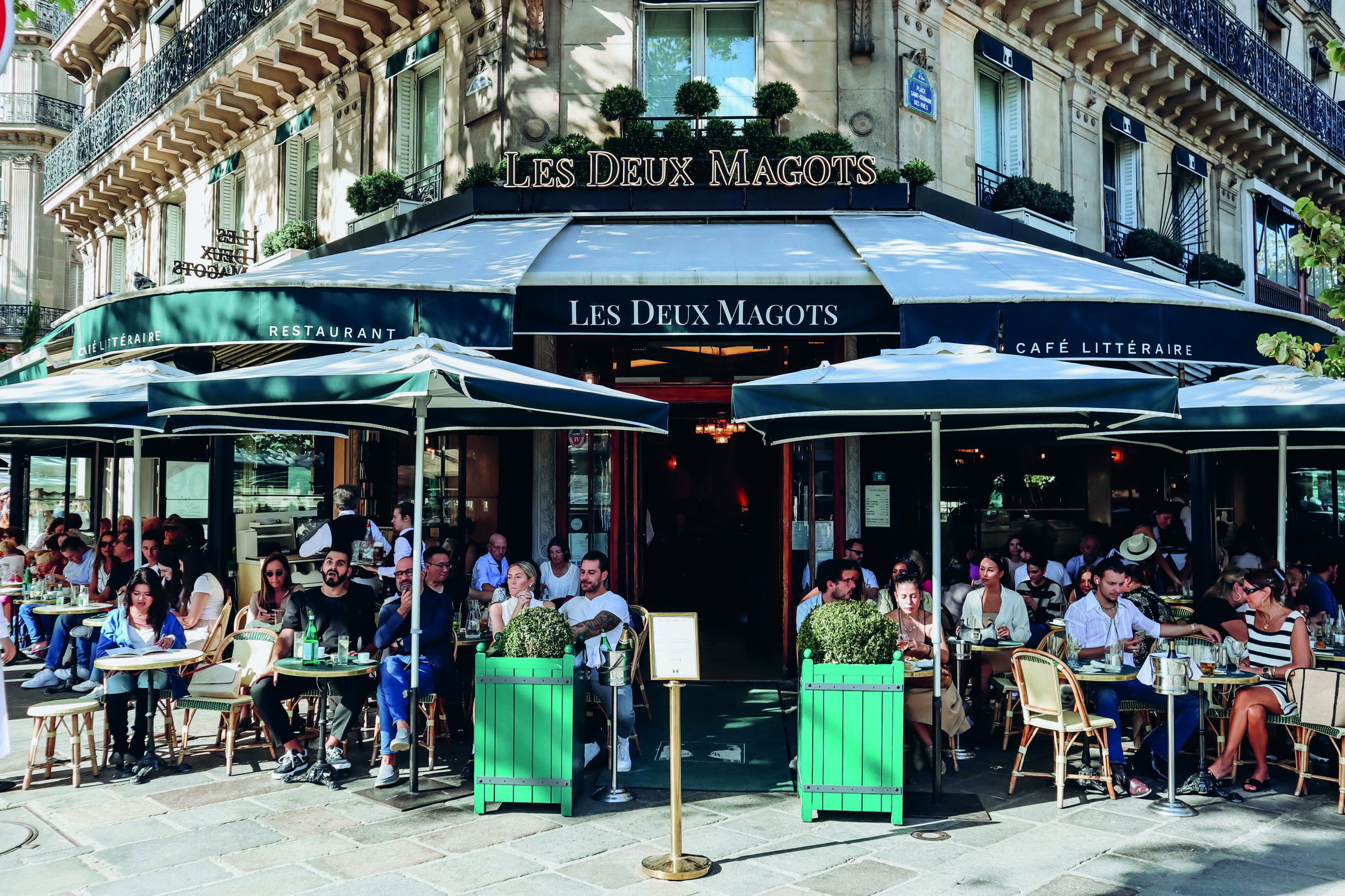
Les Deux Magots, St-Germain-des-Prés, where the literary elite used to meet
Next, you have the area known as Le Marais, which spans the 3rd and 4th arrondissements. Here you’ll find quirky narrow streets lined with historic buildings, little museums, galleries, cafés and great shopping from vintage to concept stores. Once home to writer Victor Hugo, it’s relatively laidback, and much of central Paris is within walking distance. In the 3rd, 50m2 costs around €585,000 rising to €646,000 in the 4th – home to the splendid Place des Vosges, it is more lively and includes the historic Jewish quarter.
Overlooked by the Pantheon, the 5th arrondissement is the historic Latin Quarter, known as the city’s intellectual heart, home to the Sorbonne, the Collège de France, thousands of students and arty, Bohemian types. A 50m2 apartment here fetches €580,000 (€11,604/m2), but you’ll mostly find tiny studios for around €100,000 suitable for students.
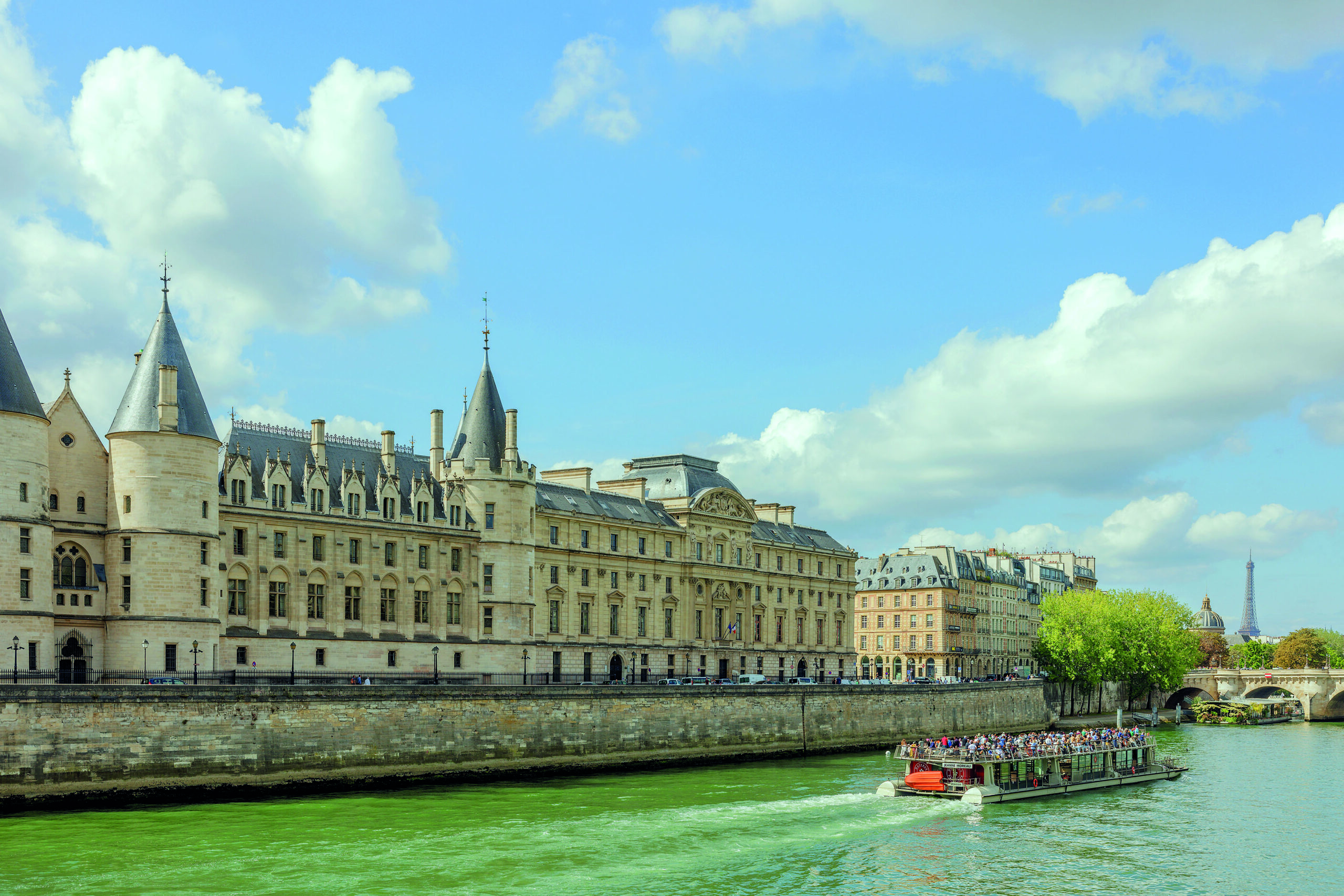
A bateau mouche pleasure boat passes the Conciergerie, a former royal palace and prison
The 6th is one of the most expensive districts, and includes St-Germain-des-Prés, a neighbourhood seen to epitomise the elite global status of Parisian intellectuals, socialites and politicians. Here you’ll find the legendary Café de Flore, Les Deux Magots and Paris’s oldest bell tower. Strict laws on historic preservation mean that new housing cannot be built, so while prices average €14,323/m2, a two-bedroom 145m2 rooftop apartment can fetch €5.7m (€39,000/m2).
The 7th is best known for the Eiffel Tower, but it’s also home to the country’s political and judicial powers and many of France’s politicians, and has a Harvard or Yale feel to it. One of the safest and most prestigious areas in Paris, the 7th boasts lots of museums including the Musée d’Orsay and property prices average €14,112/m2. Unsurprisingly, luxury penthouse or garden apartments can fetch as much as €45,000/m2.
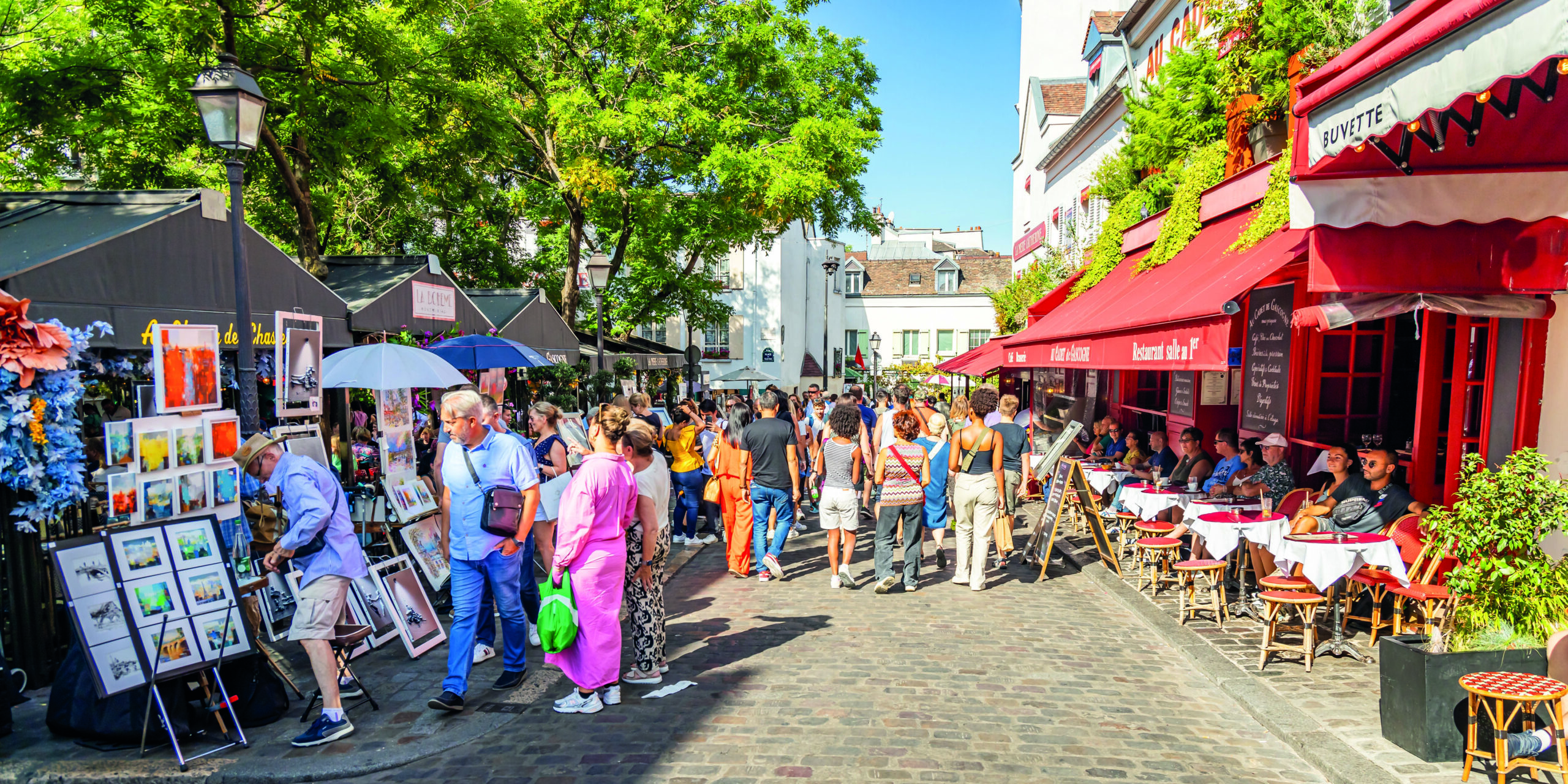
Montmartre is a historic hilltop village within Paris
With very few residents, the 8th is primarily for tourists and businesses; the district of embassies, lawyers and Paris’s most famous shopping street, the Champs-Elysées. Luxury apartments can reach an eye-watering €59,000/m2 although the average is €11,445/m2 and you can unearth tiny 7m2 rooms
for under €100,000.
Other arrondissements that deserve a particular mention include the trendy 11th, which has become rather hip (€9,763/m2); the commuter district of the 12th, southeast of Paris, which has not yet been fully gentrified; and the 13th, the capital’s Chinatown with Asian supermarkets and exotic restaurants.
And then there’s the 16th, a wealthy bourgeois district of gorgeous Haussmannian buildings on quiet, charming streets and large avenues, including gated communities. A three-bedroom 288m2 luxury apartment here with views of the Eiffel tower costs €15m (over €53,000/m2), but the average is only €10,663/m2, making a 50m2 apartment around €533,000.
Finally, northeast of Paris, are the 18th, 19th and 20th arrondissements, where factory workers settled in the 1840s, and they still offer affordable housing. The 18th has Montmartre with the Sacré-Coeur Basilica and spectacular views, the largest antique and flea market in the world (Les Puces de St-Ouen) and apartments averaging €8,798/m2.
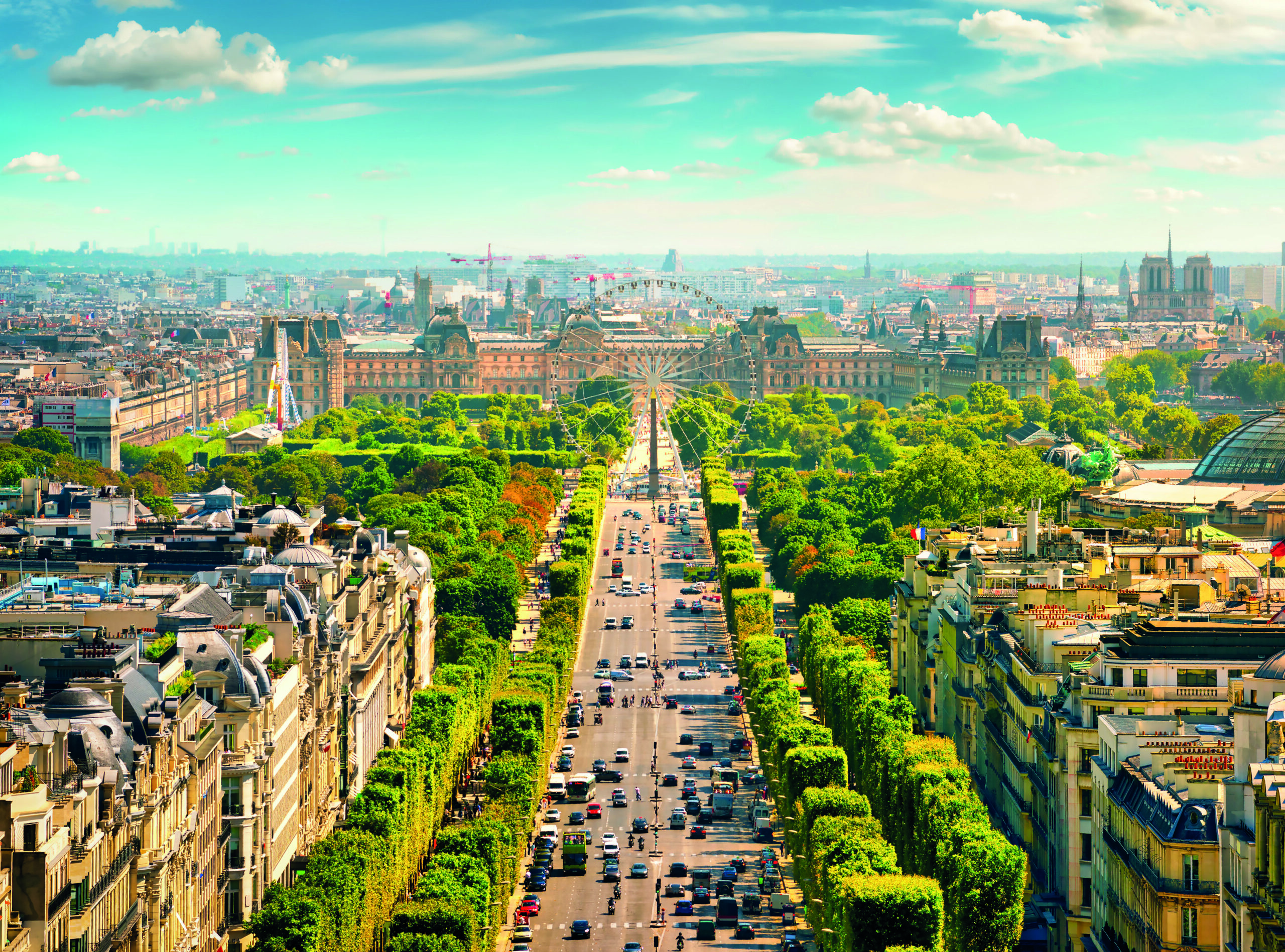
Paris’s most famous shopping street: the Champs-Elysées
The 19th has various music and concert venues, beautiful parks and property prices averaging €7,880/m2, while the 20th (€8,431/m2) is the easternmost district, home to some of Paris’ most densely populated areas and the Père Lachaise cemetery, the final resting place of many celebrities and dignitaries. Spanning the 19th and 20th arrondissements is Belleville, a young, artistic neighbourhood filled with street art and contemporary galleries.
As a resident of the city Antonia Mahon observes: “Paris property keeps its value over the long term, and although it hasn’t been a straight line, over the past 10 years it’s gained on average around 15-24% depending on the arrondissement, so if you’re not in a hurry to sell, you’re pretty much guaranteed a good investment.”
Transport
As a major international hub, Paris is easily accessible. Its main airports are Charles de Gaulle (CDG) and Orly (ORY), which have direct links to the city centre via express trains and Metro Line 14, while Beauvais (BVA) offers more budget flights.
Train links are also excellent, with international services such as Eurostar arriving at Gare du Nord, and various high-speed TGV routes running from the capital all across France and continental Europe. A direct train from Paris to Milan takes just seven hours, while Brussels takes less than 90 minutes. Within Paris, the public transport network includes the famous Metro, comprehensive bus and tram lines, and regional RER trains to reach the suburbs.
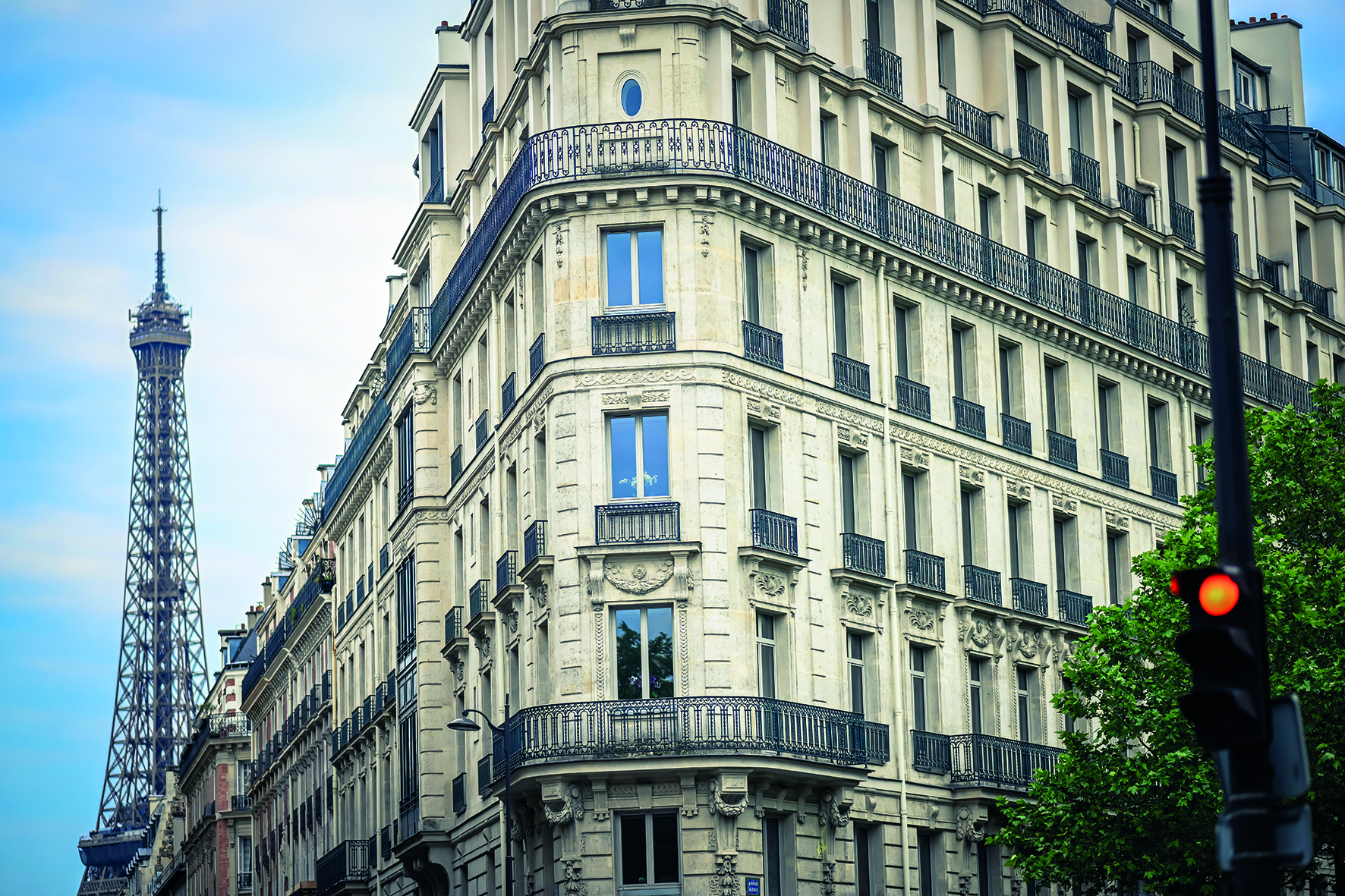
View with a Hausmann-style building (flat) with the Eiffel Tower (Tour Eiffel) in the background in Paris, France on July, 16, 2023.
WHAT IS HAUSSMANN ARCHITECTURE?
Paris’s layout did not develop organically. Between 1853 and 1870, a French official named Haussmann demolished crowded medieval neighbourhoods to create a logical series of straight streets that would connect train terminals and bring more light to the city. Haussmann architecture forms the visual identity of Paris, the city’s wide, tree-lined avenues lined with tall, elegant buildings in cream-coloured stone. The majority of the buildings in central Paris date from 1851 to 1914, so although these beautiful old structures are not always very energy-efficient, they often feature decorative mouldings, parquet fl ooring, marble fireplaces and original wall panelling. A dream for interior designers!
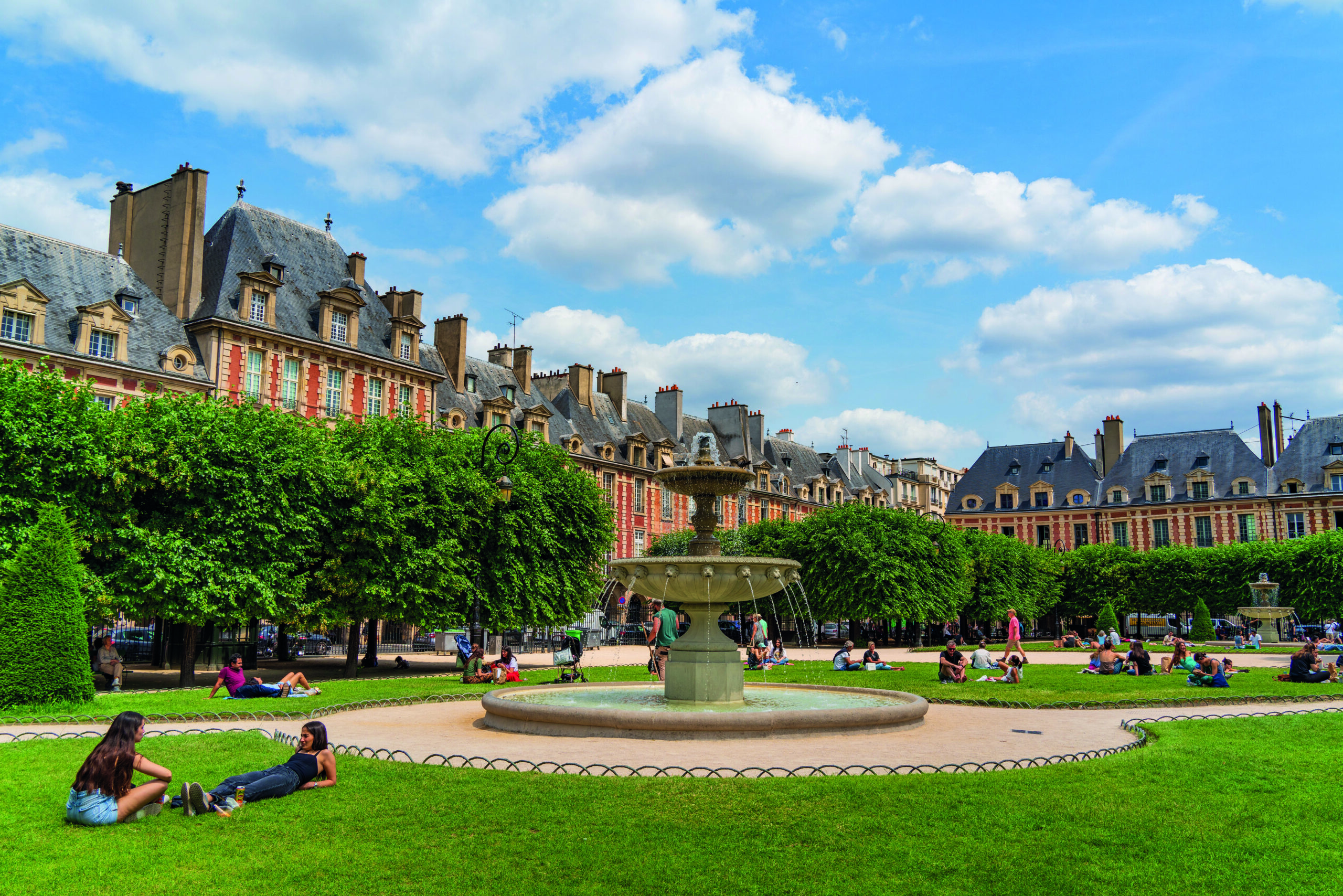
Grand houses surround the Place des Vosges located in the Marais district
EMPLOYMENT AND THE ECONOMY
With the largest metropolitan economy in Europe, Paris also has the highest concentration of corporate headquarters. Its economy relies heavily on corporate services, insurance, banking and financial services, tourism and hospitality, and of course, fashion, cosmetics and luxury goods.
Technology, digital services and AI have grown over recent years too, and the Paris region accounts for nearly 38% to 41% of all R&D spending across France. It’s also the national leader in business start-ups at around 107,000 per month (March 2026), far outstripping other regions in terms of high-growth companies and micro-entrepreneurs. Unsurprisingly, unemployment here is at 6%, well below the national average of 8.1% while 47% of youngsters aged 18 to 24 are students, compared to around 30% elsewhere in France.
Want more help with your France property journey? Search our Property Portal, subscribe to French Property News, and follow our YouTube channel for the latest advice and updates. Join us at the French Property Exhibition for expert advice and property inspiration.
Lead photo credit : Eiffel Tower or Tour Eiffel aerial view, is a wrought iron lattice tower on the Champ de Mars in Paris, France