The Landing Beaches of Normandy: History and Beauty on the Coast
Sarah Daly looks at the heritage town of Bayeux and the nearby Normandy Landing Beaches and explores what this beautiful area has to offer those considering calling it home
There is a little corner of Calvados that punches well above its weight in terms of global connections. Imagine Normandy’s beaches, and its Operation Overlord, when Allied troops started liberating France and Europe from Nazi occupation that may spring to mind. Think of Bayeux, and the famous tapestry commemorating the Norman Conquest in 1066 is likely to be the first thing you think of. This tiny area has played a significant part in changing the course of European history – twice – but that’s really only part of its appeal.
OPERATION OVERLORD
Arriving at Utah Beach in Quinéville, we found a beautiful expanse of sand stretching in each direction. The trademark concrete fortifications that the Nazis planted all along the French ‘Atlantic Wall’ from Dunkirk to Biarritz are still in evidence, but they no longer detract from its beauty.
The Landing Beaches comprise around 50 miles of coastline; with a village hinterland. The area is home to dozens of museums, exhibitions, monuments and memorials commemorating World War II and the incredible events that took place here from the summer of 1944.
We couldn’t possibly visit them all, although if I chose this area to live in, I would certainly make it my mission to do so. Instead, we started with the World War II Museum, which focuses on local life throughout the war, before and during Nazi occupation and as liberation began. This is jarringly different from life in many other Allied countries: Brits experienced the fear and devastation of enemy bombing, but French people lived under enemy occupation.
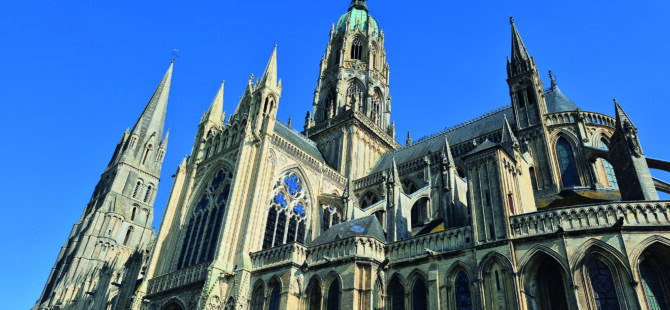

Young men were called on to move to Germany to work for the Nazi regime, although very few did so unless forced to. Some people collaborated. Others joined the Resistance, risking and often losing their lives. Most lived as ‘normal’ a life as they could.
At Gold Beach, Normandy Tours guide Jean-Charles tells us about the landings, and the incredible artificial harbour, built largely by British women in the nine months preceding Operation Overlord.
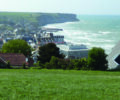
The harbour allowed men and supplies to be unloaded by Allied forces, and the Arromanches Museum explains how events unfolded while offering panoramic views over the beach and the remains of the harbour. From here, the scale of the undertaking to safely provision troops and fuel tanks is clear.
Bayeux’s Battle of Normandy Museum explains the challenges faced by the Allies: the bocage, a traditional – and now thoroughly bucolic – system of small fields, separated by sunken lanes, hedges and trees, was very easy for the Nazis to defend and the Allied victory here was hard won.
The gun battery at Longues=sur-Mer starkly illustrates just how daunting the prospect of attacking this coast must have been in June 1944. Four chilling concrete gun emplacements point directly at the beaches. You can even stand behind the original guns in two of them to see the view the Germans had of the coast as they attacked Allied troops coming ashore.
At the same time, as we listen to a lark singing its heart out high above our heads and the coastline spreads out before us, it’s clear that natural beauty here prevails. It transcends even the enormous bloodshed this coastline witnessed.
EXPLORING ON TWO WHEELS
Jumping on electric hire bikes, we are able to travel from our hotel in Bayeux to the fishing village of Port-en-Bessin along cycle paths. The whole area links inland routes to the Vélomaritime coastal path (EV4) and, like that route, it uses quiet roads, as well as dedicated bike lanes. Once you leave the coast, you can also cycle to the beautiful Abbaye St-Martin, via the network of trails.
Bayeux has the first ring road, or périphérique, in France, which was created by Allied troops who couldn’t manoeuvre their tanks through the town’s narrow streets. It now includes a cycle path, making accessing the town and surrounding countryside safer and easier. We followed it to the peaceful botanical garden, dating to 1859 and home to an unusual weeping beech tree, classed as a French natural monument for nearly 100 years.

BAYEUX THE SURVIVOR
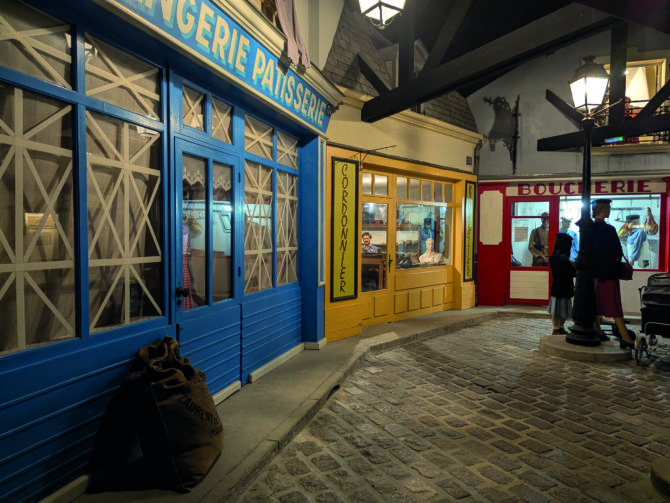
The town of Bayeux also has strong links with European history. William I was born at nearby Falaise and his successful invasion of England was immortalised in the Bayeux Tapestry – technically an embroidery and probably created in Kent. It was destined for display in the cathedral then under construction in Bayeux by William’s brother Odon. It has since become the symbol of his victory, and is the moment that tied the fates – and monarchies – of England and France together for centuries to come.
While a purpose-built museum is prepared for it in Bayeux, the tapestry is in England for the first time for nearly a millennium, on display at the British Museum from September 2026 to June 2027. This historic loan agreement represents a much more cordial example of Anglo-French relations than the tapestry itself.
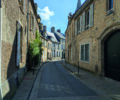
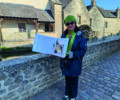
We are shown around this beautiful town by Christèle from Discovery Walks. She explains that Bayeux, unlike many towns in the area, escaped destruction at several key points in history. Not only did it avoid Allied bombing and German destruction during World War II, it also survived France’s religious wars and the Revolution – one of the ‘liberty trees’ planted in 1792 is still flourishing in the cathedral’s shelter.
It was in Bayeux that Générale Charles de Gaulle established the authority of the provisional French government just a few days after the Allied landings. The tapestry is another miraculous survivor. Having been rescued from a fire in 1105 and used as a tarpaulin for carriages in the 16th century it was nearly cut up. Nazi plans to remove it to Germany were thwarted by the Allied invasion.
On the outskirts of town, over 3,000 names are recorded on the year markers of Le Mémorial des Reporters. It’s a sobering commemoration of those who lost their lives while reporting from war zones around the world. The largest World War II Commonwealth military cemetery in France just across the road from it has more than 4,000 graves, while the Bayeux Memorial commemorates over 1,800 men who went missing in the summer fighting of 1944.
From June to September every year, Bayeux hosts a sound and light show, with a medieval festival in July. For those who love learning, the Université Inter-Age in the town offers courses in language, culture, arts and sports.
There are 35 villages attached to the town and the River Aure, now canalised, winds through it. The banks of the river saw leather tanning and dying and the town was once famous for its soft kid gloves. It even patented its own colour – Violet de Bayeux – made from Iranian ochre. What was once a Roman street, on the road from Paris to Cherbourg, is now lined with elegant homes and the fascinating art and history museum allows an in-depth exploration of the town’s past.

LIVING IN THIS AREA
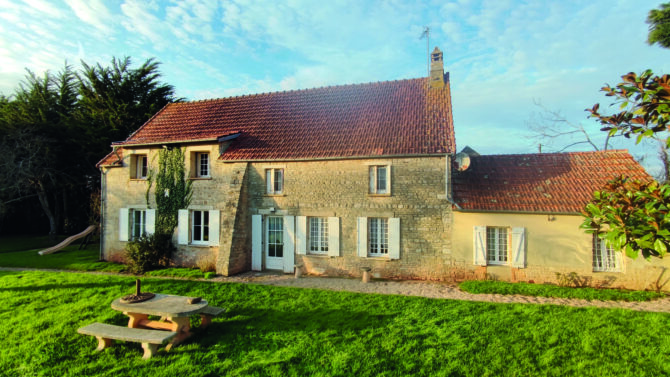
Katie de Pomereu lives in Vaux-sur-Seulles, four miles from Bayeux, with her husband Jean. The couple met in Paris and lived in London for years. “Jean is a complete Anglophone,” Katie tells me. “We always spoke English at home, but we wanted our three children to know their French roots, so we moved here in 2007 when they were all quite young. We chose Bayeux because we had both holidayed here, it was close to Jean’s family and we could easily visit the UK.
“I love this area. The beaches are glorious and the Norman bocage is so distinctive. Because of the Landing Beaches and the tapestry, Bayeux feels very international and I’m often stopped in the street and asked for directions in English. It’s different from a lot of rural France in that respect.
“For most people, it’s a holiday destination, but we get to enjoy it all year. There are a lot of retirees from Paris and plenty of young families, so there is an active arts, music and literature scene, and with Caen only 20 minutes away, there’s something for all ages.
“I’ve learned French since we moved, but it’s easy to underestimate how difficult it is to communicate at first as, even if you speak some French, you miss the nuances. It’s surmountable though and I really feel I’ve had to challenge myself more here than if we’d stayed in the UK, which is no bad thing.”
VIEW FROM THE AGENT
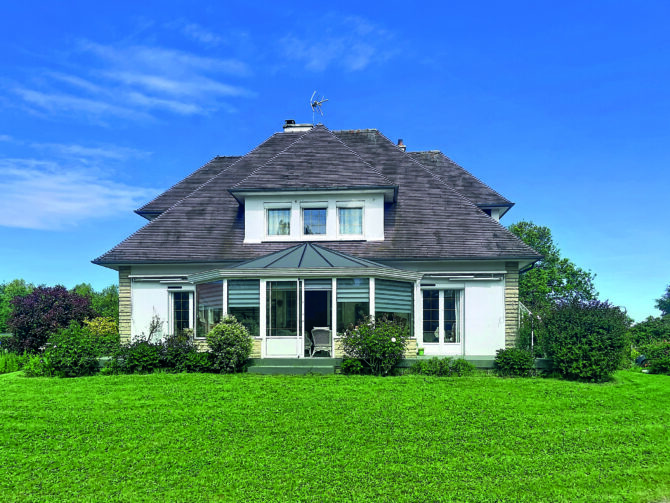
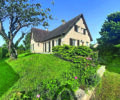
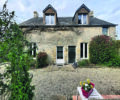
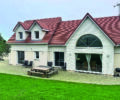
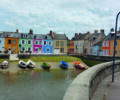
“The property market here is buoyant, with a lot of people moving here for the charm and authenticity of Bayeux, and the proximity to the beaches,” says Samuel Poprawski, estate agent for Folliot. “Seaside towns like Port-en-Bessin attract second-home buyers and the average price in Bayeux is around €3,000/m2. If you want a three-bedroom family home in good condition, expect to pay around €350,000 on average.
“The countryside is really varied, the architecture is beautiful and there’s plenty to do. Bayeux is a very liveable town, rich in history and with a great quality of life. The housing market here saw a strong rise after Covid and prices are still increasing gently. If you’re thinking of buying here, I would definitely recommend finding an agent you trust to guide you through the process and to get to know the area as well as you can before you begin your search.”
BED AND BOARD
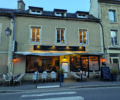
Bayeux’s Novotel is an ideal base for househunting in the town and beyond, and the restaurant on site offers good French food. As always in France, you’re almost guaranteed an excellent meal wherever you go and eating out is a pleasure. Acte 2 in Bayeux offers a great, reasonably priced midday menu, while the aptly named P’tit Resto near the cathedral offers fresh, seasonal cuisine in an intimate setting.
I had never visited this part of France, so knew little about it beyond the headline facts. You’ll discover glorious beaches – whether you are exploring the part they played in liberating Europe or settling the kids in with a bucket a spade. And the town of Bayeux is a jewel: it may not redisplay its famous tapestry until next year, but there’s no shortage of wonderful things to uncover in the meantime.