
Where to buy in France: Rivers and Waterways
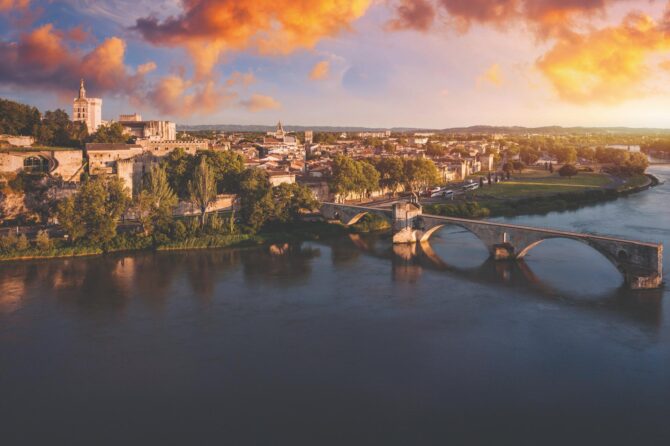
From trading routes to a modern-day leisure focus, France’s rivers make the perfect casting-off point for a property search, says Joanna Leggett…
Long before the Romans came to France and bisected the land with their roads, its many wonderful rivers provided major ‘thoroughfares’ throughout the country. From neolithic foragers to intrepid travellers, emissaries, missionaries, pilgrims and knights, merchants, traders and the like, France’s mighty rivers provided the best and often safest way to travel.
For millennia they were highways for travel and trade with many a byway and settlement set along their banks. Indeed, the Meuse in northeastern France is considered one of the oldest rivers in the world because it emanates through the Ardennes, which were formed at least 250 million years ago. From rivers winding through wine regions (in France, most seem to do so), to the blood-red-coloured rivers of the Camargue and the romance of the Seine, their beauty and character are so varied it’s hard to choose a favourite.
The Loire was once so beloved by kings of France that they dotted it with glorious châteaux; the mighty Rhône flows west and south through southeastern France down to the Mediterranean, passing through wonderful wine regions and Provence; and then there’s the southwest, dissected by the Garonne, Lot and, arguably, most beautiful of all the Dordogne.
I admit to some personal bias towards the latter. As a teenager during an exchange to France (to improve language skills – French food and boys weren’t supposed to be the focus of study), my ‘French family’ used my stay to explore the Dordogne river close to Sarlat, and with its charming golden stone towns and pretty villages, lush landscape, forests, meadows and defensive châteaux lining the cliffs overlooking the river, I was sold. My pen friend had merely been introduced to London: the Changing of the Guard and the Tower of London – I clearly got the better deal!
Geologically, river systems in France are determined by a major divide running from the Vosges in the northeast down past the Massif Central to the south of France. As a result, most of the rivers of the larger, western part of the country emanate from there such as the Seine and Loire. The other ‘major five’ rivers include the Garonne, which springs from the Pyrénées, while the mighty Rhône and even mightier Rhine originate in the Alps. You might not consider the Rhine river to be French although it forms its eastern boundary for 190km. Fed by Alpine headstreams, it is at its height in late spring and lowest in the autumn.
SEINE: CITY, COUNTRY AND COAST
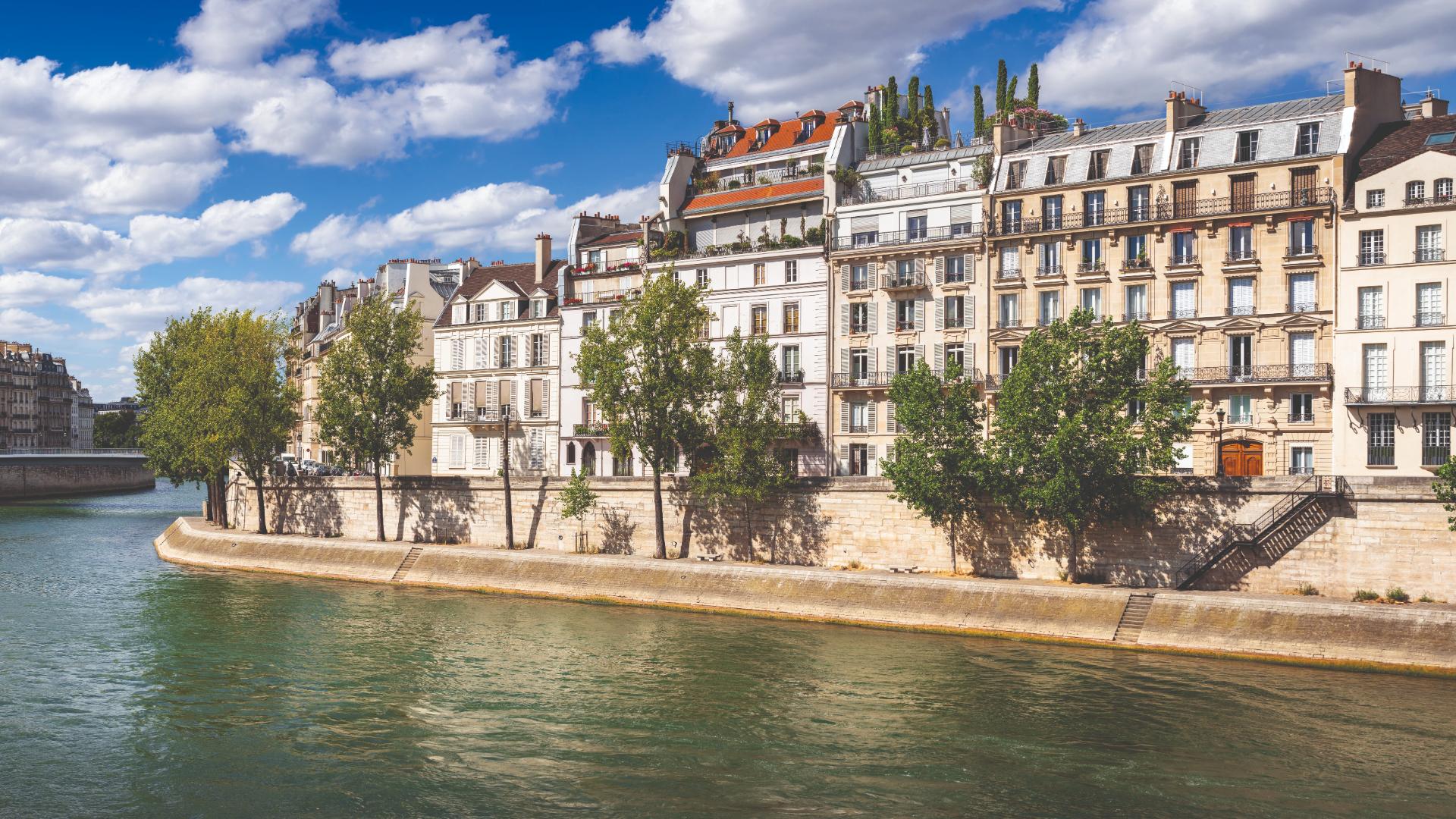
River Seine_Paris Ile St-Louis, Photo: Shutterstock
Most famous of all French rivers has to be the Seine. This beautiful river, so beloved of Impressionists, dissects central Paris where it runs beside the Louvre Palace. Rising in Burgundy northwest of Dijon, fed by tributaries such as the Marne and Yonne, it meanders through Champagne and Brie (a mouth-watering combination!).
Along its route it passes wooded banks, chalk hillsides, steep slopes and flat meadows before reaching the main attraction – Paris. Here, a number of memorable islands enhance its beauty – most notably the Île de la Cité, home to the stunningly restored Notre-Dame. Its banks are wonderful to promenade along, boat trips are a must and wonderful bridges connect the city’s left and right banks. It flows on northwest up into Normandy running alongside Monet’s garden in Giverny and through the ancient city of Rouen until it empties into the English Channel. The simply stunning Pont de Normandie, once the longest cable-stayed bridge in the world, is the last to cross the Seine, connecting Le Havre with beautiful Honfleur. Much of the river is navigable, a mecca for boaties.
LOIRE: VALLEY OF THE KINGS
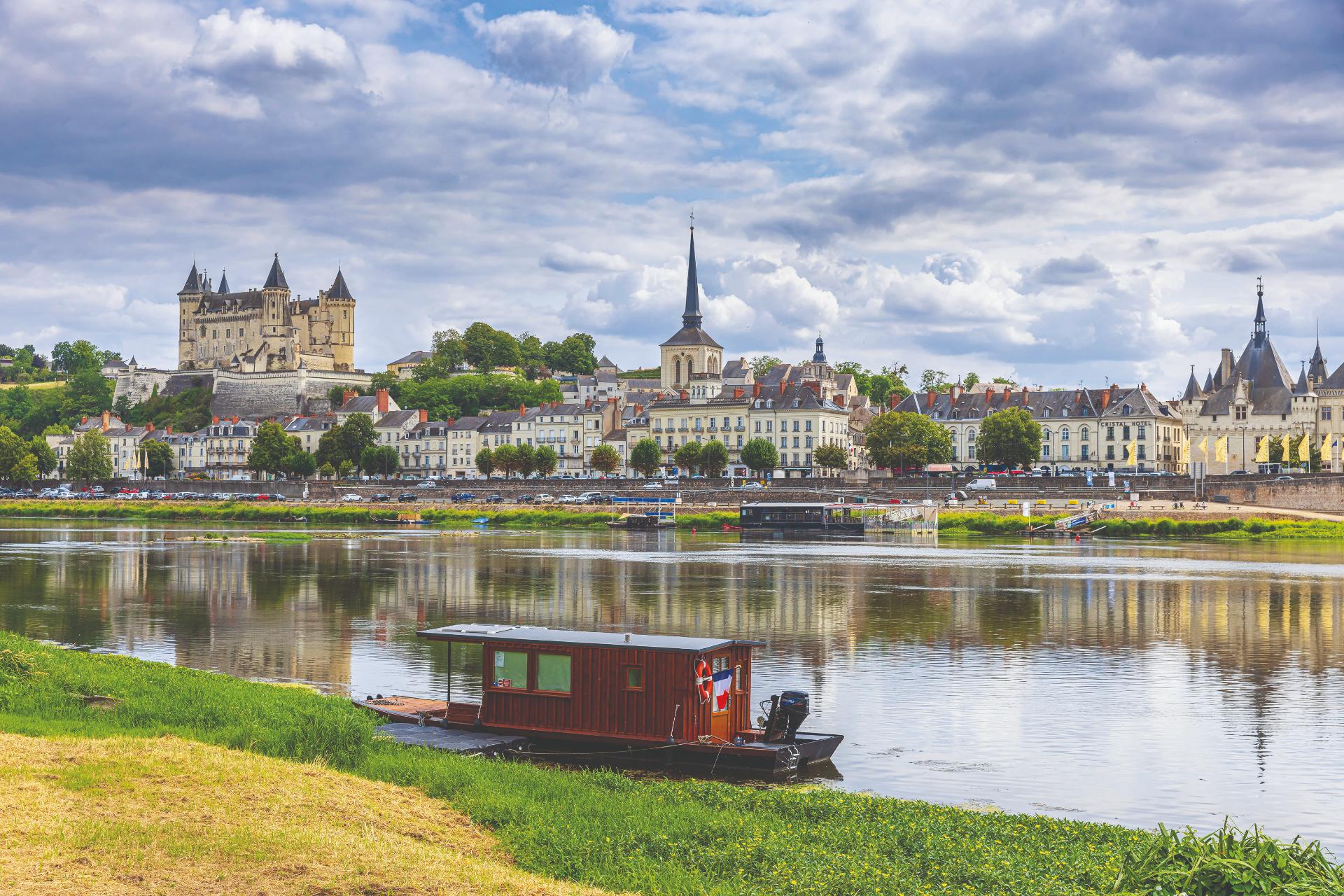
River Loire_Saumur, Photo: Shutterstock
The longest river in France, the Loire, starts its journey in the Ardèche in south-central France, flows north, takes a left turn around Orléans, before meandering through the world-famous Loire Valley, where it’s better known as the river of the Kings of France.
Flowing for over 1,000km, it’s the only major river in Western Europe that has never been fully canalised, drifting onwards through Tours and Nantes before emptying into the Bay of Biscay at St-Nazaire. Of course, it’s best known for its amazing Renaissance-style châteaux including mighty Chambord, enchanting Azay-le-Rideau and magnificent Amboise. Chenonceau – So beloved of Diane de Poitiers before Catherine de Medici, mother of three future kings of France, took over ruling the country from its famous Green Room – sits atop the arched bridge over the River Cher. Used as military hospital during the First World War, during the Second its great gallery provided the gateway to the Free Zone for people seeking to escape Occupied France. It continues to enchant with its glorious setting and gardens.
The Loire became ‘the’ place and holiday home destination for kings, queens, nobles and hangers-on (and more than a few mistresses) as it was ‘conveniently situated’ not too far from Paris, even before the TGV. Blois, with its amazing intertwining double staircase, was home to seven kings and 10 queens of France. They loved the mild climate, abundant hunting for wild boar and deer, the excellent wine and luscious food – most of which continue to be great attractions today for we lesser mortals.
RHONE: VINEYARD COUNTRY
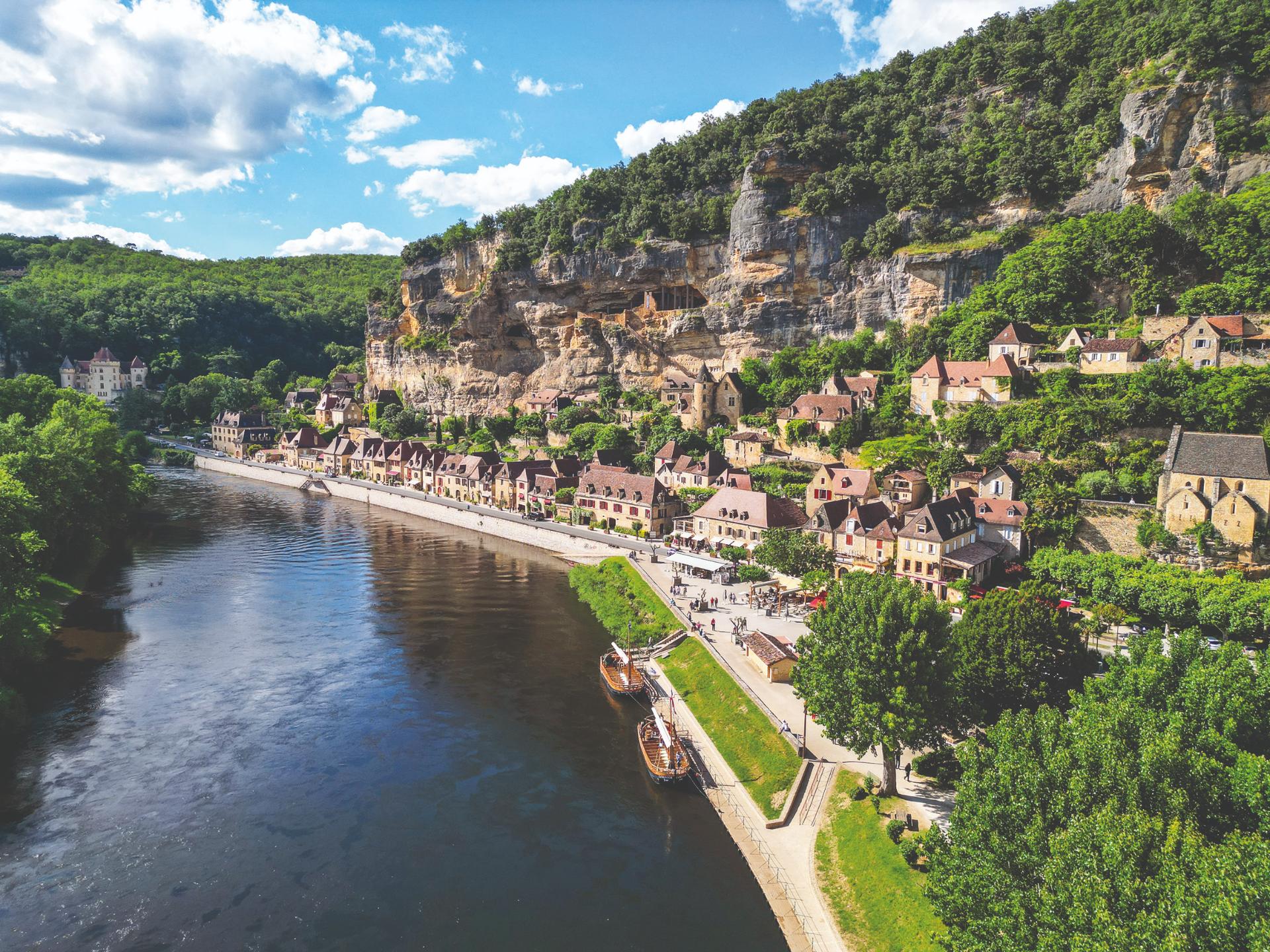
Dordogne_ La Roque-Gageac, Photo: Shutterstock
The Rhône is the only major river flowing directly into the warm Mediterranean from its source in Alpine glaciers, covering quite a few kilometres along its way. One highlight of its course is the gastronomic epicentre of France, Lyon, where many of the world’s best chefs have trained – not for nothing is it known as the French food capital. The city is also known for Burgundy wines; winemaking areas encompass the eastern part of the valley including Beaujolais, Chablis, Côtes du Rhône… the list goes on. Perhaps the most famous of all is Châteauneuf-du-Pape, nearer Avignon with its famous bridge.
Eventually the river flows into the Mediterranean after it splits into two branches at Arles to form its delta – the wild Camargue – famed for flamingos, salt marshes and the blood-red rivers and lakes caused by the high levels of salt in the water.
Last, and by no means least, is the Garonne, which slices through luscious rich southwestern France, travelling from the Pyrénées northwards through the rose-red city of Toulouse and Agen (watering the plums that make those tasty prunes) on the way to Bordeaux and the Gironde estuary.
Along the way it’s joined by the Ariège, Lot, Tarn and finally the Dordogne. It is one of the few rivers in the world with a tidal bore beloved by surfers and jet skiers, sometimes reaching as far as the town of Cadillac, a name to conjure with. It is also the last place left where the sturgeon fish breeds.
In about the 15th century, someone had the bright idea of digging canals to create waterways in France for a new communication network, making it possible to transport goods more easily – perhaps it was an entrepreneur with an eye for a ‘nice little earner’.
The first sizeable boat canal was the Briare-Montargis canal, which merged the Loire with the Seine. With canals joining large rivers it became possible to transport goods ever more cheaply from one region of France to another. When it comes to canals, for me the most fascinating is the Canal du Midi, linking Bordeaux with the Mediterranean.
I’ve touched on just five major rivers here. Large or small, waterways provide the backdrop to life in France. For one thing, fishing is a serious undertaking in the country and many towns and villages boast their own Société de Pêche. Every weekend you’ll spot groups of keen anglers meeting by the water, armed with sustenance suitable to augment their catch.
Homes have always been built along rivers, originally because of the need for adjacent water. Today, they provide the most beautiful of settings offering great gardening opportunities, somewhere to moor a boat, or to simply gaze upon as you enjoy a glass of the local wine.
Joanna Leggett is the Marketing Director at Leggett Immobilier View the full portfolio of properties at leggettfrance.com
The unique mix of legal, financial and tax advice along with in-depth location guides, inspiring real life stories, the best properties on the market, entertaining regular pages and the latest property news and market reports makes French Property News magazine a must-buy publication for anyone serious about buying and owning a property in France.

Lead photo credit : River Rhone_Avignon, Photo: Shutterstock
Share to: Facebook Twitter LinkedIn Email
More in dordogne, Rivers, Seine
Related Articles
Leave a reply
Your email address will not be published. Required fields are marked *
REPLY