A Guide to Neoclassical Architecture in France
Love Neoclassical architecture? This style was a revelation, gives Paris a lot of its character and was forged in the lead up to the Revolution, says Joanna Leggett
It is undisputed, France is beautiful. Bound by wonderful coastline, its stunning countryside is peppered with ancient dwellings, divine châteaux, medieval villages and enchanting towns. Every city and major town boasts a rich diversity of architectural style. In the larger ones, wide boulevards – often lined with stately buildings in the ancient Greek and Roman styles – entice you to explore and remark upon the colonnades and columns that adorn their facades. Space and grandeur, symmetry and white stone are the dominant features of their design and a benchmark of French architecture.
This Neoclassical style of architecture first became popular during the reign of Louis XV in the early to mid-18th century and was said to have been inspired by the archaeological excavations at Pompeii. Louis XV was known for his massive building projects: Versailles, of course, being the largest he built. The style he chose for it was almost religiously followed by others aspiring to impress.
By the 1740s, fashion and tastes in interior design and architecture had started to change, decoration became less extravagant and more classic. Then the Marquis de Marigny – brother of Madame de Pompadour, Louis XV’s mistress – went on a road trip to Italy with a delegation of scholars and artists to see recent archaeological discoveries in Pompeii and Herculaneum and, naturally, made a grand tour of other classical monuments at the same time. They came back fired up with enthusiasm for a new classical style in architecture, which imaginatively became known as Neoclassical or le goût Grec (Greek style).
BREATH OF FRESH AIR
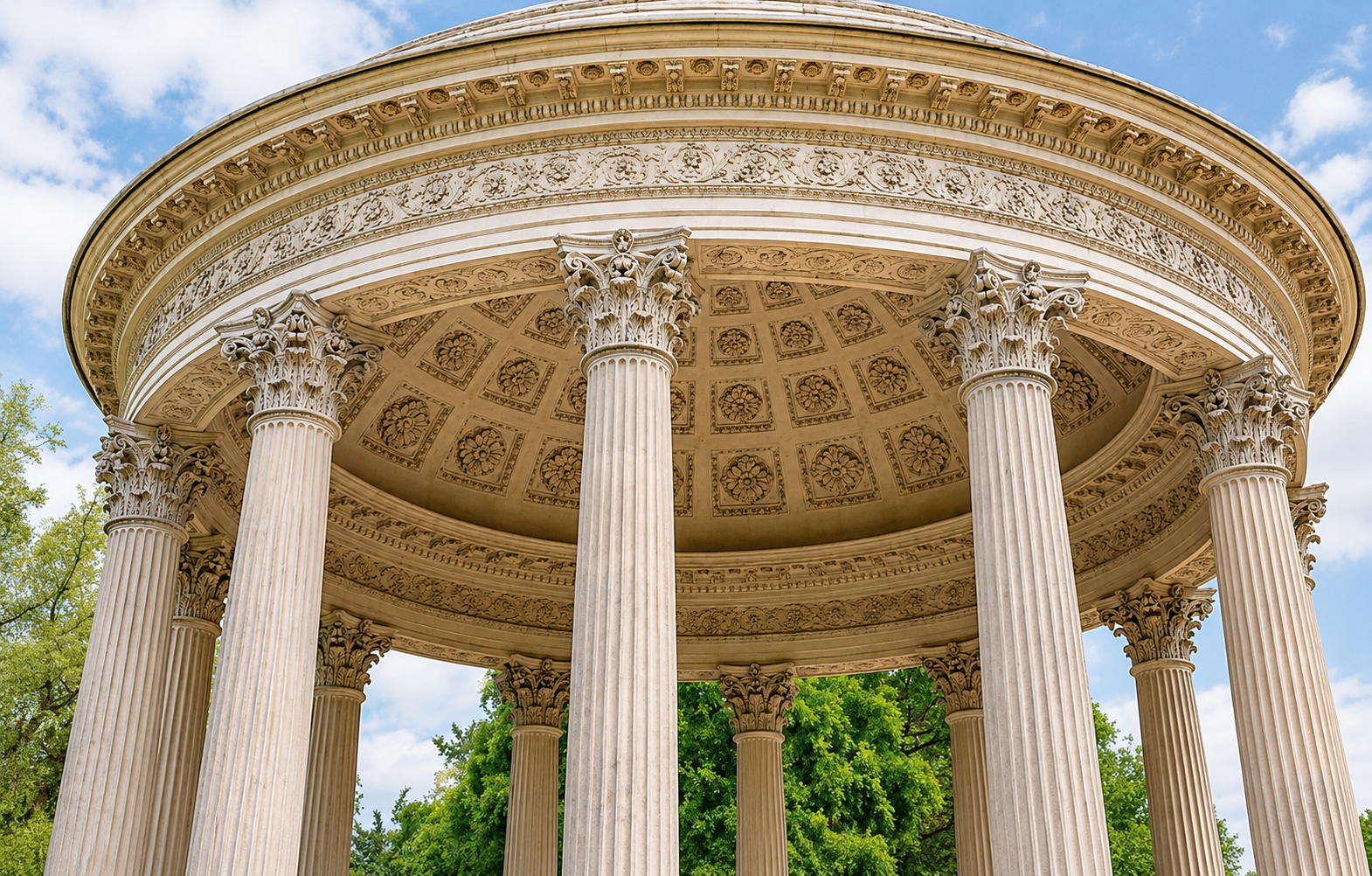
The Temple of Love at Marie Antoinette’s château, Le Petit Trianon, Versailles
Considered a revelation after the heavier Baroque and Rococo styles of previous eras, it really caught on. In 1757, the first illustrated textbook of the style was published, promoting the majestic style of the architects of ancient Greece – and the rest, as they say, is history. This ‘cutting edge’ new design style started appearing in royal residences during the last years of Louis XV’s reign and was prevalent throughout Louis XVI’s tenure, which is hardly surprising as Marigny had by this time become director of buildings for the latter. The style was especially popular in the interior salons and furnishings of Marie Antoinette in her boudoir at Fontainebleau, and with Parisian aristocracy. In fact, while labelled Neoclassical, it was a mélange of Greek, Roman and Etruscan styles, sometimes with chinoiserie and Turkish themes thrown into the mix.
By 1780, this new style started appearing externally too in the architecture of classically designed buildings, which notably included the Petit Trianon at Versailles and the Château de Bagatelle set within 24 hectares of the Bois de Boulogne in the 16th arrondissement of Paris. The latter was designed as a small lodge for brief stays for Louis XVI’s brother while out hunting – was this the ultimate comfort stop? It was completed in just 63 days to win a bet with Marie Antoinette over whether he could build a château within three months!
“The style was especially popular in the interior salons and furnishings of Marie Antoinette in her boudoir at Fontainebleau”
PARIS STYLE
Towards the end of Louis XV’s reign, Neoclassical had become the dominant style in civil architecture. The east facade of the Louvre had been reimagined, nearby the Hôtel de la Marine was erected with its grand colonnaded front elevation facing the Place de la Concorde, and then there’s the École Militaire, to name just a few such magnificent buildings in central Paris.
Then came the Revolution. The aristocracy fled Paris, most of their palaces and townhouses were stripped of furnishings and decoration, and many suffered the same fate as Marie Antoinette. While major building works virtually stopped during the initial revolutionary turmoil, the ethos of Neoclassical architecture escaped the confines of Paris and was taken to every part of France. With its style demanding the geometric forms, decoration and majesty of ancient Greece, it was perhaps a symbol of stability.
A modified version of Neoclassicism found favour briefly during the time of the French Directorate in the 1790s, mixing its style with the architecture and designs of Robert Adam in England. But when Napoleon Bonaparte took centre stage, Neoclassical became the Empire style – with crowns, laurel wreaths, classical heads seen in profile, Napoleon’s imperial bee symbol, the eagle and the letter ‘N’ proliferating.
CLASSIC CHATEAU
The Château de Compiègne in Oise had been the preferred summer residence for French kings, who enjoyed hunting in its nearby forest. Gutted during the Revolution, Napoleon reclaimed it as an imperial domain and made it habitable again – its beautiful facade featuring columns and porticos in a pleasing symmetry. He altered its layout, added a ballroom and replanted the garden in classical style incorporating an entry into the forest.
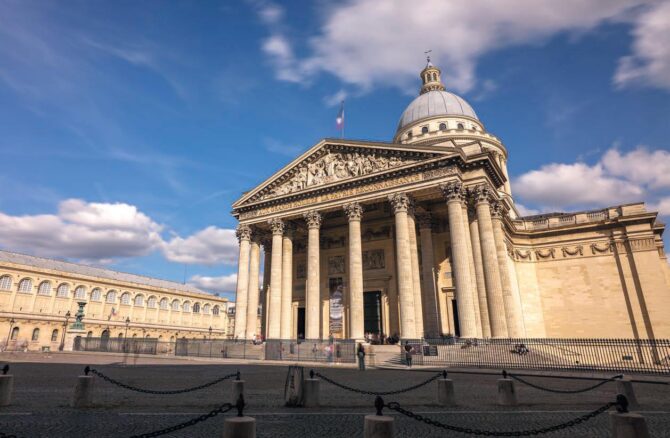
This era saw triumphal arches erected – the Arc de Triomphe dominated the Champs Elysées (as well as many a postcard). Townhouses became hôtels particuliers, with discreet street entrances opening onto square interior courtyards surrounded by massive dwellings with windows around each side bringing an abundance of light into rooms. Many grand buildings boast impressive arcades at street level, carefully balanced by rows of windows and columns with classical pediments. The Grand Théâtre de Bordeaux is a great example, its majestic stairway providing inspiration for the Opéra Garnier in Paris. Architecture for churches also used this vernacular, most notably the Panthéon in Paris.
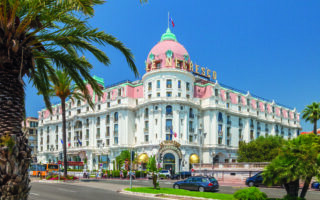
The craze for Neoclassical design spread throughout France. There are wonderful examples of this architecture with its distinctive features including the Place Masséna in Nice, the exceptional 18th-century urban planning in Bordeaux, the mairie (town hall) in Annecy and three large plazas built under royal patronage in the 1750s in Nancy.
During the latter part of the Revolution, the Directoire style emerged, employing Neoclassical architecture, minimal carving and much decorative painting. It was a transitional style reflecting the values of Republican Rome and the changing egalitarian movement of the French regime. Beautiful furniture was created to fill rooms – similar perhaps to the Regency mode in England created during the same period.
CHATEAUX COUNTRY
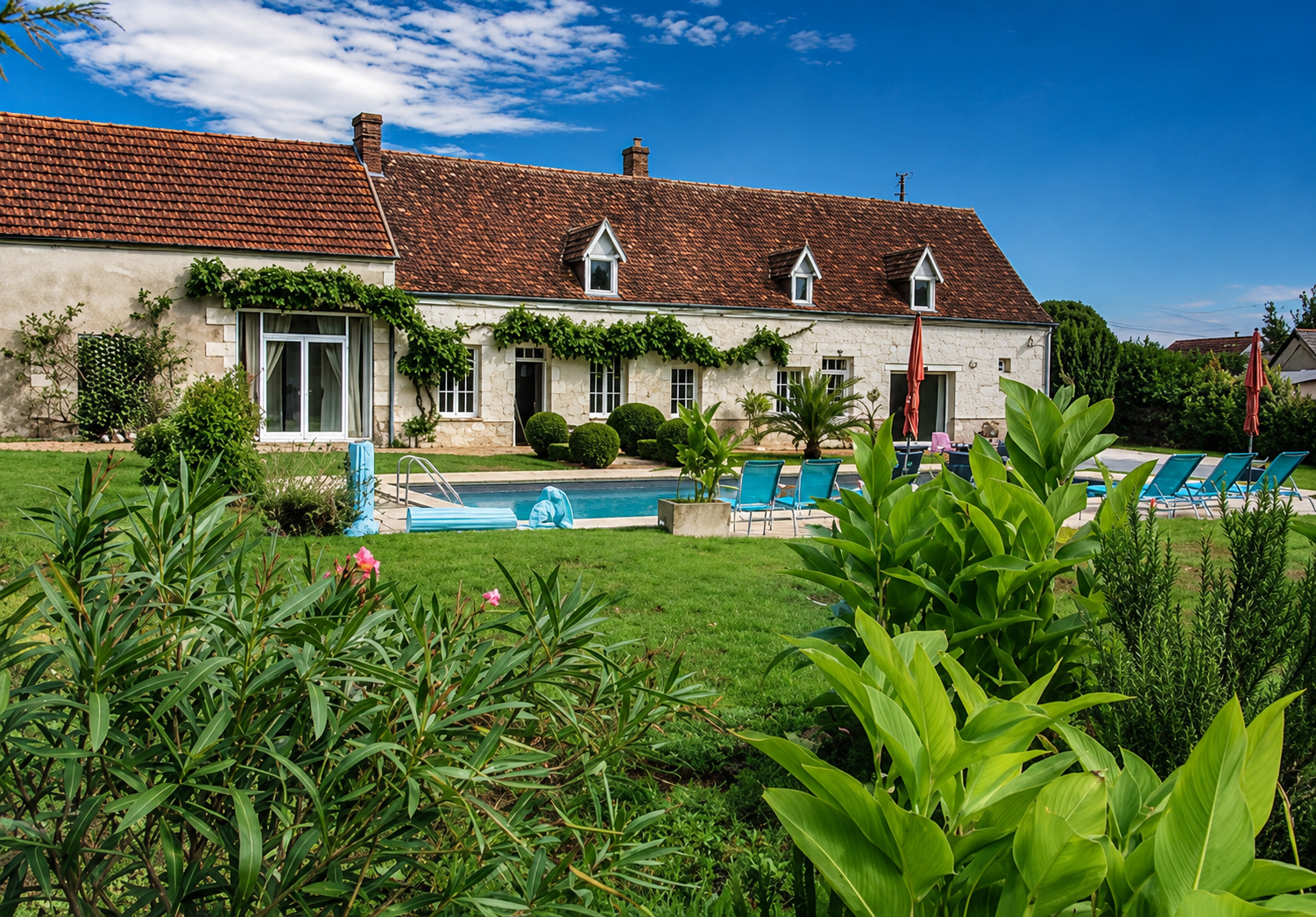
€327,540
In the heart of Touraine, close to Chenonceaux, Amboise and Tours, this classically designed mid-19th-century farmhouse is fully restored, offering an enormous living room, open-plan kitchen, three bedrooms and dressing room with single-storey living. Outside, in the 1.5-hectare private park, there’s a swimming pool, pétanque court and wisteria-clad lean-to – the perfect spot to while away hot summer days and evenings.
CLOSE TO NARBONNE
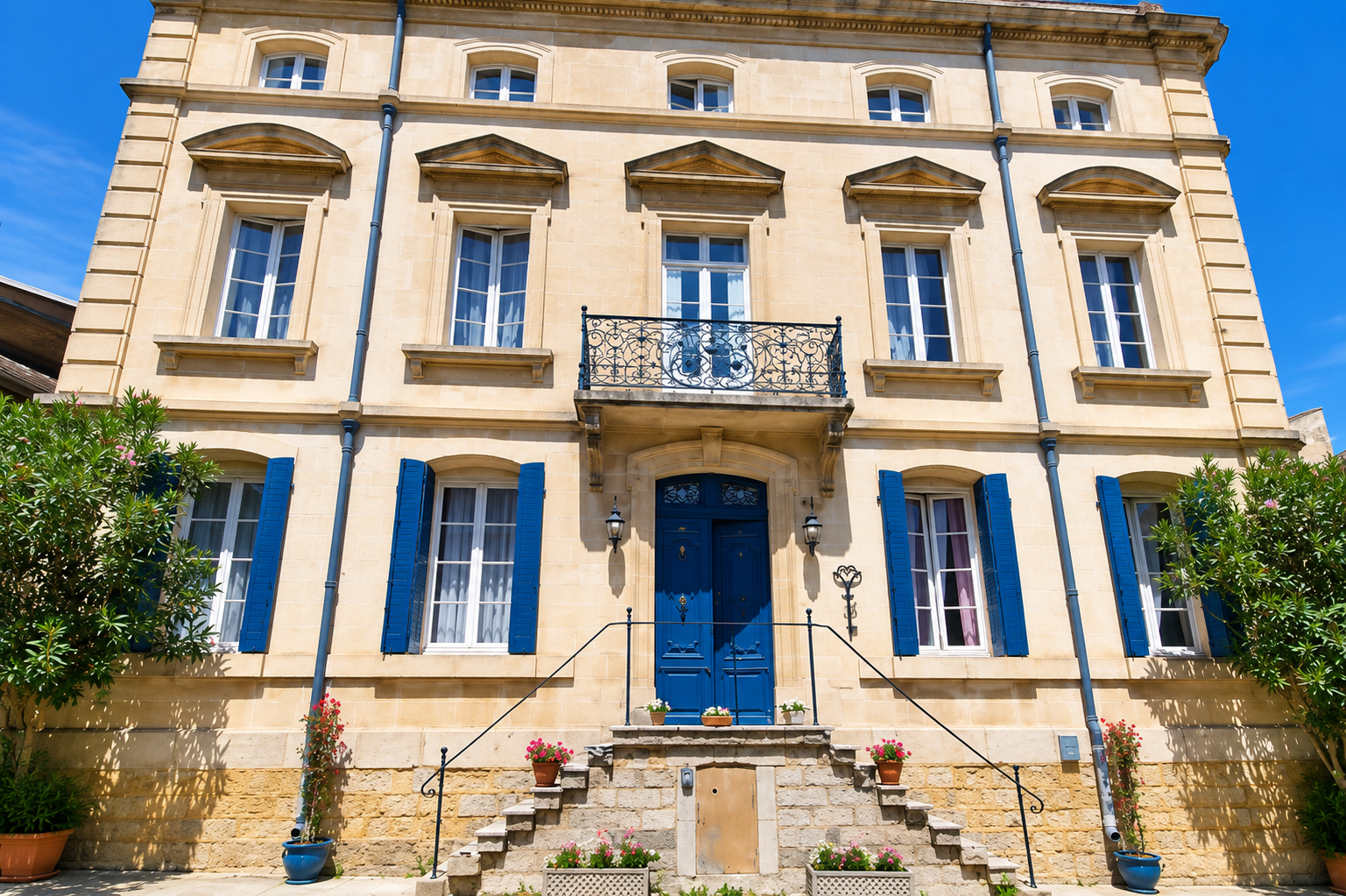
€695,000
In the south of France in Minervois, Ginestas is crossed by the Canal du Midi and surrounded by vineyards. Within walking distance of amenities, in a private courtyard garden, this stunning ‘maison de maître’ is full of authentic features offering an opportunity to create a ‘chambre d’hôte’ or extended family home. Its living rooms are spacious and a grand stone staircase leads to four ensuite bedrooms on the first floor ideal for guests. There are five more on the top floor, while outside the pool beckons, making it the perfect retreat.
ELEGANCE IN WINE COUNTRY
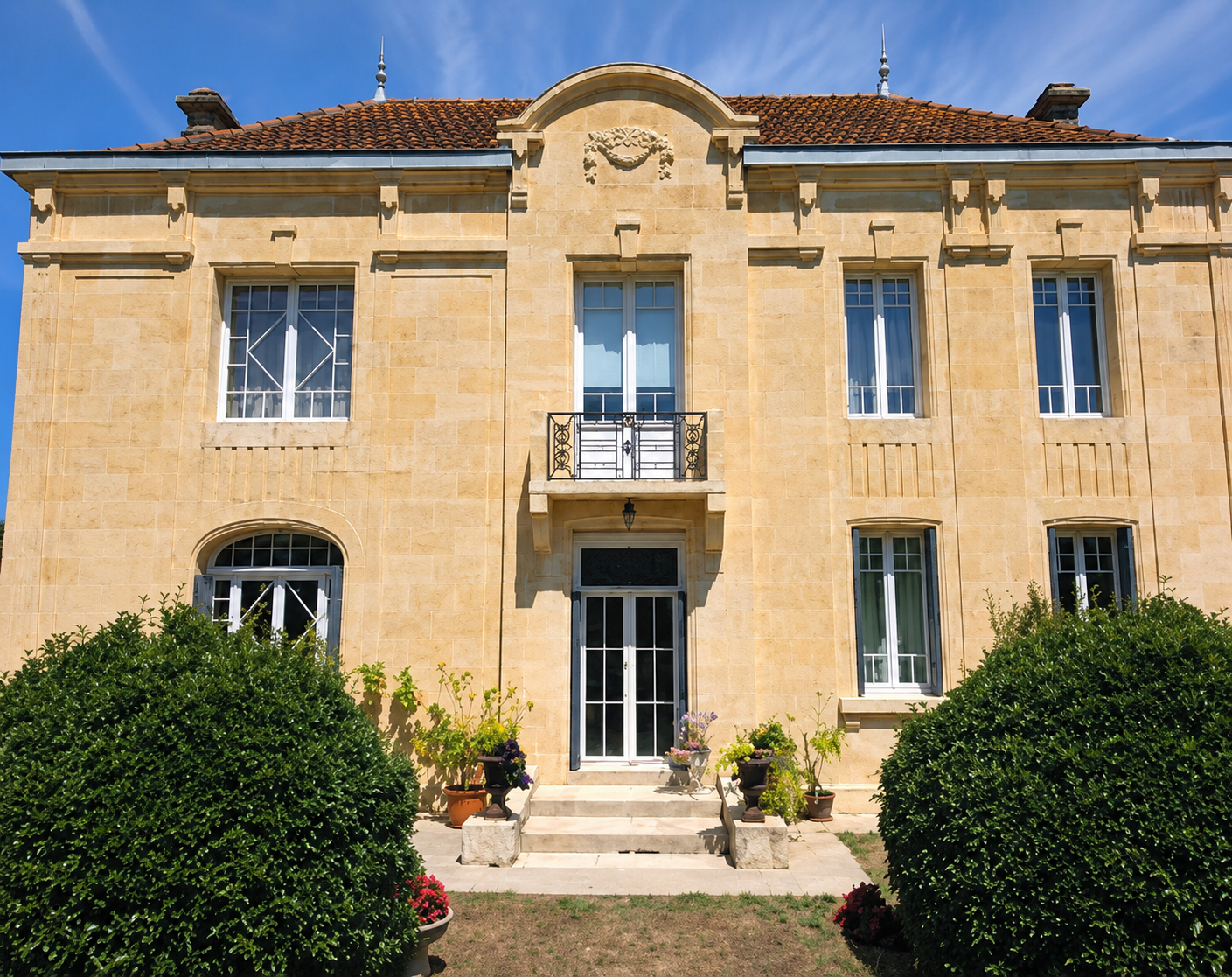
€635,000
Just 40 minutes’ drive from Bordeaux in the heart of Gironde wine country, this beautiful estate is in a private peaceful hamlet. Dating back to 1850, its facade charms with its porticoed classic design and wrought-iron-faced balconies. Completely renovated, the manor is set around the main house with two independent, two-bedroom guesthouses, a vast garden and large swimming pool, with numerous
outbuildings. All have achieved an ‘A’ energy rating. The ‘manoir’ has four/five bedrooms, large reception rooms and is bathed in sunshine.
PEACEFUL RETREAT IN THE CITY
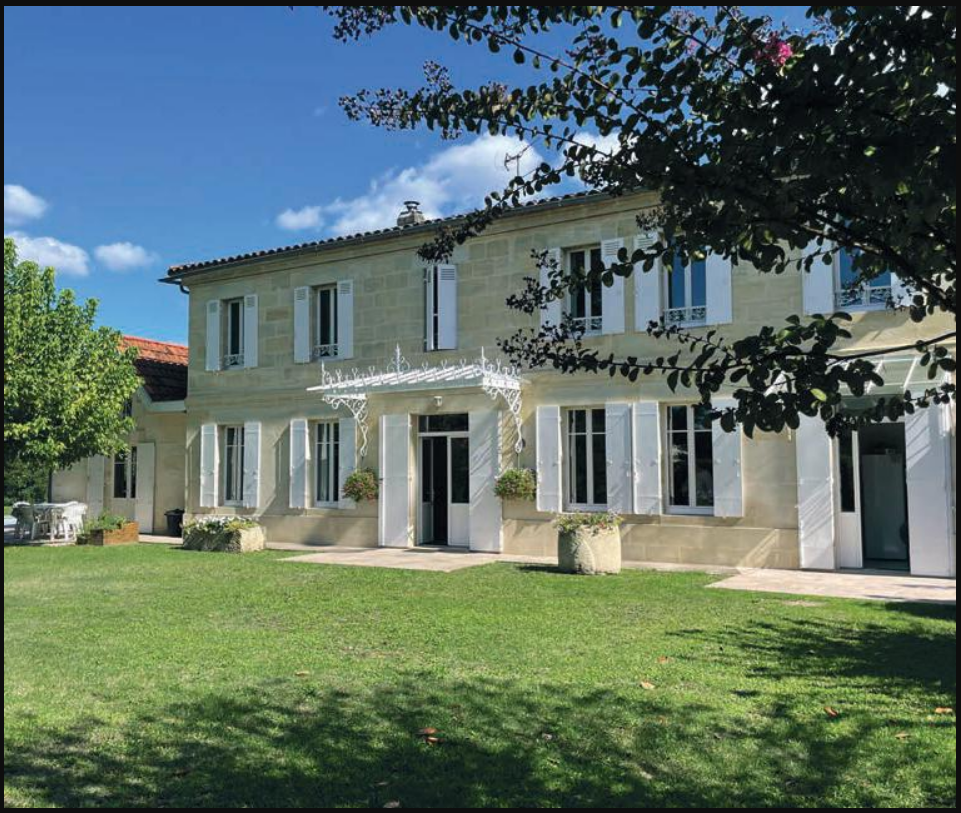
€790,000
This lovely stone ‘manoir’ is surrounded by a large fully fenced park with automatic gates. Just a stone’s throw from the centre of Libourne in Gironde, and not overlooked, it offers modern comfort in exceptional condition. With four large bedrooms, generous living spaces and a swimming pool, it balances urban living and country life to perfection.
TOURAINE TRIUMPH
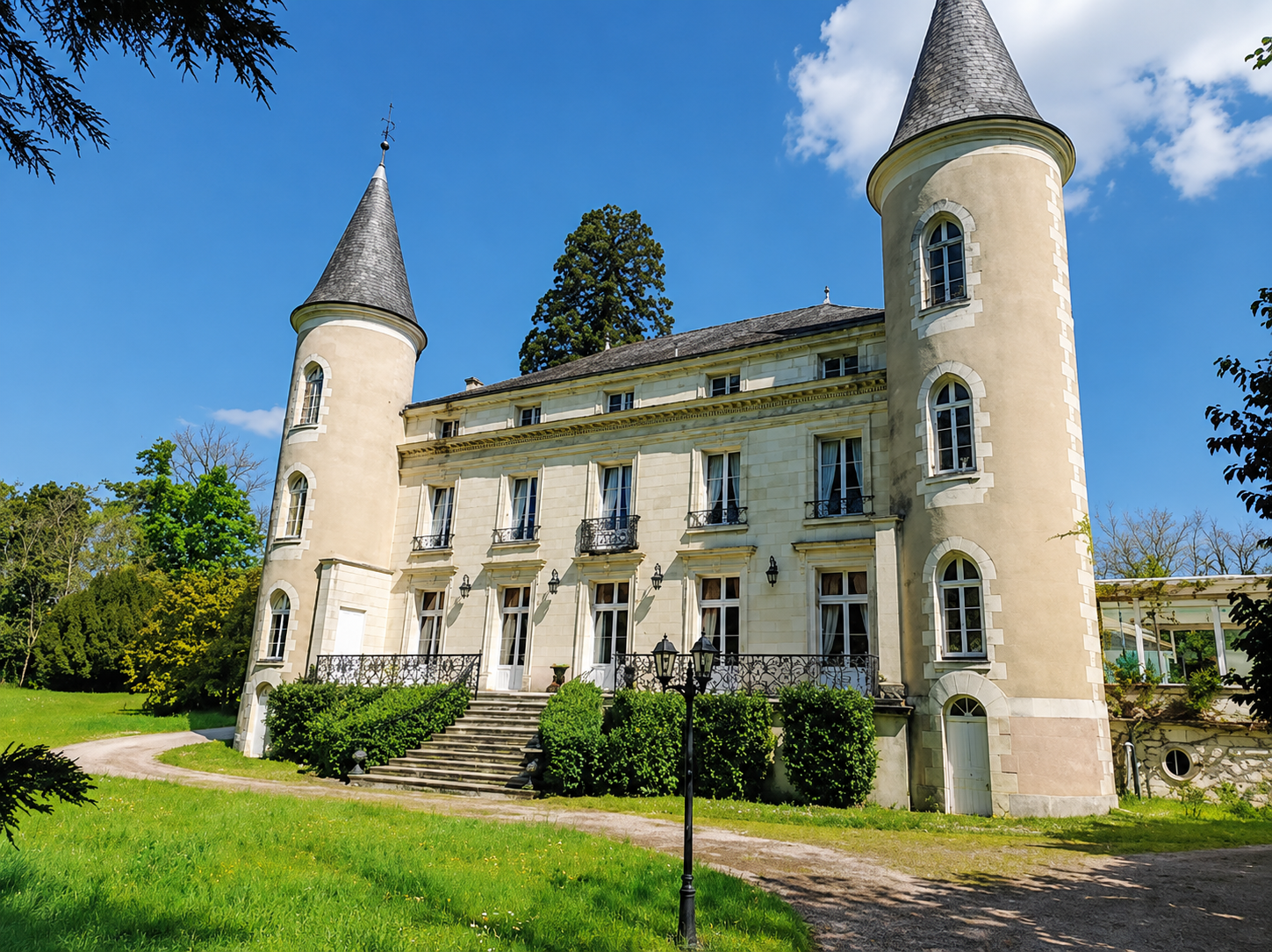
€1.41M
Built on the site of a previous château destroyed in the Revolution, this magnificent property sits in parklands of approximately 11 acres with a lake and some huge 200-year old trees. It has an enormous heated pool and 11 ensuite bedrooms, plus there’s a further five-bedroom house, three-bedroom guardian’s property and several outbuildings. It’s situated in beautiful countryside of the southern part of Touraine and Creuse, near Tournon-St-Pierre.
And so it continued throughout the Bourbon Restoration until Neoclassicism was gradually replaced as the dominant architectural style by Romanticism and Eclecticism. When Haussmann was redeveloping Paris though, Neoclassic style featured heavily in the buildings that took pride of place when he was creating his wide sweeping boulevards and enhancing the magnificent structures.
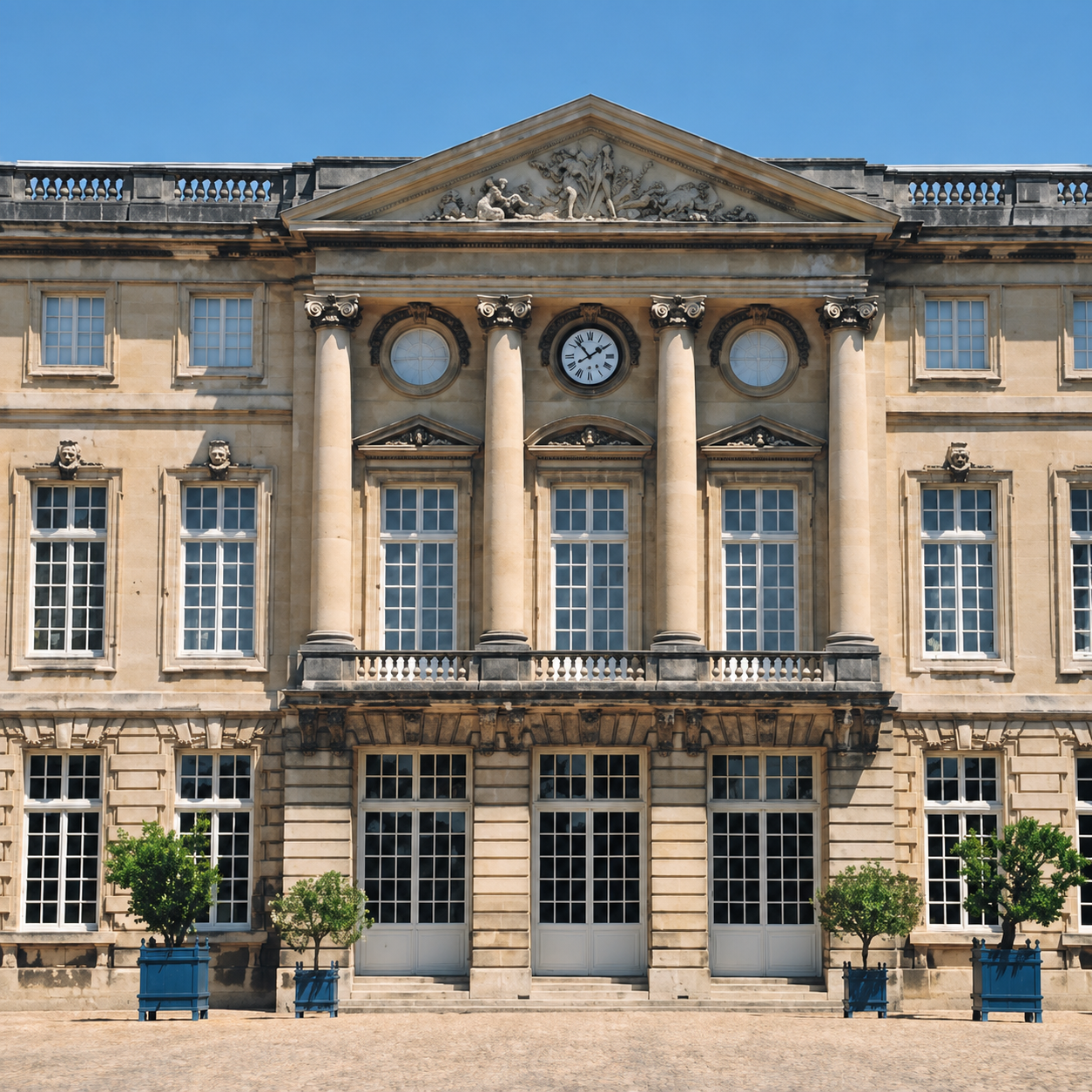
Château de Compiègne in Oise
MOVING ON
As the 19th century progressed, so too did class structure, and who could afford the building and upkeep of town and country mansions. More and more people were making enough money to build their own version of stately homes – what we might describe as ‘des res’ – including entrepreneurs who wanted their own châteaux or manoirs built to their own specifications. Many a Neoclassic château was built around the country including in the Loire Valley, once the exclusive domain of kings and nobles. Maisons de maître are smaller but still generous in proportion, offering the chance to create a more than enviable lifestyle for anyone lucky enough to buy one today – and they continued to be built in the Neoclassic style until the turn of the 20th century.
Joanna Leggett is Leggett Immobilier’s Marketing Director – view the full portfolio of properties at leggettfrance.com
The unique mix of legal, financial and tax advice along with in-depth location guides, inspiring real life stories, the best properties on the market, entertaining regular pages and the latest property news and market reports makes French Property News magazine a must-buy publication for anyone serious about buying and owning a property in France.

Lead photo credit : © SHUTTERSTOCK