Apply for French Nationality/Citizenship STEP-BY-STEP: Preparing for your Interview (Entretien d’assimilation)
Essential Reading
FrenchEntrée digital editor Zoë Smith takes you through the long process of applying for French Nationality (Citizenship) – step by step.
In the seventh article of this series, we’ll go over how to prepare for the all-important interview at the préfecture. If you missed the other articles in this series, scroll down to the bottom for links.
What happens in the French citizenship interview?: My own experience
Being invited for an interview at the préfecture is arguably the most crucial step of the entire French nationality application process, so it’s essential to be prepared. Historically, these interviews varied greatly between préfectures, with some people reporting a brief and casual chat, and others reporting an hour-long grilling on French history, geography, and culture, but since the new memo was sent around to préfectures recently, it seems that préfectures are following a more standard interview structure.
Most candidates report interviews following a similar structure to my own (detailed below), and taking between 30 minutes and 45 minutes. If your situation is more complicated or there are a lot of documents to update, it could take longer; similarly, a very simple application with few documents to update could be over quicker.
Here’s how my own interview went*:
- The agent started by introducing herself and explaining what would happen in the interview.
- She asked for my passport and checked this, then some other documents that I had been asked to bring, including the original copy of my birth certificate, my latest tax return and quittance de loyer (rental receipts), a relevé de carrière, and some other documents relating to my work situation.
- She asked several questions about my work, financial situation, personal situation (marriage, children, etc), why I moved to France, my French friends, whether I’m in any associations, how I spend my spare time, etc. I was given quite a bit of time to talk here, which gave me plenty of opportunities to show how integrated I am in France and to talk about my long history with France (having had a second home here since I was a child).
- I was asked several questions relating to my home country (the UK), including how often I visit, whether I still have family and friends there, what British culture practices I still uphold in France, what I prefer about France over the UK, and if there is anything I don’t like about France.
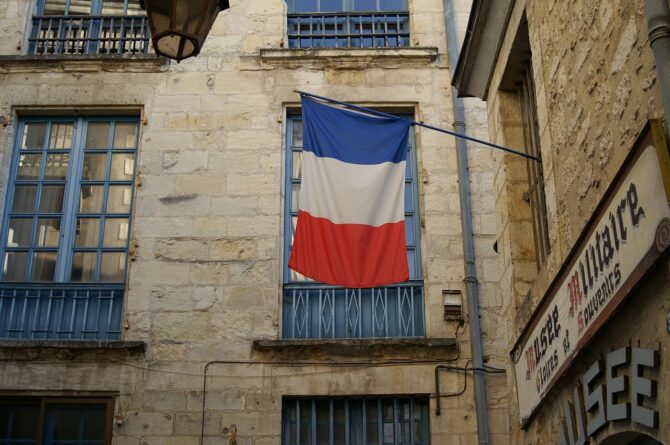
- We then moved on to the question-and-answer portion of the interview, and at this point, she told me to just answer the questions, not to elaborate. I was asked about 20-30 questions, all based on the Livret de Citoyen (see below), they included easy questions, like the colours of the French flag, the date of the fête nationale, how many countries are in the EU, and the French motto, as well as who is Simone Veil, the presidents of the fifth republic, the dates of the world wars, who was the King during the French Revolution, who is the current Prime Minister, and to list some French authors. These were mixed in with some more opinion-based questions, for example, what was my opinion on Charlie Hebdo, what did I think about laïcité, what are my views on abortion, etc.
- My final question was the classic “Why would you like to become French?”
- I was then asked to read and sign the Charter of Rights and Duties of French Citizens.
- Finally, she talked me through the next steps, gave me an indication of estimated wait times, and asked me if I had any questions for her.
The whole interview took about 40-45 minutes, and although I was very nervous, the agent conducting the interview was really nice and tried her best to put me at ease. Overall, it was a positive experience and I left feeling like I’d really been able to “make my case” for citizenship, as well as feeling confident that I had answered all of the fact-based questions correctly – thankfully, I had done my homework and spent several months memorising everything in the Livret de Citoyen.
*NOTE: This is based on my own experience only, and while it does seem to follow a similar format to many other candidates’ interviews, there is no guarantee that your own interview will be the same.
To learn more about the interview process, make sure you read the previous guide in this series:
Apply for French Nationality/Citizenship STEP-BY-STEP: Interview at the Préfecture
How to prepare for your French Nationality Interview
Whether you’ve already received your convocation entretien d’assimilation (interview summons) or you’re still waiting, the sooner you get started on preparations, the better. The most important part of the preparations will be to learn the information that is in the Livret de Citoyen (the Citizen’s Handbook), which you can download here. It might look small, but there’s a lot of information packed into it, and – as I can vouch from personal experience – you really do need to know everything that’s in here.
I suggest leaving yourself plenty of time to revise the information in the book over several weeks or months. You should memorise important names (of French historical figures, politicians, etc), dates (such as the different jours fériés and what they signify, the dates of the world wars, the start and end of the French Revolution, etc), the towns, regions, and geographical landmarks of France, and other facts relating to France.
Ideally, you should also spend some time reading about or watching videos on each subject to ensure that you understand them fully, as you may be asked to explain them or give your opinion on them – simply repeating the facts won’t always be enough. For example, you should feel confident explaining French values like “laïcité”, “fraternité”, and “liberté”, as well as the role of the Senate or the rights and responsibilities of French citizens.
It’s equally important to realise that you may be asked questions that aren’t in the book, especially if the interviewer wants to better understand how integrated you are into local life and culture. You might be asked what French TV shows you are currently watching, what French bands or singers you like, or where you last went on holiday in France.
If you don’t already, make a habit of reading or watching the French news and staying up to date with current events, politics, and notable figures. While you won’t be expected to know everything, you may well be asked a question about a recent national news story or a recent election. You should also be aware of important local information, such as the mayor of your town.
Preparing for personal questions
It’s easy to focus solely on revising for the question-and-answer part of the interview, but don’t forget to prepare your answers to the personal questions too. Most important is the one question that you’ll undoubtedly be asked: “Why do you want to be French?”. This is a critical question, so give it some thought and prepare a proper response to this. The best responses are thoughtful, honest, and personal, so think about what it really means to you to be French. Perhaps there is a French value that really resonates with you, an opportunity or freedom that France has afforded you that you didn’t have in your country of origin, or a deep affiliation with France through family connections, your work, or your studies.
You will also likely be asked plenty of questions about your personal life, friends, hobbies, and everyday life in France. The most important thing here is to be honest – remember that everything you say will be checked up on – but keep in mind that these questions are being asked to determine whether you understand and practice French values, and how well you are integrated into France. With this in mind, make sure you use this opportunity to show all the ways that you areintegrated. It’s often difficult to come up with an eloquent answer to these kinds of questions on the spot, so prepare for these questions just like the rest of them and write down all the key points you want to remember.
Preparing for your French nationality interview: Useful resources
While the Livret de Citoyen will be your best friend through this whole process, there are plenty of other resources to help you prepare for your interview. Here are some resources that I used during my preparations – if you find any others, make sure you share them in the comments!
(Please note: these are NOT FrenchEntrée resources, so we can’t guarantee the information in them is correct or up-to-date – use them to help you practice, but always refer to the official Livret de Citoyen.)
For a comprehensive list of common questions:
200 questions for the French Citizenship interview
200 questions Naturalisation Française
Multiple-choice test based on the Livret de Citoyen
YouTube
These AI-generated Q&A videos are a great way to test yourself if you’re more of an auditory or visual learner:
200 questions and responses video
200 questions with advice on responses
While you (probably) won’t be asked to sing the Marseillaise in the interview, you should know it by heart:
Learn the French National Anthem
Some personal accounts and opinion videos that I found useful :
Entretien de Naturalisation par Décret – An American (now French!) account of his interview questions and answers in 2023
Quid Droit – some ideas on how to answer the “Why do you want to become French?” question
Quid Droit – an example interview to help you practice
Ju Jacq – another personal account of the interview process and questions
Learning about French culture:
Comme une Française – popular YouTube channel for learning French where you’ll find lots of videos on French culture, traditions, etc.
Français Authentique – another popular channel for learning French, you’ll also find some history, culture, and geography-themed videos here.
Français avec Nelly – There’s a great series on French culture covering TV shows, music, and more here
Podcasts
Podcasts on French history and culture:
La Fayette, We Are Here! – French history podcast with a Frenchman (English)
Histoire de France – Podcasts covering French history (French)
The French History Podcast – goes through French history chronologically, episode by episode (English)
Français avec Pierre – French learning podcast (they also have a YouTube channel), where they often focus on French history or cultural topics.
The following Facebook groups can be really useful to read other people’s experiences of the interview. Search for “entretien” or “interview” to read the many first-hand reports or pose your own questions in the group.
Tips and advice for the Entretien de Naturalisation
Hopefully, this article has helped you to understand what to expect for your French citizenship interview and given you some ideas for how to prepare. Here are my final tips and advice, but if you have more, please share them in the comments!
- Don’t wait until the last minute
As you can see, there’s a LOT to learn for this interview, and you really want to go into the exam feeling prepared, so my number one tip is: start NOW. Incorporate daily or weekly study sessions into your routine as early as possible and break it down into manageable chunks. This will make it far easier for you when you do receive your interview date, especially as some people have reported only having a few weeks to prepare.
- Study as if it were an exam
While you’ll often hear that this is an interview, not an exam (and that’s true – it isn’t as scary as it seems!), I still recommend studying for it as if it were an exam. Don’t underestimate how important the interview is or how much there is to learn. You aren’t going to “fail” the interview like an exam, but if you haven’t studied the Livret de Citoyen, it will be very obvious to the interviewer, and this could definitely hurt your chances of a favourable outcome. On the other hand, if it’s clear to the interviewer that you have revised and taken this interview seriously, it’s not going to matter as much if there’s one date that slips your mind or one or two answers that you fumble over.
I set aside dedicated study periods each day, hand-wrote flash cards and carried them around with me so I could test myself whenever I got a chance, and used a wide variety of videos, podcasts, and articles to help me.
- Find ways to make studying fun
Everyone learns differently, so make the most of all the different resources available to you. Watch YouTube videos or French TV and documentaries, read books or articles online, listen to podcasts on your morning walk or in the car on the way to work – there are plenty of ways to make studying more interesting.
- Study in French
Read, write, and revise everything in French! For many candidates, French will be your second language, and while you should have a solid command of it by now, it can be easy to fall back on your native language when studying topics like history and politics. My advice is to do 90% of all your studying in French – use French language resources wherever possible, write out or rehearse your answers in French and, if you haven’t already, make the switch to reading the news and watching TV in French only, at least in the weeks up until your exam. The more you immerse yourself in French, the better and, especially when it comes to more technical vocabulary, it will be of little use learning it in English as your interview will be in French.
If you must resort to English, do it to gain a more in-depth understanding of topics that you struggle with, but then challenge yourself afterwards to study those same topics in French.
- Practice out loud
Most people are going to be nervous on the interview day, so make sure you’ve practised your answers aloud beforehand. Ask your partner, a friend or a family member to test you on the 200 questions listed above, practice talking about your life in France and why you want to be French. You can also do this out loud on your own at home or in the car – you might feel silly at first, but it will quickly show up any areas of weakness and help prepare you to push through the inevitable nerves that you’ll have on interview day.
- Be honest
When it comes to the personal questions, don’t attempt to lie, conceal information, or withhold anything. Checks on citizenship candidates will be comprehensive and there’s a very slim chance you will be able to keep anything from the authorities – more importantly, if you are found to have lied about anything during the application it will be, at best, a reason to doubt the rest of your application or, at worst, a reason for a flat-out refusal. It’s not worth the risk.
If there’s something you are worried about, for example, you aren’t a member of an association or you don’t have many hobbies, then use the time before your interview to either make a change (maybe this is the perfect excuse to take up a new hobby and join an association?) or highlight other ways in which you contribute to the local community. For example, maybe you don’t have time for your own hobbies right now, but you have children in a French school and spend a lot of time at their after-school activities, where you often help out the other Mums. Remember, the interviewer is looking to see how integrated into local life you are and that you adhere to French values, not to judge your individual lifestyle choices!
- Don’t talk too much!
Depending on the interview and your agent, you may have more or less time to talk about your personal situation. Practice keeping your answers succinct and to the point to make sure that you get a chance to say everything you want to say.
For the question and answer section, simply answer the question you are asked – the agent will likely be typing your answers as you go along, and they are just looking for the answer, not for you to show how much you know. For example, if you’re asked the dates of the French Revolution, just say the dates; you don’t need to go into detail on all the different events and historical figures. If they need more information, they will ask a follow-up question.
- Try to relax
On the day, it’s normal to be nervous or feel overwhelmed (I certainly did!), but try to relax and remind yourself that you’ve done everything you can to be prepared. If you’re feeling nervous, it’s because you care, so don’t be afraid to share that with the agent conducting your interview. If you don’t fully understand the question, ask for clarification; if you’ve forgotten an answer, be honest! Remember, this is just one part of the application process, and if you are a strong candidate, it’s unlikely that you will be refused just because you were nervous or forgot a couple of answers. Breathe, try to relax, and just do your best.
Follow our French Citizenship series:
If you missed the other articles in this series, you can find them here:
Disclaimer: Please note that any screenshots or specific details of my own French nationality application apply to my situation only and are provided only to give you an insight into the process and what to expect. These are not intended as a blueprint for your own application, as your situation may be completely different to mine!
Also, please remember that I am taking you through the process with me in real time! This means there is the possibility that I have made errors on my application form, or will be asked to submit extra documents as I continue in the process. There is also (unfortunately!) no guarantee that my application will be accepted and that I will be granted French nationality.
Moving to France?
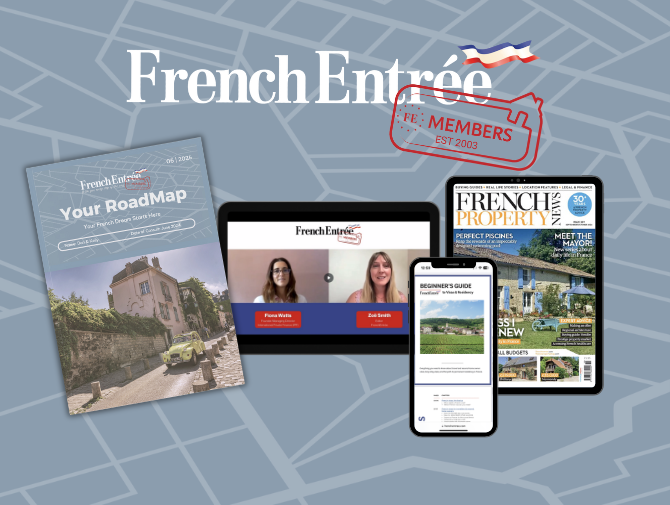
From applying for your visa and opening a French bank account, to integrating in your new community – FrenchEntrée is here to help! Let our Essential Reading and Visa & Residency articles guide you through the whole process. Or, if you need extra help, become a FrenchEntrée Member to access exclusive masterclasses and digital books, or speak with one of our FrenchEntrée Property & Relocation Advisors. Become a FrenchEntrée Member now!
Share to: Facebook Twitter LinkedIn Email
Related Articles


By Zoë Smith
Leave a reply
Your email address will not be published. Required fields are marked *