
What is the Livret du Citoyen? Essential Reading for French Citizenship & Residency Applicants
Essential Reading
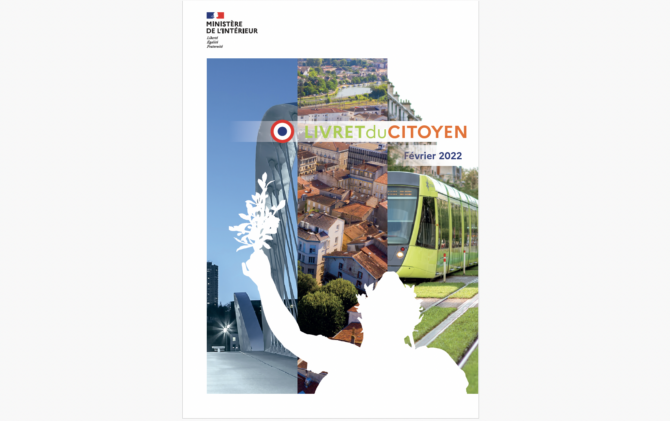

France’s Livret du Citoyen is the official government handbook detailing essential information for residency card applicants and French citizenship candidates, and a new version has just been released. Here’s what you need to know.
What is the Livret du Citoyen?
The Livret du Citoyen, or citizen’s handbook, is an official guide published by France’s interior ministry for French citizenship candidates. It presents the key topics that applicants should know prior to becoming a French citizen and forms the basis of the information on which you will be tested. It’s written in French, naturally, and should be understandable to those with a B2 language level (the level required for French citizenship applicants).
If you’re studying for the civics test (which is required for multi-year and permanent residency cards as well as for all citizenship applications) or preparing for the entretien d’assimilation, the crucial citizenship interview which takes place at your local prefecture, this should be top of your reading list.
Read more about applying for French citizenship or find out what happens during the citizenship interview at the prefecture.
What’s changed in the new Livret du Citoyen?
Following on from other recent changes to the French citizenship application process (including an increase in application fees and the introduction of the new civics test), a brand new edition of the Livret du Citoyen was released on the 16th July 2026. The previous version was released post-Brexit in 2022, so it was due an update—and there are quite a few changes.
Anyone who has read the previous Livret du Citoyen will immediately notice the biggest change: the updated version is now a whopping 83 pages long compared to the previous 28 pages! The new handbook is more comprehensive, with additional detail provided on key subjects and updates on new laws and political changes.
Some notable additions include:
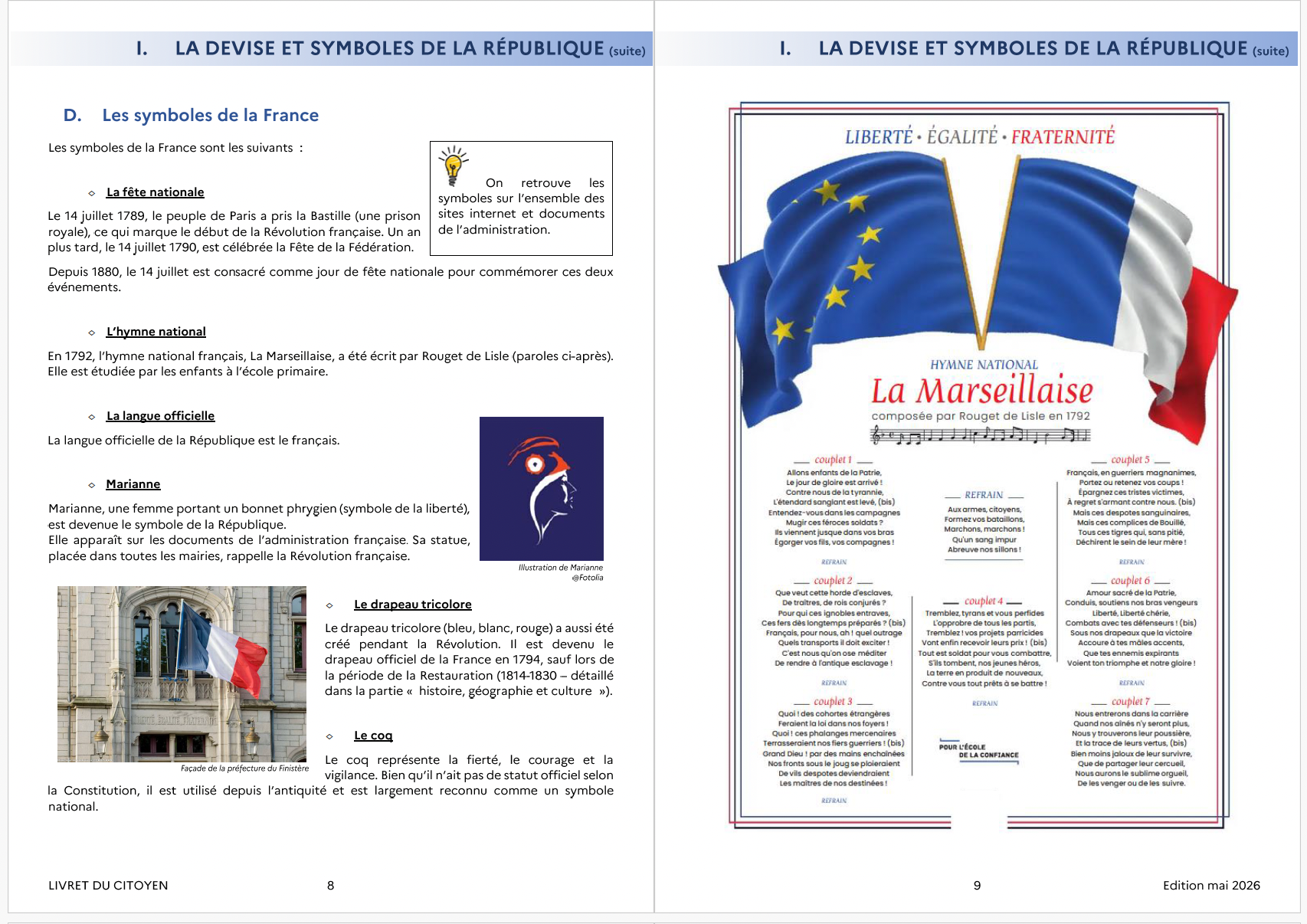
- The full text of the Marseillaise, France’s national anthem (it’s not clear whether or not you’ll be expected to sing it at the interview, but make sure you at least know the lyrics!).
- An additional two pages explaining laïcité (secularism), one of the most important principles of the French Republic, including clear examples of how this works in practice (this was previously a short paragraph).
- A handy map and timeline showing key events in the history of the European Union and the dates that different countries entered or left the EU.
- Updated and more in-depth information on the rights and responsibilities of French citizens, including new sections on women’s and LGBTQ rights, as well as the environmental charter.
- A new sporting section that mentions France’s footballing victories and the 2024 Olympic Games
- A whole new chapter detailing everyday life in France (everything from healthcare to recycling rules), the rights and regulations for working in France, and raising a family in France (parental obligations, the French education system, laws surrounding marriage, etc)
Do I need to learn everything in the Livret du Citoyen?
The short answer is yes! While you certainly won’t be expected to quote entire sections from the Livret du Citoyen, it’s highly likely that you will be asked questions on all of the key topics covered in the book.
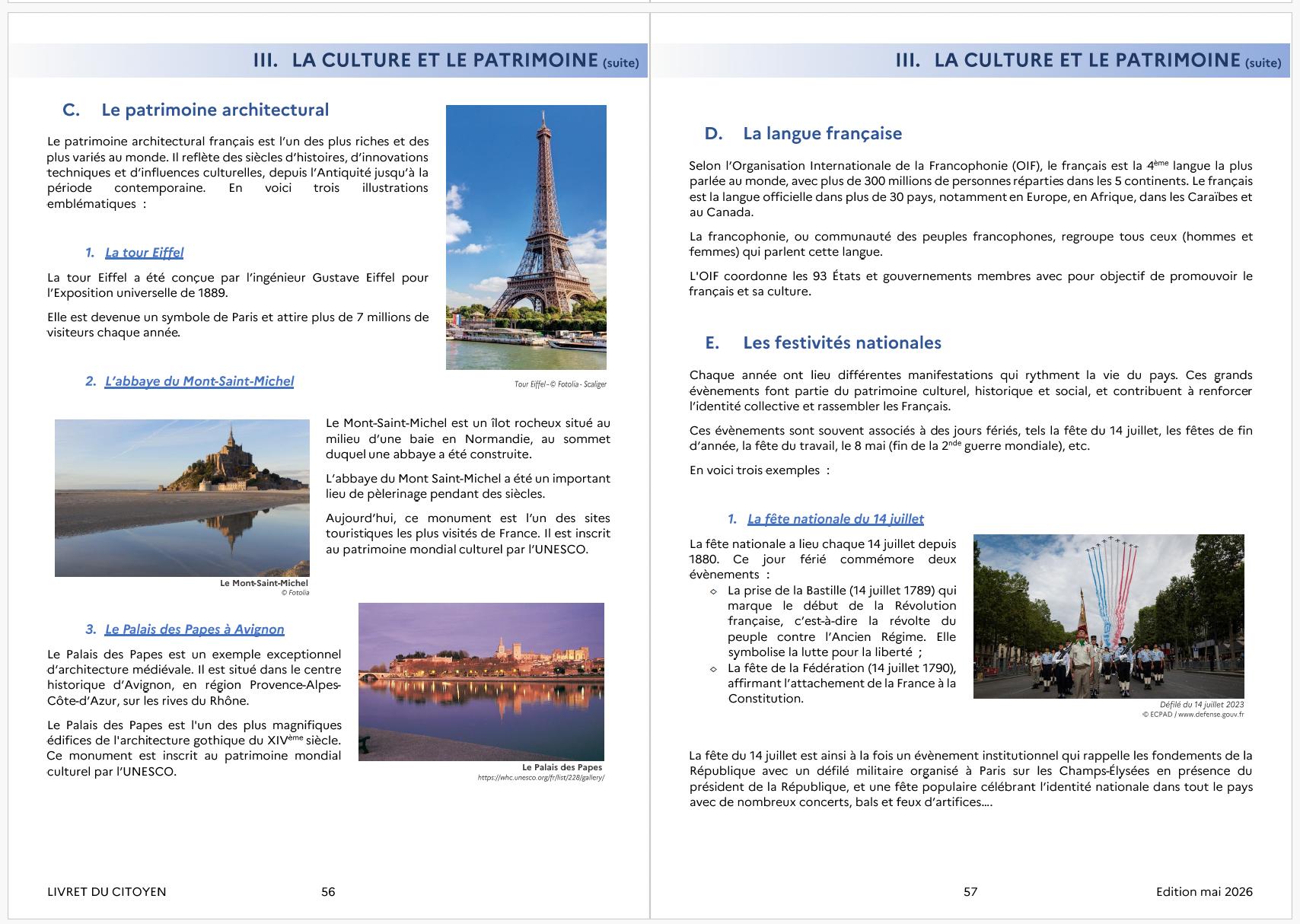
Citizenship interviews are expected to follow a similar format to the five chapters of the handbook (although they may not always be in that order), so make sure to study each section individually:
- Principles and values of the republic
- French politics and institutions
- Rights and responsibilities of citizens
- History, geography and culture
- Living in French society
My advice for studying for the citizenship interview or civics test
As someone who undertook the French citizenship interview in 2024 (read about my own application here), I can highly recommend familiarizing yourself with the Livret du Citoyen. It was, without a doubt, the single most important thing that helped prepare me, and almost every non-personal question I was asked during my interview was covered at some point in the handbook. (Note that it is still possible that you will be asked questions that aren’t in the book, but the vast majority should be.)
I can’t stress enough how important it is to really read and study it cover to cover! Even though I’ve been living, working, and writing about France for years, I’m certain that I would never have been able to answer all the questions I was asked without studying.
There’s a lot to get through, so give yourself plenty of time to read and re-read it, take notes. I focused on just a few pages each evening, made study cards to help me memorise important names and dates, and practiced answering questions out loud on the different topics (in French!).
Read our guide to preparing for the French citizenship interview for additional advice and plenty of free resources to help.
Do I need to read France’s Livret du Citoyen?
While the citizen’s handbook is aimed at those taking the French citizenship interview, it’s also great preparation for the civics test, which consists of multiple-choice questions but covers many of the same subjects. It’s also a really useful aid for anyone moving to France, especially if you hope to become a permanent resident or citizen one day. Understanding more about French law, politics, and culture is sure to help you better integrate into French life (plus, you’ll be one step ahead when you come to take the civics test one day).
Where can I find the Livret du Citoyen?
The new Livret du Citoyen is available as a downloadable PDF from the French government site – click the link below.
Download the new French Livret du Citoyen – July 2026 here
The book is free, so while you might choose to pay for services to help you study or practice your French, don’t be taken in by anyone who asks you to pay for the book itself!
Moving to France?
From applying for your visa and opening a French bank account, to integrating in your new community – FrenchEntrée is here to help! Let our Essential Reading and Visa & Residency articles guide you through the whole process. Or, if you need extra help, become a FrenchEntrée Member to access exclusive masterclasses and digital books, or speak with one of our FrenchEntrée Property & Relocation Advisors. Become a FrenchEntrée Member now!
Disclaimer: Our Essential Reading articles are designed to give an overview of the visa requirements and procedures for moving to France. We always check our information against the official government information made available to the public, however, please remember that all visa and nationality applications are considered on an individual basis and the exact requirements, fees, or application procedure may vary. Unless you are an EU citizen, obtaining a French visa is not a right, and we cannot guarantee that your visa will be approved.