News Digest: Eurostar Expansion, Wildfires & Is the Water at Your French Home PFAS free?
News

The recent heatwave has left large parts of France at risk for wildfires and drought, some communes in France have banned tap water due to forever chemical contamination, and women between 18 and 25 can now access free STI home tests. Here are the French news stories you need to know about this week.
1. Wildfire and drought alerts
After scorching temperatures swept much of southern Europe last week, the weekend also saw several major wildfires break out in the south of France. The fires started in the communes of Estézargues in Gard, Portel-des-Corbières in Aude, and Fréjus in Var, leading to hundreds of firefighters being deployed and the closure of the A9 motorway on Saturday. Further fires have sparked up today close to Narbonne, Marseille, and Bordeaux, and several areas remain on high alert.
While temperatures dropped throughout the country at the beginning of the week, they are set to climb back up into the 30s (°C) by Friday, leaving many areas at risk. If you live or plan to travel through a high-risk area, it’s a good idea to keep an eye on Meteo France, which has a colour-coded map showing the fire alert levels around France, and Feux de Forêts, which shows the most up-to-date status of recent and ongoing forest fires around the country.
The hot, dry weather also goes hand in hand with drought warnings, and many communes are already introducing water restrictions. Check the official website here for details of water restrictions in your area or ask at your local Mairie.
2. Eurostar set to increase capacity
The increasingly popular Eurostar train service between London and Paris is set to expand its capacity. The service, which is currently used by some 11 million passengers every year, is predicted to triple its services by 2040, when this number will increase to an estimated 35 million passengers. However, the weak link in increasing this capacity is London’s St Pancras Station, where the international departure area is often subject to overcrowding, lengthy queues, and delays.
This week, Eurostar and St Pancras have signed a joint statement of intention to solve this issue. Efforts will follow a two-pronged approach, including both an expansion or reorganisation of the current departures area at St Pancras, alongside the implementation of more streamlined and time-efficient security and border controls.
This comes hot on the heels of Eurostar’s recent announcements that it plans to start two new direct train services from London to Frankfurt and Geneva, set to run from the early 2030s.
3. Is your tap water safe to drink?
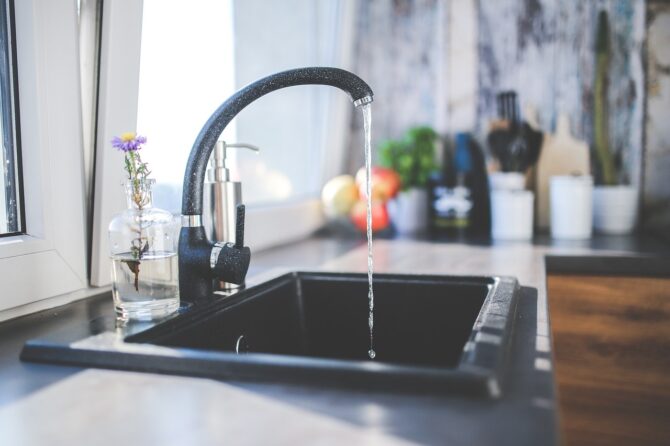
Tap water in certain parts of France is to be banned as new reports show it contains over the legal limit (100 nanograms/litre) of PFAS (per- and polyfluoroalkyl substances) – making it unsafe to drink or use for baby formula. Sixteen communes in the Ardennes and Meuse departments are affected, with the commune of Villy registering the highest ever level of the forever chemical in French tap water – 2,729 ng/l. Local governments are being put under pressure to come up with long-term plans to reduce the pollutants and bring the water back to potable standards. In the meantime, bottled water will be supplied to residents.
The Selectra website offers information on other high-level areas, including certain communes in Nouvelle-Aquitaine, Occitanie, Auvergne-Rhône-Alpes, Grand Est, Bourgogne Franche-Comte, and Normandy. The maps and tables show that certain departements are more at risk than others, and if you do live in one of these areas, it may be worthwhile investing in an activated carbon filter or nanofiltration device. However, these filters all have different rates of effectiveness and may not work on all PFAS
4. Free STI home tests
France is rolling out free home testing kits that allow testing for two of the most common STIs (sexually transmitted infections) or IST (Infections Sexuellement Transmissibles) in French – chlamydia and gonorrhoea. The tests can be ordered online and delivered to your home, where you can carry out the vaginal swab (women) or urinary tract swab (men) yourself, and send off the sample in the pre-paid stamped addressed envelope provided. The tests are delivered in an unmarked envelope and only take about 15 minutes to carry out – full instructions are provided. You can apply for a test here.
The Mon Test IST service is initially only open to women (who are deemed to be most at risk of lasting complications), but will also be made available to men later this year. The home tests are covered 100% for women between the ages of 18 and 25 registered in the French healthcare service, while women over 26 years will be reimbursed at 60%.
For a more comprehensive STI/STD screening, including HIV, Syphilis, and Hepatitis B, you will need to go to a laboratory, but these tests are now all available without an appointment or prescription. The tests are also completely free for anyone under 26 years old, while those over 26 are covered up to 60% (or 100% for HIV screening).
P.S. Happy Bastille Day!
It’s a jour férié (bank holiday) in France next Monday, July 14th, as the country celebrates its Fête Nationale, known to anglophones as Bastille Day. Look out for celebrations and firework displays in your local city or commune.
Share to: Facebook Twitter LinkedIn Email
Related Articles



By Zoë Smith
Leave a reply
Your email address will not be published. Required fields are marked *
REPLY