
Power to the pedal! Buying in France for Cyclists
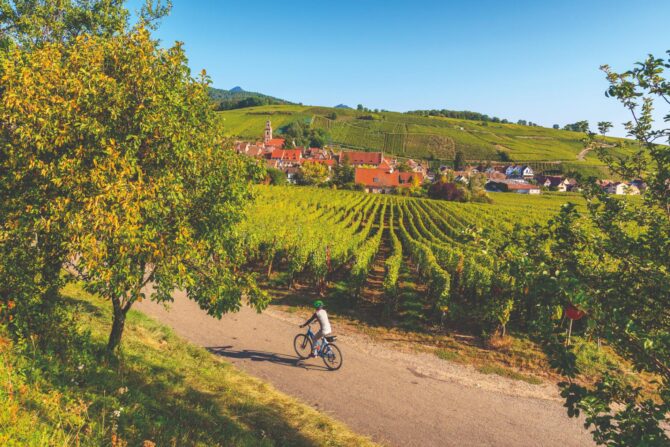
The French are passionate about cycling, whether watching the Tour de France or exploring one of the country’s many cycle paths, as Joanna Leggett explains…
Many of us dream of life in the French countryside. Cycling each morning to the boulangerie, returning home with the obligatory baguette and perhaps a wee pain au chocolat as reward?
France has had a long love affair with le vélo. Perhaps because of the wonderful cycling the country provides, undoubtedly from following le Tour each year (more of which later), definitely from limited access to automobiles in earlier years-let alone the joy of sailing along the road, wind in your hair, looking at gorgeous countryside, gardens and houses and general joie de vivre.
Steeped in the culture of the sport, France offers everything cyclists need including rolling terrain, quiet country roads, mountain ranges with incredible vistas – it really has it all! Mixed with (predominantly) courteous drivers, great roadside restaurants with wonderful cuisine and, of course, the Tour de France. 1 read somewhere if God created a country for cycling fans then it must have been France.
Like food, cycling here is taken very seriously – I’ve also seen it quoted that the French live to cycle or was it cycle to live? In any case there are cycleways and paths right across the country; better heeled holidaymakers can book plush cycling tours through vineyards (with convenient vans taking luggage from hotel to hotel picking up any bounty purchased en route) to families enjoying dedicated cycling paths such as the ecofriendly Veloflow from Thiviers in the Dordogne all the way out to the Atlantic Coast at La Rochelle. The route passes through some amazing scenery along the beautiful riverbanks. In Périgueux, for example, the Bois Vert runs beside the island below the wonderful cathedral of St-Front, which is said to have inspired the architecture of Sacre Coeur in Montmartre, which was in turn based on St-Mark’s Basilica in Venice.
UP HILL AND DOWN DALE
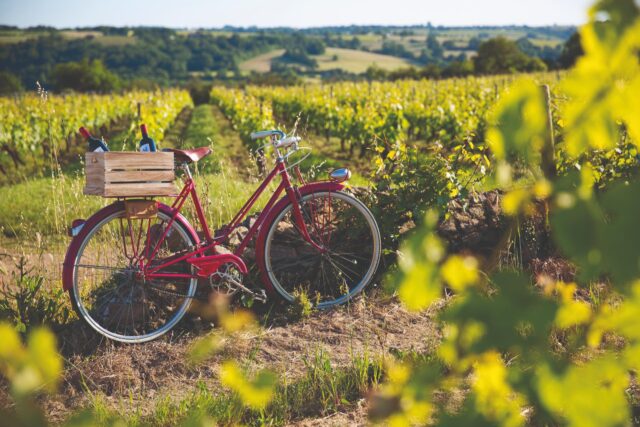
Other tracks wend their way through Normandy, the wonderful Loire valley vineyards, up hill and down dale. At vacation hotspots like the lle de Ré, so beloved by Parisians, everyone seems to travel on a bicycle to beaches, markets, cafés and restaurants. As this tiny flat island has over 100km of excellent cycling paths, you really wouldn’t want to travel any other way. The Côte d’Azur is another favourite place to cycle, as is Provence.
AVID ENTHUSIASTS
There are more challenging toutes for serious cyclists like not forgetting Mont Ventoux in the Provençal countryside, plus mountain biking in the Pyrénées and Alps. The serious cyclists with their pricey bikes and all ‘modcons have led to the collective noun “mamils”, a word with which to truly conjure. Now included in the Oxford English and French Dictionaries, this acronym is a term used to describe “a middle-aged man in Lycra or, more precisely, men who rile expensive racing bikes for leisure. It’s not always a good look….
Cycling first gained traction in France during the late 19th century and by the turn of the last century, the French were avid enthusiasts. This passion for two wheels quickly spread ensuring a deep seated (or bicycle seated) love for the sport.
In France it’s not just about racing but also enjoying the journey, cruising past châteaux in the Loire valley, tackling demanding mountain passes or cruising through vineyards surrounding Bordeaux-note that these latter soutes may have many enticements to stop and savour-well, it’d be rude to ignore local produce.
TOUR DE FORCE
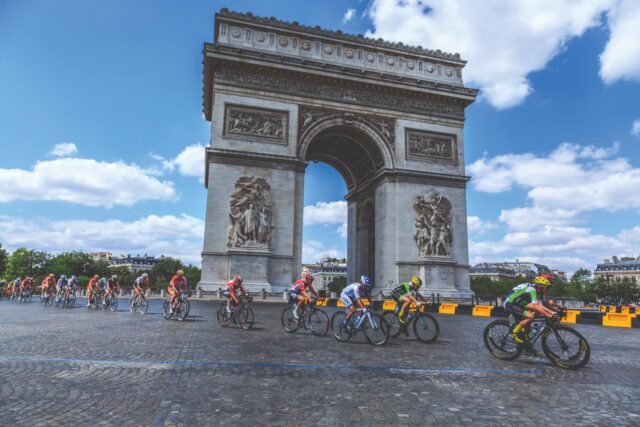
The oldest and most prestigious cycling race in the world, the Tour de France started back in 1903. It was created as a marketing ploy to promote sales of cycling newspapers. The initial plan was for a five-stage race, starting and finishing in Paris. Bicycles were heavy with minimal or no gears, and not set up for comfort or speed. The winner averaged about 16mph on several of the stages.
Controversy in sport is clearly nothing new, in 1904 cheating was rife and leading riders were disqualified. However, le Tour was greater than the sum of these parts, it grew both in size and popularity and has run every year since, with breaks for the world wars, to its present world domination of the sport.
Each year le Grand Départ starts at a different venue, once in Yorkshire as well as Spain, Dublin, Copenhagen, and Italy. It always includes time trials, passage through the Pyrénées and Alps, and finishes on the Champs Elysées except last year when Paris was preparing for the Olympics, Some 20-22 teams of eight riders usually compete, supported by professional teams, and hotels book out months in advance. fielgium
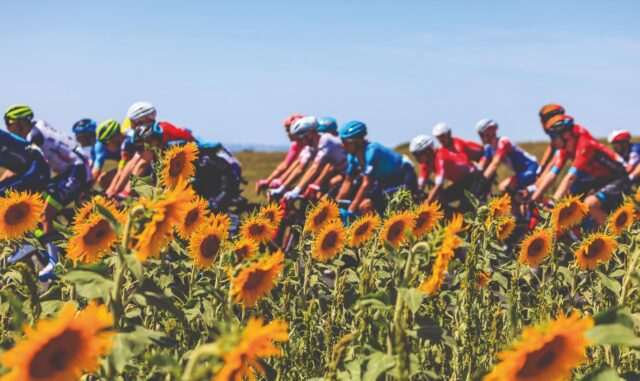
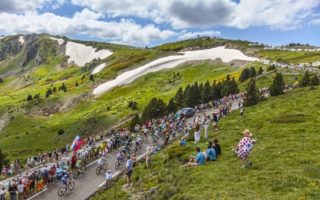
One of the greatest things about the Tour is the TV coverage. Even if you have little interest in cycling, it’s mesmerising with aerial shots of the countryside, focusing upon ancient châteaux and churches, villages and towns-France unrolls on the screen in front of you with a combination. of history and geography. It’s fascinating to see towns or places you’ve visited, or have always wanted to see, from the air. Avid enthusiasts follow the tour’s progress with their campervans or tents, cheering on their favourites, sometimes getting dangerously close to the teams in their enthusiasm!
The 2025 Tour starts in northern France in the ancient town of Lille on 5 July, finishing in Paris three weeks later. Lille is best known to many as the Eurostar station and interchange, however, it is a charming university city, once an important merchant centre of French Flanders, with 17th-century brick townhouses, cobbled streets and a large central square.
This year the Tour won’t cross any borders but it will visit 11 regions and 34 départements around the country, starting in the north with stages to Dunkirk and Boulogne. It moves on to Normandy visiting Bayeux (of tapestry fame) and St-Malo, then across Brittany, moving south in stages towards Toulouse and the famed mountain stages of the Pyrénées. Carcassonne is always a favourite stop for viewers of the race, before le Tour moves to Montpellier with a stage across to Mont Ventoux in Provence then up into the French Alps with thrilling mountain stages and impeccable scenery.
On 27 July, the race finishes in Paris with teams hurling themselves, jockeying for position, up and down the Champs Elysées, although the results are determined well before this stage usually.
FAMILIAR LANDMARKS
A few years ago the Tour passed close to us here in the southwest – it was exciting to see familiar landmarks from a new perspective. Overnight road closures and hoardings were erected to protect riders from the crowds, which seemed to disappear just as rapidly as soon as they flashed past in what felt like nano seconds.
As summer approaches, many country villages close streets for local cycle races. Then in the run up to le Tour, great flocks of cyclists erupt onto the usually empty country roads across the landscape, making their own pelotons, sometimes four or five abreast – pity the poor motorist who’s been stuck behind for several kilometres while they cruise along having a lovely outing.
They have been known to become animated when I’ve indicated that I’d like to pass the group – I like to compare it to being a bit like the ancient rule of droit de Seigneur! After three weeks of avidly following le Tour, this form of group activity seems to disappear promptly until the next summer approaches!
Joanna Leggett is the marketing director at Leggett Immobilier – view their full portfolio of properties for sale in France at leggettfrance.com.
Looking for more like this?
Every issue of French Property News delivers in-depth regional buying guides, sound and trusted advice from leading experts, inspirational real life stories, renovation tales and lots of lovely properties to browse.

Lead photo credit : Photo: Shutterstock
Share to: Facebook Twitter LinkedIn Email
Related Articles
Leave a reply
Your email address will not be published. Required fields are marked *