Buying Property in Paris: Why Due Diligence Means Avoiding Buying The Wrong Property
When buying property in Paris, the most important information isn’t always in the documents you receive. Sometimes, it’s what isn’t mentioned that matters most.
At Tomette Paris®, I believe thorough due diligence means asking the right questions, investigating further, and looking beyond beautiful photographs and persuasive listings.
One of the most important parts of my job isn’t helping clients buy property. It’s helping them avoid buying the wrong one.
Here are two recent examples.
A Charming Parisian House That Wasn’t Quite What It Seemed
My clients came across a listing that seemed irresistible: a charming house tucked away in a former industrial courtyard in a trendy Right Bank neighborhood, with an 18 m² green courtyard. A rare find in Paris.
But a closer look revealed several surprises.
- It wasn’t entirely an independent house. Part of the ground floor belonged to another owner.
- The courtyard wasn’t owned by the property. The owner only had a right to use it under the regulations.
- The advertised 59 m² was misleading. Spread over three levels with two internal staircases, the usable space felt closer to 52 m².
- Despite a recent renovation, the DPE was F. A reminder that renovated doesn’t necessarily mean energy efficient.
And the asking price? Approximately €1.5 million. Based on the property’s characteristics and comparable market data, I estimated its value to be substantially lower.
Beautiful photographs and clever descriptions can be persuasive. But what are you actually buying?
When the Problem Is Next Door
In another recent transaction, my clients were considering an apartment in a Parisian building.
While investigating the property and its surroundings, I discovered structural concerns affecting the neighboring building, involving party walls and potentially impacting my clients’ building.
Remarkably, this wasn’t mentioned in the copropriété meeting minutes, nor had the listing agent brought it to my attention.
I investigated further and contacted the notaire to clarify the situation and its potential implications.
The objective wasn’t to assume the building was unsafe, but to establish the facts and make sure my clients had the information they needed before committing.
This is what thorough due diligence looks like: not jumping to conclusions, but refusing to leave important questions unanswered.
Due Diligence Goes Beyond the Paperwork
Reviewing copropriété meeting minutes, financial statements, technical diagnostics, and legal documents is essential. But it’s only the starting point.
I also look at the building’s condition, planned works, potential financial liabilities, structural concerns, and inconsistencies between the documents and what I observe during visits.
Sometimes, this means contacting the building management, checking administrative records, consulting the notaire, or recommending an additional technical assessment.
What is missing from a document can be just as important as what is written in it.

Why My Legal Background Makes a Difference
Before founding Tomette Paris®, I spent 25 years working as a lawyer in international business, compliance, and anti-fraud.
That experience taught me to question assumptions, cross-check information, identify inconsistencies, and investigate when something doesn’t add up.
I bring that same mindset to every property search. My role isn’t to replace architects or structural engineers, but to identify potential issues, ask the right questions, and ensure that further advice is obtained when necessary.
As an independent buyer’s agent, I have no property portfolio to sell. My responsibility is to protect my clients’ interests, not persuade them to buy a particular apartment.
Sometimes due diligence provides reassurance. Sometimes it leads to a price negotiation. And occasionally, it means advising clients to walk away from a property they’ve already fallen in love with.
Sometimes, the best investment decision isn’t the property you buy. It’s the one you choose to leave behind.
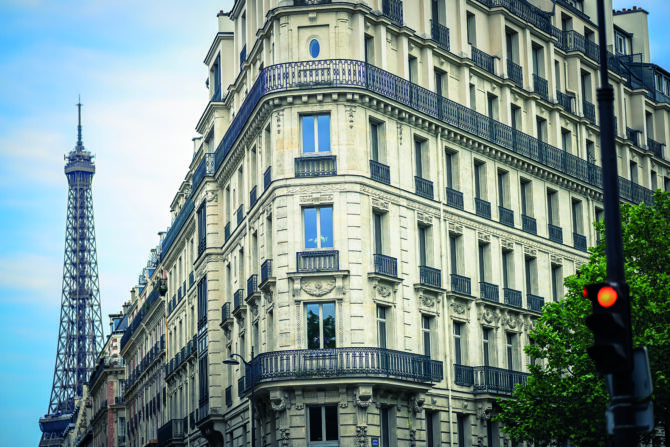
Lead photo credit : View with a Hausmann-style building (flat) with the Eiffel Tower (Tour Eiffel) in the background in Paris, France on July, 16, 2023.