France’s Airbnb Crackdown: What Property Owners Need to Know
Sponsored Content
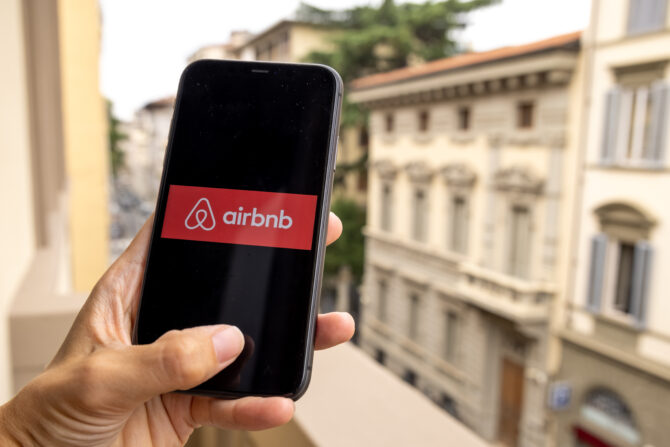

Jacques Cutting is a bilingual French-English Apprentice Solicitor at Stone King. As part of his day-to-day work, he advises British individuals and families on a wide range of French legal and tax matters. In this article, Jacques examines the recent tightening of French rules governing short-term holiday rentals and the implications for British property owners in France.
Since Airbnb was launched in France in 2012, short-term holiday rentals have grown dramatically and become an important source of income for many property owners. Generous tax incentives and relatively light regulation encouraged both French and foreign owners to rent out their properties when not in use.
However, as in the UK, France is facing a housing shortage in many cities and tourist hotspots. Policymakers increasingly argue that the rapid growth of short-term holiday lets has reduced the availability of long-term housing and contributed to rising rents. In response, the French government and local authorities have introduced a series of measures designed to curb the expansion of Airbnb-style rentals, reduce tax advantages and impose stricter compliance requirements on property owners.
France’s Airbnb Crackdown
For many British owners, renting out a French holiday home on Airbnb has long been an attractive way to offset running costs. Whether it’s a city apartment in Bordeaux, a cottage in Normandy or a villa on the Côte d’Azur, occasional holiday rentals can provide a useful source of income while allowing owners to continue enjoying their property for part of the year.
France’s preferential tax treatment of short-term rentals has helped it become Airbnb’s second-largest global market. Many second homeowners have opted to rent out their property while they are not using it.
However, recent changes to French tax and rental regulations are beginning to alter the landscape. New rules affecting furnished holiday lets (“meublés de tourisme“) have reduced the tax advantages previously available to many owners, while also introducing additional registration and compliance requirements. Consequently, some property owners may find themselves paying tax on a significantly larger portion of their rental income than they would have done just a few years ago.
Before January 2025
Homeowners of unclassified furnished holiday lets (meublés de tourisme non classés) were entitled to a tax allowance of up to 50% and an income of up to €77,700. For example, if your annual rental income was €20,000, your taxable income would only be €10,000 once the tax allowance was applied. This income threshold was sufficient for most homeowners unless they wanted to run the property as a full-time business.
In this case, they could register the property as a meublé de tourisme classé. The tax allowance would then increase to 71%, with an income limit of €188,700. However, registration incurs a cost. The property would need to be audited and strict equipment requirements would need to be met, as well as a greater administrative burden being incurred.
Since January 2025
For meublés de tourisme non classés, the income limit has been reduced to €15,000, with the tax allowance being brought down to 30%. If your income exceeds €15,000, you will enter a new tax bracket called the régime réel and lose your tax allowance. However, with the régime reel, you will be able to deduct any expenses from the income.
Please note that even if your income is less than €15,000, you can opt for the régime réel. This option is only worthwhile if the tax regime allows you to deduct expenses and charges amounting to more than 30% of the income. The régime réel will impose more rigorous accounting requirements.
If the property has been registered as a meublé de tourisme classé, the income limit has been reduced to €77,700, with a tax allowance of 50%.
Your main home is in France
If you have decided to move to France full time, but wish to rent out your French property on Airbnb or Booking.com while visiting friends and family in the UK, this is relatively simple. But you should check with your local town hall to see if they have specific rules in place.
With the passing into law of the loi ELAN, if you live in Annecy, Biarritz or Bordeaux, you will be required to obtain a number called a ‘numéro de déclaration’, which must be shown on your online advertisement. More and more towns are deciding to adopt this registration system each year. If you do not have a registration number, your ad is likely to be taken down, and you could face a fine. Paris, for example, has been regularly increasing the penalty and the number of checks carried out. Before setting up your Airbnb account, you should also check whether you need a SIRET number.
You should also check with your local town hall how long you can rent out your property for. As a general rule, you cannot rent out your main home for more than 120 days a year. However, some towns, such as Bordeaux, have reduced this limit to 90 days per year.
Research is key
Before starting the rental process, whether for your main or holiday home, you should check with your local Mairie what specific rules and regulations you must comply with.
In most towns with over 200,000 residents, short-term rental rules are gradually becoming more restrictive in order to incentivise long-term rentals. In Bordeaux, for example, Airbnb-style rentals are subject to a compensation requirement. Every property owner in Bordeaux who rents out a holiday flat or house must convert another property into long-term rental accommodation. This other rental accommodation must be created from premises that are not currently being used for residential purposes, such as offices or shops.
As with all French matters, seeking advice from a professional can prevent costly mistakes or misunderstandings.
If you are interested in finding out more about estate planning and trust use in France and would like help analysing the options available to you, please contact the international and cross-border team at Stone King LLP either by calling +44(0)1225 337599 or by emailing [email protected].
Lead photo credit : Shutterstock