Starmer Resignation Process Adds to UK Market Uncertainty: Sterling Update

Here’s the latest currency news from our partner Moneycorp, to help you find out what your money is worth.
UK leadership uncertainty leaves GBP without support
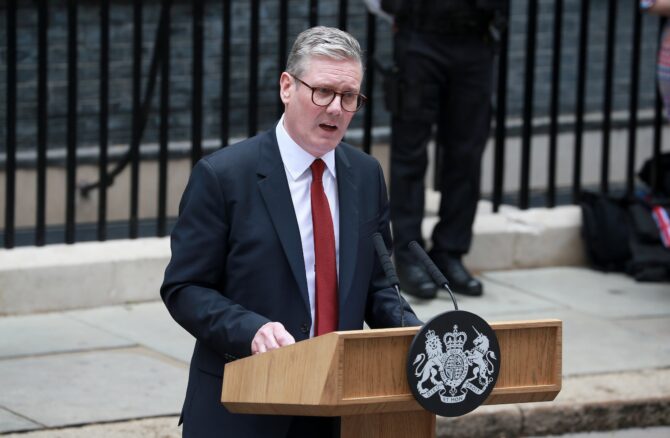
UK media coverage over the weekend focused on cabinet ministers, many of whom offered a less robust defence of Prime Minister Keir Starmer, suggesting that preparations for a transition were already underway. Starmer announced his intention to stand down this morning, while remaining in post until a successor is appointed. This has not generated significant market movement, but it does little to support confidence.
The short‑odds favourite to succeed Starmer, Andy Burnham, is facing increasing scrutiny over potential cabinet appointments and policy priorities, should he secure the leadership.
For markets, several questions remain. Who else may challenge Burnham? What form might a new cabinet take? Would fiscal policy shift towards higher or lower public spending as a share of GDP? Might fiscal rules be revised again, and would any spending plans be fully costed? What would the broader policy agenda look like?
The UK data and survey calendar is limited this week. Bank of England speakers, including Taylor, Dhingra and Breeden, are due, and may re‑emphasise the challenges of raising interest rates against a backdrop of weak growth, labour market stagnation and elevated inflation in essential goods. GBP may struggle to find independent upside this week, in my opinion.
US‑Iran talks proceed but remain fragile
Talks between the US and Iran took place in Switzerland over the weekend, though progress was uneven. Discussions were paused at one stage, while Tehran has indicated it could close the Strait of Hormuz, even as transit continues. Iran also walked out following remarks from the US President that included renewed threats.
At the same time, fighting between Israel and Hezbollah continues despite an apparent ceasefire, complicating the negotiating environment and risking disruption to the talks.
For financial markets, failure to progress negotiations presents upside risk to energy prices and the US dollar. However, upside risks for yields in major economies appear more limited. It is notable that FX price action last week was driven primarily by shifts in monetary policy expectations rather than geopolitical developments.
Fed speakers likely to face scrutiny over inflation dynamics
Recent shifts in Federal Reserve communication, away from signalling rate cuts and towards the possibility of near‑term tightening, may remain in focus this week.
A number of Fed speakers are due, including Waller, Williams, Goolsbee, Kashkari and Barkin. On the data front, attention is likely to centre on the May PCE deflator, due later in the week. This is expected to show a slowing in the pace of inflation increases, though levels are expected to be above those recorded in April. June data may prove more encouraging.
At the same time, real interest rates in the US are declining, which in itself represents a degree of monetary loosening. The USD could continue to appreciate against some currencies, although much of the recent shift in monetary dynamics appears already priced in, in my opinion.
ECB communication in focus on further tightening approach
Several ECB policymakers, including President Lagarde and Chief Economist Lane, are scheduled to speak this week. Markets will look for clearer articulation of the ECB’s approach to further monetary tightening. Current guidance suggests that policy rates would move towards being less accommodative in real terms, rather than clearly restrictive.
The outlook is further complicated by the ECB’s comparatively more extensive policy adjustments in 2024 and 2025, which have yet to translate into stronger growth. Persistent weakness in the German economy adds to this challenge, with its structure appearing increasingly out of step with broader economic shifts.
These growth considerations may limit the ECB’s willingness to respond aggressively to inflation that is largely driven by external factors. For the EUR, this presents a challenging backdrop unless the Governing Council signals a firmer policy stance, in my view.
Why Moneycorp?
With a Platinum Trusted Service Award 2020 from independent review site Feefo and 40 years of experience in the industry, FrenchEntrée has been recommending Moneycorp for more than 15 years. During this time they have helped thousands of client planning the best way to pay for their property as well as supporting them afterwards with any further payment from paying bills, mortgages to repatriating UK pension payments for those who have retired to France.

Furthermore, we have worked with the same person at Moneycorp for more than a decade! You might be familiar with her as she often writes for our French Property News magazine. She has 13 years’ experience in foreign exchange, and is a qualified European lawyer with experience in European transactions. Mar will be happy to answer any questions or enquiries to support you through these difficult times
Opening an account is really easy and free of cost. You can register online or over the phone in a couple of minutes and for FrenchEntrée readers there are no transfer fees in any payment.

Want more help with your France property journey? Join Membership, search our Property Portal, subscribe to French Property News, and follow our YouTube channel for the latest advice and updates. Join us at the French Property Exhibition for expert advice and property inspiration.

Lead photo credit : Shutterstock