
Filling in Your First French Tax Return: A Simple Guide
Essential Reading
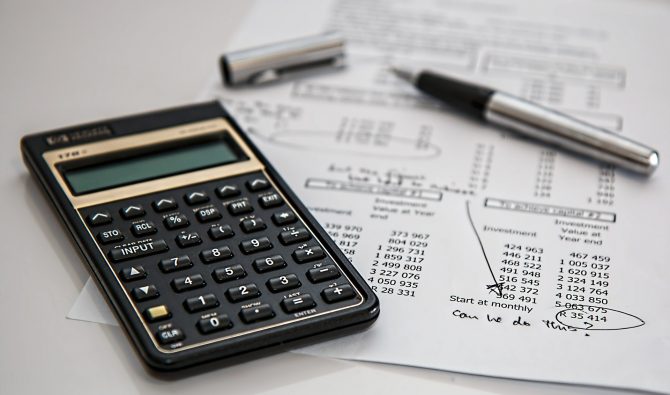
If you have recently moved to France, friends may well have warned you about tax return season. The government makes an announcement around March or April, and the submission of income declarations is staggered over three different deadlines depending on which department you live in. It’s an admin job no one likes; however, the prospect of filing your tax return for the first time doesn’t have to throw you into a panic! Here’s what you need to know about filling in your first French tax return.
Do I Need to File a Tax Return in France?
Everyone who is tax resident in France has to do a tax return whether they are in salaried work, freelance or not in work at all. You are tax resident if you:
- live permanently in France
- spend most of your time in France (more than 183 days a year)
- your professional activity is in France
- the centre of your economic activity is in France
You have to declare all your income, from whatever source, in France or abroad. The French tax authority (commonly known as le fisc) then sends you a tax notice in the summer and you pay your income tax. Since 2019, France has operated a PAYE system known as prélèvement à la source (PAS), meaning income tax is deducted at source from salaries and French pensions throughout the year. However, the universal annual tax declaration is still compulsory. It reconciles what you’ve already paid via PAS with what you actually owe, and may result in a refund or an additional payment. This is an important distinction: even though tax is now deducted monthly, you must still file a return every year.
On top of income tax, you should be aware of social charges (prélèvements sociaux), which include the CSG (contribution sociale généralisée) and CRDS (contribution pour le remboursement de la dette sociale). These are levied on most forms of income and are often higher than income tax itself. For 2026, the CSG rate has increased from 9.2% to 10.6% in several cases, including non-professional furnished rental income and capital gains on shares. Social charges are usually handled separately, deducted from wages for employees, or via URSSAF for the self-employed, but they are an important part of the overall tax picture that catches many newcomers off guard.
But, you may be asking yourself, I have already paid tax on my foreign income. Will I have to pay it again? The answer is ‘No’ if you are a UK citizen. France and the UK have a double taxation treaty that prevents tax being paid twice. This is a standalone bilateral agreement between the UK and France, entirely separate from EU membership, so it is completely unaffected by Brexit. The treaty covers income tax, capital gains tax, and corporation tax, and provides mechanisms such as tax credits and exemptions to ensure you are not taxed on the same income in both countries.
For some other nationalities, including Americans, you may still be required to submit a tax return and potentially pay tax in your home country. Contact an international financial or tax advisor if you are unsure.
Filling in Your French Tax Return: Do You Need Extra Help?
If you live alone and your financial affairs are uncomplicated, the declaration is relatively straightforward. But it is sensible to seek professional advice, especially if you have complex affairs, run a business, or there are several people in the household. The Ordre des Experts-Comptables is the French professional body for chartered accountants, so check that any prospective accountant is a member. Obviously, all the forms are in French so if you are not confident about understanding them, seek advice.
Our international financial and tax advisors can help.
Your First Income Tax Declaration in France
Your first-ever declaration must be submitted in paper form. Although France has moved heavily towards online filing for most taxpayers, first-timers are not yet registered with the tax system and in 2026 do not have access to the online declaration service. You will need to download the relevant paper forms from the impots.gouv.fr website, or request them from your local tax office (Service des Impôts des Particuliers, or SIP).
Once your first paper declaration has been processed, you will be allocated a tax number (numéro fiscal) and given the access codes to create your personal online account (espace particulier) at impots.gouv.fr. From the following year onwards, you will be able, and indeed required, to file online.
How Do I Obtain My French Tax Number?
Your French tax number is generated when your first paper declaration is processed by the tax authorities. See our full article on How to Get a French Numero Fiscal & Open Your Online Tax Account for further details on the process.
Once your account is set up you’re good to go with future declarations. The French tax year runs from January 1st to December 31st, so in 2026 you’re declaring for the calendar year 2025. If you arrived in France part-way through the year, you declare your worldwide income from the date you became French tax resident.
Filling In Your French Tax Declaration
There is a standard form everyone has to fill in (No.2042) but foreigners have a couple of additional forms for income earned abroad (No.2047), and foreign bank accounts (No.3916/3916 bis). Each one has a guidance note. If you are doing it yourself, completing a paper version first is useful as a dry run and if you want someone else to check it for you.
The local Mairie may hold consultations with a French tax lawyer or, if you are a member of local Facebook groups, you might see posts recommending local accountants or tax lawyers. It is sometimes possible to find a firm offering free consultations with an English lawyer. However, in all these situations, you may have limited time, so try to fill in the forms yourself first, and use the time you have to check they are correct and ask any questions you have. Of course, you can also get in touch with FrenchEntrée and they will put you in touch with one of their international tax specialists. If you own a business, have assets or investments in multiple countries, or have a more complicated tax situation, it’s highly recommended to seek expert advice.
Gather the relevant information beforehand. You will need details of your French-earned income such as salary, French pensions, rental income, investments etc. You also need details of any sources of income that were earned abroad e.g. a pension from a UK provider. On top of that you also need the details of every bank account that you still hold abroad, including any that you closed during the period you’re declaring. You’ll need the account numbers, precise dates of opening and closing, name and address of the financial institution. If you have very old or a large number of accounts this will almost certainly need some phone calls back home!
Submitting Your French Tax Declaration Online
After logging into your account on the French tax website, follow the link ‘Accédez à votre déclaration / je declare en ligne’,
which will take you to the declaration form. It allows you to move backwards and forwards without losing any information you’ve already inputted, and you can log off and come back later to pick up where you left off. There is also a mobile app (Impots.gouv) which can be used for simple declarations, though if your situation is at all complex you are better off using the full website.
You will be asked to enter personal details of yourself and anyone else living in the household. Then you enter your income. To declare foreign income and bank accounts, the ‘Déclaration Annexes’ takes you to the additional forms 2047 and 3916. You are advised to fill these in first as, once done, the information is automatically inserted in the relevant boxes on the main form.
At the end, you will be told to enter an electronic signature and submit. And your tax return has gone to le fisc.
Automatic Declarations
If your tax affairs are very simple and your situation hasn’t changed since the previous year, you may benefit from an déclaration automatique. Around 11 million households in France are eligible for this. The tax authority pre-fills your return with information it already holds, and if everything is correct, you don’t need to take any action; it is validated automatically. However, this only applies to established taxpayers with straightforward affairs; it won’t apply to your first declaration.
After You’ve Submitted
Obviously, it is sensible to double, even triple-check everything before the declaration is finally submitted. If you realise afterwards that a mistake has been made, all is not lost. You can correct errors up to the submission deadline by accessing your declaration online, or by sending an email to your local Centre des Finances Publiques if you submitted a paper copy. After the deadline, errors can still be rectified but they will take longer to take effect.
Your tax notice (avis d’impôt) will arrive during the summer. From 2026, if you filed online, the tax office will no longer send a paper notice by default. It will only be available in your personal online space, and you’ll be notified by email. You can opt to continue receiving paper notices if you prefer, but you’ll need to set this up in your account settings. If you submitted a paper declaration, you’ll receive your notice by post.
The notice will tell you whether you have additional payments to make, are due a refund, or have no further action to take. It will also confirm the withholding tax rate that will apply to your income from the following September.
And That’s It!
Tax returns give most people the jitters but they don’t have to induce blind panic. Give yourself adequate time, seek professional advice, and stay calm. Most people submit an accurate return and have no problems. There’s no reason why you can’t be one of them.
Want more help with your France property journey? Join Membership, search our Property Portal, subscribe to French Property News, and follow our YouTube channel for the latest advice and updates. Join us at the French Property Exhibition for expert advice and property inspiration.




REPLY
REPLY