
Visiting the Doctors in France: Appointments, Prescriptions, and Your Médecin Traitant
Essential Reading
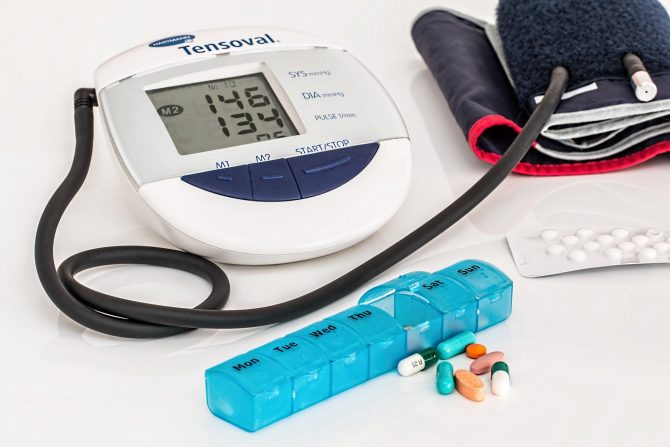
High on the list of priorities for expats arriving in France is healthcare. Once you’ve taken the first step of registering with the French healthcare system and applying for your Carte Vitale, the next step is finding a GP or general practice doctor, known as your ‘médecin traitant’. Here’s what you need to know about registering with a GP, making appointments, and visiting the doctors in France.
Finding a Doctor in France
Finding a decent doctor is probably top of your list of things to do when you move to France. Many of us have enjoyed a good rapport with our doctor and that relationship of trust is an important one. So, how do you go about replicating that in France?
Searching for a French doctor
A search on Ameli (France’s Social Security/Healthcare website) will help you locate doctors and medical practices in your area. You can also contact your local Caisse Primaire d’Assurance Maladie (Cpam) (health insurance organisation) directly for a list of local doctors or do an internet search for ‘Maison de Santé’ (Health Centre) or ‘médecins’ in your area.
It’s worth noting that while you can choose any doctor in France to be your médecin traitant, there are shortages of doctors in some rural areas, and you may find your local practice is full and are not taking on any new clients. Start your search early to avoid disappointment and if your chosen practice is full, ask them to add you to their waiting list—remember, you can change your médecin traitant at any time. If you live in an area officially classified as a zone d’intervention prioritaire (ZIP) by the regional health authority and you genuinely cannot find a médecin traitant, you can ask your CPAM to designate one on your behalf through the “Mon médecin traitant” service on ameli.fr.
Local advice and recommendations
A ‘good’ doctor is a subjective matter and individual opinions will always vary. As an English speaker, you may also be hoping to find a doctor who speaks some English. Asking for feedback via one of the many social media groups for local expats may begin to give you some ideas. Locals are often ‘in the know’ so you could also ask for recommendations from your neighbours, your mairie or the local headteacher if you have school-aged children.
If an English-speaking doctor is a priority, Doctolib also allows you to search for doctors based on language.
Do you need a médecin traitant in France?
It is up to you to find and declare your médecin traitant in France, and everyone resident in France over the age of 16 is advised to do so. You will not be assigned one if you don’t take the initiative.
There are clear benefits to having your own GP, but one thing you may not be aware of is that not declaring a médecin traitant or visiting a doctor that isn’t your own will often cost you more. Reimbursement on consultations is typically 70% through the French healthcare system, but this is just 30% for those without a declared doctor. Most mutuelles (top-up health insurances) will require you to declare a médecin traitant and if you don’t, you may not be able to be receive reimbursements on certain treatments.
However, you can visit a doctor in France without being registered and online booking sites such as DoctorLib also offer video consultations if you can’t make it to a practice.
Registering With a Doctor in France
Once you have found a médecin traitant willing to take you on, you will need to make an appointment to register.
In order to make an appointment, brush up on your French (our ‘At the Doctor’ French phrases list might help!) and take the plunge via the telephone, or go in and see the secretary yourself. You may be asked for your Social security card and/or proof of your address. You will also need to complete a form in order to be registered with that particular doctor. The form is the standard Cerfa n° 12485, which most doctors will give you on the day and submit directly to your CPAM electronically. This form may need to be sent to your Health Insurance Mutuelle too, so bring the details of your mutuelle with you.
Medical records
When you arrive in France, bring your medical records with you from your previous country of residence. Sometimes you may be charged a small fee in your home country for photocopying or administration, but it’s important to be able to present this information to your new doctor in France. Try to source your full medical history, including your vaccination record. Once you are in the French system and have your social security number, those records can be uploaded into your Mon espace santé account at monespacesante.fr — the secure online personal health record introduced in 2022 (replacing the older Dossier Médical Partagé) — so that any French doctor you authorise can consult them rather than you having to bring paper copies to each appointment.
Visiting the Doctors in France
Making an appointment with your French doctor can be done by phone or in person, but most practices now allow online bookings. Many doctors appointments can be made online via sites such as Doctolib but you may find your practice has its own booking system, so be sure to ask if you can’t find them on Doctolib.
Once you have your appointment, it may be an idea to research some key vocabulary to help explain your condition. Translation applications are your friend – they may not be absolutely one hundred per cent accurate, but you will certainly be understood. Many doctors in France speak some English and the secretary may have already steered you towards an English-speaking practitioner, but it’s important to be prepared. Our medical terminology guide is a good place to start.
If you have ongoing prescription needs, take these with you, along with a simple translation of your condition.
Paying for your doctor’s appointment
There is a charge for visiting a doctor in France (€30 for a standard GP consultation with a sector 1 médecin conventionné since the new Convention médicale came into force on 22 December 2024 — up from €25 — with higher tariffs for specialists and out-of-hours visits), which is payable on-site, so bring some form of payment. Some doctors only accept cash, while others have card machines or may accept cheques, so check in advance if you’re unsure. Depending on your practice, this payment will be made either directly to your doctor at the end of the appointment or via the secretary.
This amount will be partly reimbursed by your state healthcare provider (and the rest paid by yourself or your mutuelle). Typically, you will be asked for your Carte Vitale and this will be taken care of automatically. Holders of a French carte de séjour (alongside French citizens and Belgian, Spanish and Portuguese ID-card holders) can also use the appli carte Vitale — a digital version of the green card on a smartphone. If you don’t yet have your Carte Vitale or have another form of private health insurance, you will be given a printed form (feuille de soins) to give to your insurer.
A note on flat fees: the state’s 70% reimbursement is net of a participation forfaitaire of €2 per doctor’s or specialist’s visit and per biology test (doubled from €1 on 15 May 2024, capped at €50 per person per year), and the standard arithmetic on a €30 GP visit is therefore: €21 reimbursed by the state, €2 retained as the participation forfaitaire, leaving €7 to be covered by you or your mutuelle. Children under 18, pregnant women and Complémentaire santé solidaire (C2S) beneficiaries are exempt from the participation forfaitaire.
Presciptions and Pharmacies in France
When you are given a prescription or an ‘ordinance’ in France, you will need to take this to the local pharmacy. You will generally be asked for your Carte Vitale, details of your Mutuelle, and possibly also your address and phone number if it’s your first time visiting that pharmacy.
Depending on the prescription, expect to pay all or some of the fees. You may be reimbursed depending on your ailment and/or your level of additional health insurance coverage. Some conditions are not charged for and neither are certain medications for children. Sometimes you may find you have to pay a nominal amount on items, such as €1 or €2 – the difference left after the percentages paid by the state and your mutuelle. Note that the non-reimbursable franchise médicale on prescription medicines is €1 per box, with a separate €1 per paramedical procedure and €4 per non-emergency ambulance journey, all capped at €50 per person per year.
Seeing a Specialist in France
If you need to see a specialist at a hospital or another medical practitioner such as an osteopath, your doctor will give you an explanatory letter to give to the specialist. Usually, you ring the hospital or medical practice to make the appointment yourself and your results will be communicated to your doctor. Sometimes, your doctor may even arrange an appointment for you and it’s worth asking them if they will do this for you if you are worried about it or unsure about being able to communicate in French. For non-admitted A&E visits, note also the forfait patient urgences (FPU) of €19.61 — introduced on 1 January 2022 to replace the previous percentage co-payment — or €8.49 if you have a long-term illness (ALD) or other exemption.
Everything You Need to Know About Healthcare in France
From understanding the French state healthcare system and visiting a doctor to choosing a mutuelle insurance and dealing with your and your family’s health concerns—FrenchEntrée is here to help. Follow our Essential Reading articles for everything you need to know about healthcare in France.
Want more help with your France property journey? Join Membership, search our Property Portal, subscribe to French Property News, and follow our YouTube channel for the latest advice and updates. Join us at the French Property Exhibition for expert advice and property inspiration.