Joanne Harris on Chocolat and the Writing Life
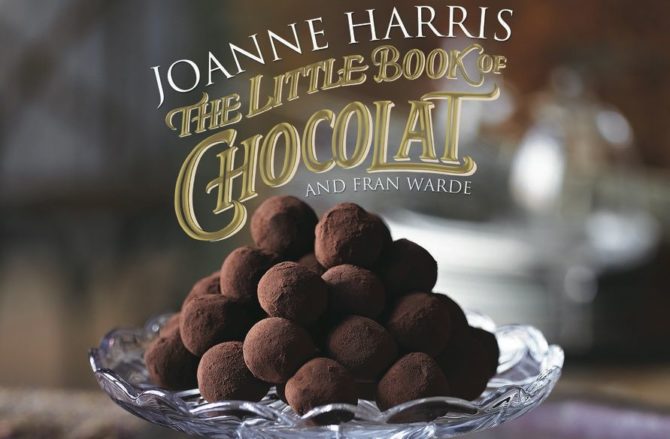
Joanne Harris, celebrated author of Chocolat, talks to Angela Sara West about the impact of her French family’s homes, food and scents on her fiction, from her earliest bestsellers to her latest prequel novel
More than 25 years after sensual Chocolat took the literary world by storm – telling the tale of mysterious single mother, Vianne, who sets up a seductive, contentious chocolaterie opposite a quaint French village church – Anglo-French writer Joanne Harris continues to captivate readers with her spirited storytelling.
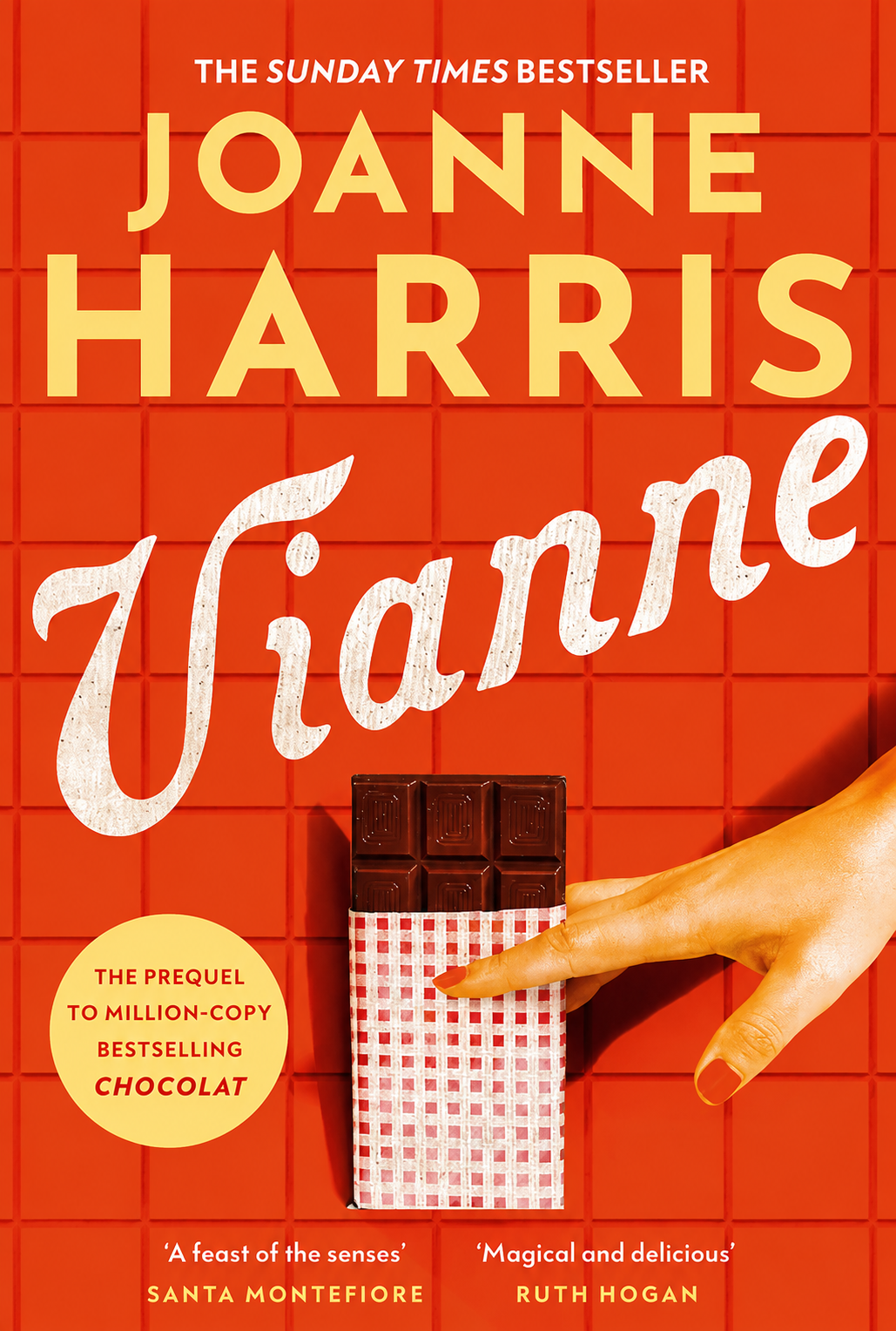
With its lively narrative exploring themes of curiosity, temptation and transformation, the charming book became a novel sensation. And now, following three successful sequels, the award-winning author has published the prequel, Vianne, unveiling her vivacious protagonist’s origins.
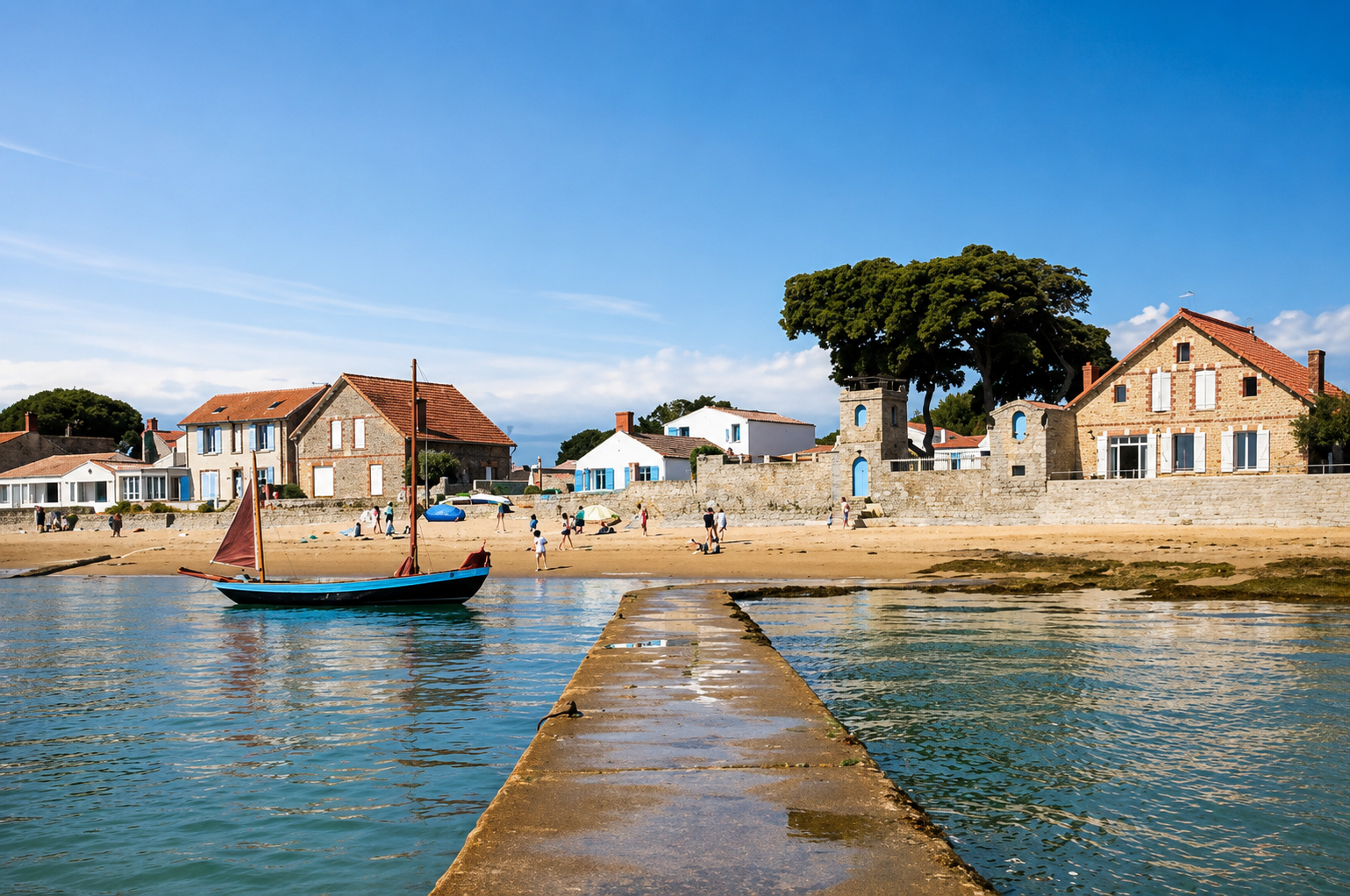
Noirmoutier, where a young Joanne (inset) spent many summer holidays
In a tale of two cultures, Joanne was born in Yorkshire to an English father and a French mother who met in France. “French was my first language, and I’ve always spoken it to my parents and French family,” she explains, “but English is the language I write in.”
Drawing from her blend of British/French backgrounds, her bestselling books are enriched by Joanne’s dual legacy and unique perspective. France and her French family hugely influence the author’s work, which weaves together deeply rooted customs, cookery and, of course, chocolate. “I’m lucky to have two cultures to dip into: two kinds of cuisine, poetry, folklore, tradition and literature,” she tells me. “I was also lucky enough to have grandparents with interesting stories. I’ve used both in my books, depending on the location and the character of the novel.”
FRENCH CHILDHOOD
The French way of life plays a pivotal role in the narrative, resulting in a harmonious blend of intrigue, French heritage, gastronomy and everyday life, so what does this vivid writer like most about France? “I love the sense of connection to heritage and how le patrimoine lives on in all kinds of things: recipes, traditions, stories and dress, alongside the rapidly changing face of politics and society.”
Having first visited France at just two weeks old, she spent childhood holidays in Brittany and western France – summers at her grandparents’ holiday home on Noirmoutier, and Christmas and Easter in the historic walled town of Vitré.
“I have so many memories…Taking my grandfather’s fishing boat out on Noirmoutier, riding his bike all over the island, cooking langoustines and mackerel on the barbecue, picking figs from his trees and hunting for glow worms at night. Also, the carnival in Vitré every Easter, and the château – which I could see through my bedroom window – lit up every evening.”
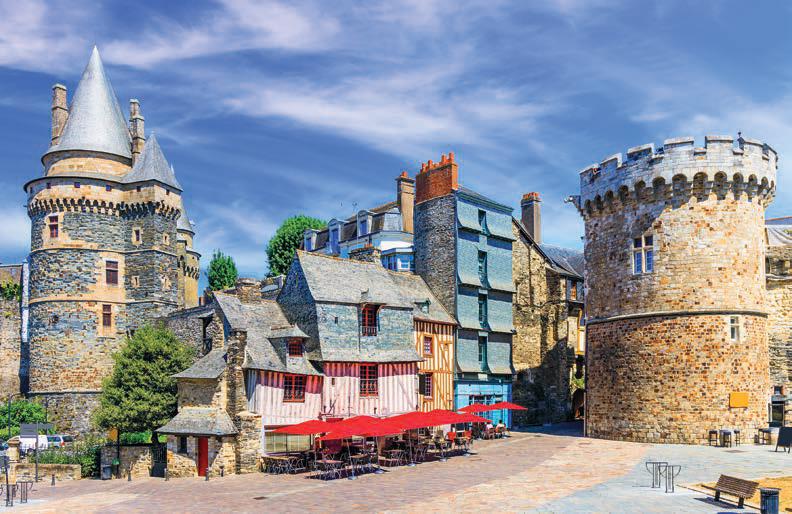
The historical walled town of Vitré; Joanne (inset) visited here many times in her youth
“I’m lucky to have two cultures to dip into: two kinds of cuisine, poetry, folklore, tradition and literature”
FOOD FOR THOUGHT
Joanne fondly recalls many memorable mealtimes. “The family together, 15–20 people at a time, all talking at once, helping my grandmother and great-grandmother in the kitchen, listening to their stories…”. Her French relations’ properties and fascinating tales are captured in the novels. “My grandfather’s fisherman’s cottage on Noirmoutier was very basic, comprising a main living room/kitchen with a concrete floor, in which my great-grandmother had her bed, and two attic bedrooms.
“His home in Vitré was an ordinary turn-of-the-20th-century terrace house, which had belonged to my great-grandmother,” she explains. “It’s part of my past, my heritage. To me, it’s the landscape of childhood.”
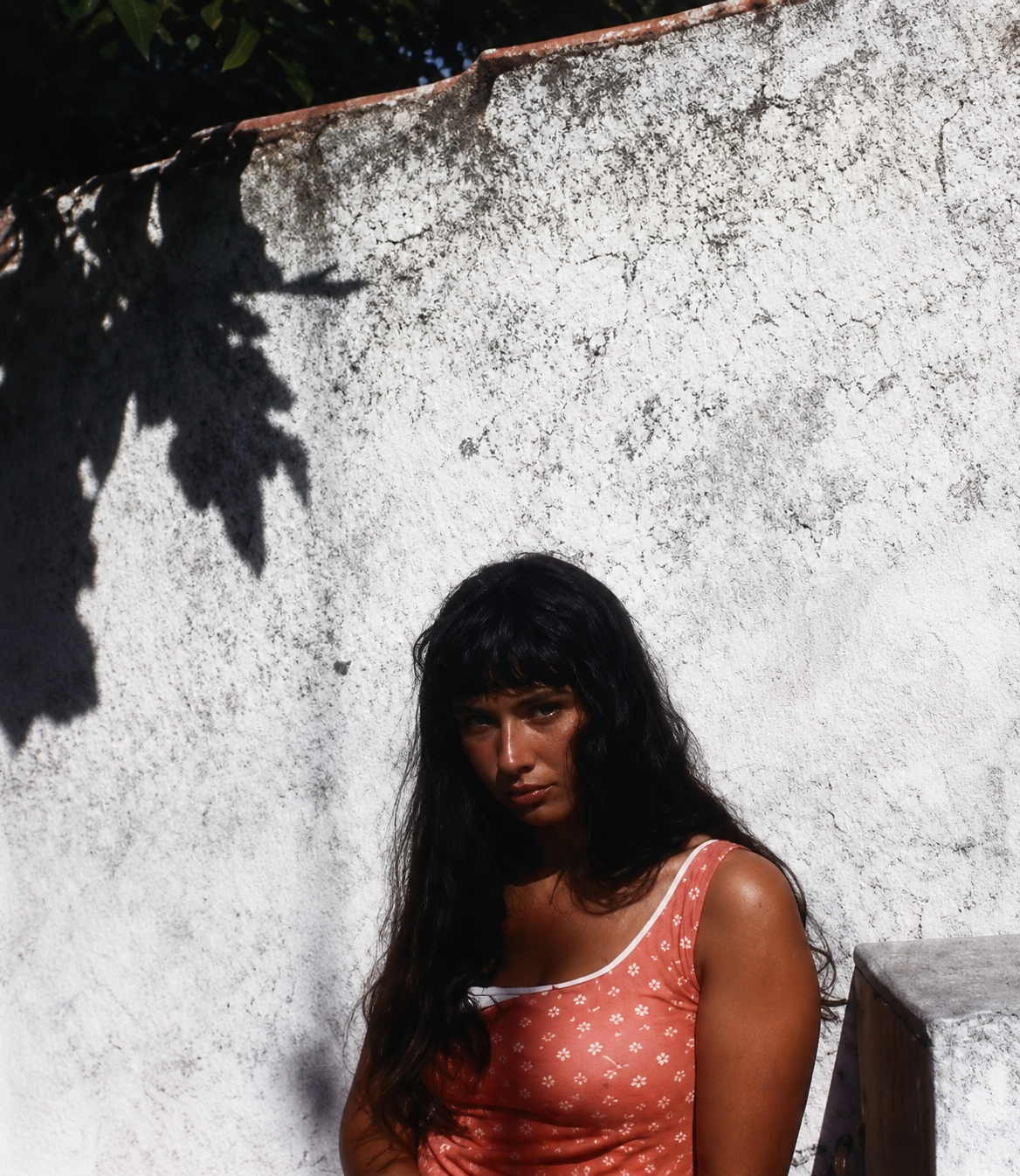
Joanne admires their design. “I like the simplicity of this region’s houses: whitewashed walls, red-tiled roofs, colourfully painted shutters, gardens filled with hollyhocks, tamarisks and rosemary.”
Gascony produced Chocolat’s concept. “My grandfather had an old friend who lived in Nérac, who he took me to see several times throughout my childhood. I fell in love with La Cigale chocolaterie there, where you could watch the chocolates being made from behind a glass screen, and loved the old wooden houses and narrowboats on the river, which became a part of the story.”
With chocolate the central metaphor, she kept the location quiet, although the town itself was very public about its association with the sell-out book. “I was deliberately vague about the inspiration for Chocolat until I realised that Nérac was completely supportive of the connection and started to advertise themselves with great pride as ‘the town that inspired the book’. So, I don’t make any secret about it now!
“Every village has a chocolaterie. It’s part of the French tradition of gourmandise. Some are famous, like A la Mère de Famille or Les Trois Chocolats in Paris, but it’s actually nice to discover for oneself what’s available. The best chocolaterie isn’t always the best known.
“Local French markets are the best,” she adds. “Wherever I go, I find out the market days and check out what’s available. Once again, the famous ones aren’t always the best: locals will usually know better than any guidebook.”
FAVOURITE PLACES
With location central to the atmospheric books, Chocolat’s Fictional Lansquenet-sous-Tannes is based on real places in Tarn-et-Garonne. “I’m very fond of the many little bastides along the river – despite their proximity to one other, each has its own distinct history, markets and special traditions. The culinary tradition is interesting too, with lots of small producers and independents, keeping the food very authentic.”
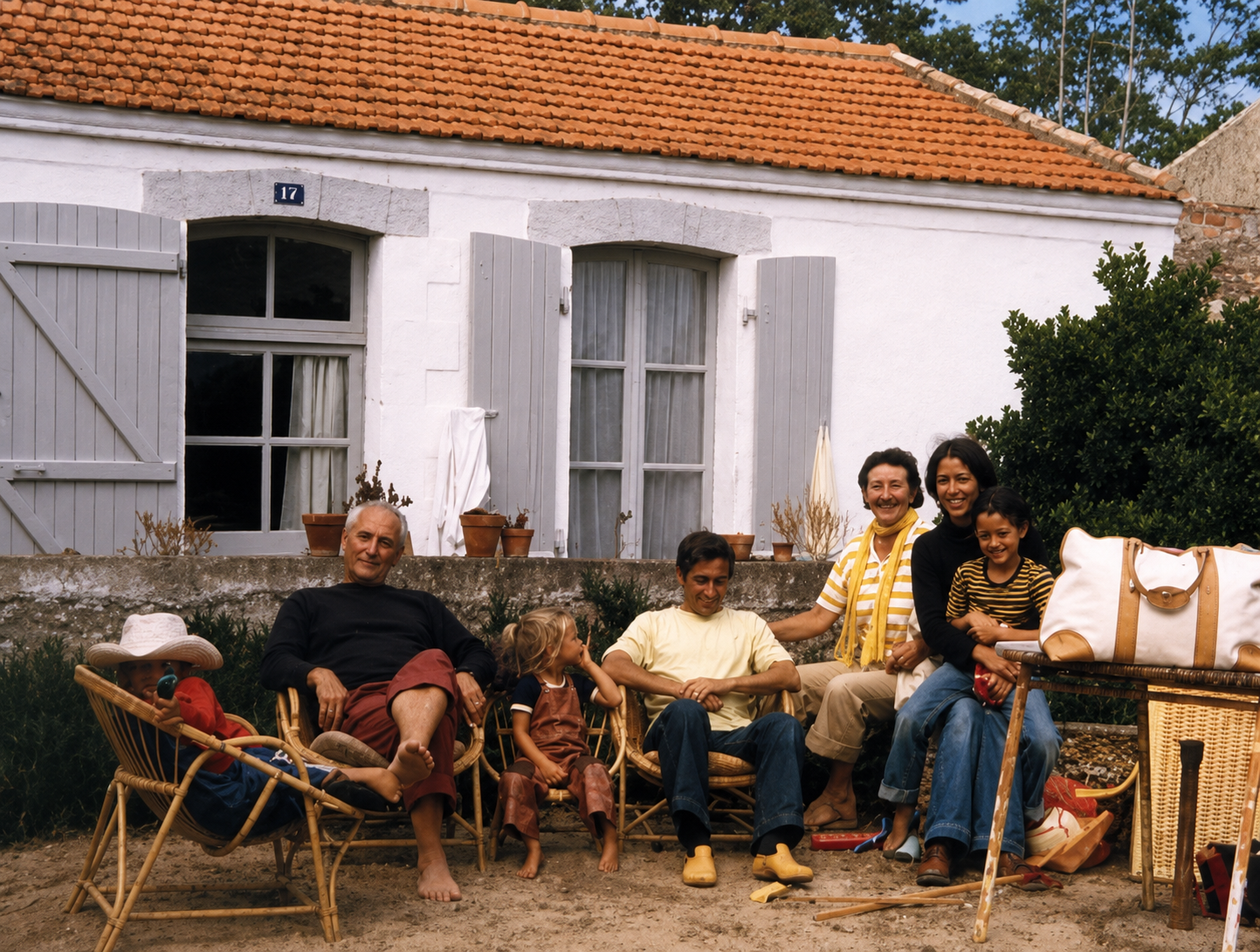
Joanne’s family sitting in front of her grandparent’s house on Noirmoutier
A fan of the capital, she loves the Île de la Cité, long walks along the Seine, the Musée d’Orsay and Louvre. “My great-aunt lived in Paris and took me all over the city, so I know it well, although it’s always changing. I set The Lollipop Shoes in Montmartre because, despite its enormous tourist appeal, it still has such a villagey feel and re ects so many different facets of Paris and its history.”
Four of her other books are set in France too: Coastliners, Holy Fools, Blackberry Wine and Five Quarters of the Orange, their narratives intricately imbued with dramatic backdrops depicting France’s rich history, vibrant culinary traditions and unique cultural landscapes, with the latter set in a small village on the Loire.
“We often stayed with my parents’ friends in La Bohalle, outside Angers. Many of those childhood summer stories ended up in the book. There were no tourists at the time, and the community was small and close-knit. Every house had an attic full of war memorabilia: helmets, guns, grenades, uniforms, and we’d dress up and play war games. No one ever batted an eyelid…”
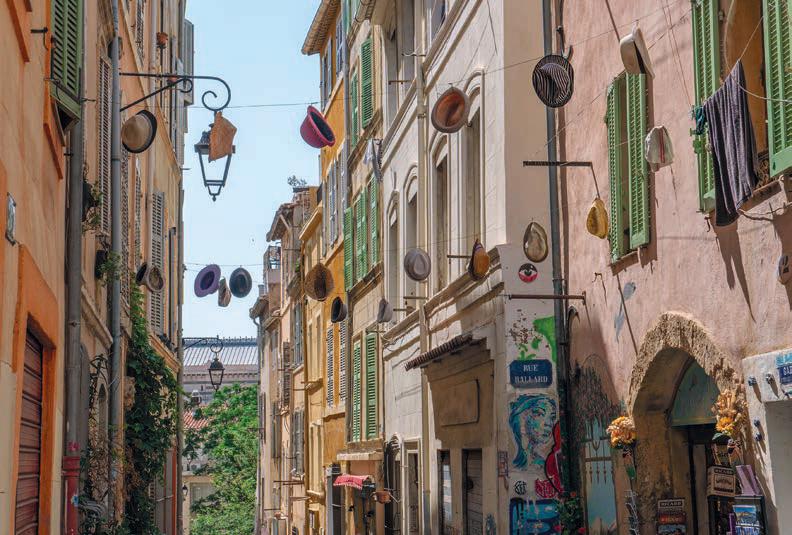
Bustling and vibrant Marseille, where the latest book in the Chocolat series, Vianne, is set
NOSE FOR A TALE
Joanne has a form of synaesthesia, enabling her to ‘smell’ colours. “I find my condition enhances my perception of the world from below. Colours trigger scents: bright red is chocolate, blue is coconut, and some purples trigger diesel oil or patchouli.”
She infuses reminiscent smells deliciously into her storytelling: “From the scent of Noirmoutier’s tidal flats reminding me of childhood, the yellow mimosa that flowers there in February and a freshly made galette sold by the roadside, to the lavender markets in Provence, sardines cooking on a barbecue, rosemary in my grandmother’s garden and the wax floor polish she used on those perfectly polished floors.”
Joanne dedicated Chocolat to her French great-grandmother. “A strong, influential-personality throughout my childhood, she inspired the character of Armande as well as Vianne. She was a non-conforming woman in a very patriarchal rural community, who made everyone bow to the force of her personality.”
On returning to the wonderful world of Chocolat, she says: “I’ve never really left that world. This is the fifth book I’ve written about it. But writing a prequel has its own challenges – not least the portrayal of a Vianne who can’t cook, has never been a mother and doesn’t know anything about chocolate! But readers seem to like it, and to welcome the insights into her past.”
The novel is mainly set in bustling Marseille: “I love its excesses: the noise, the history, the clash of cultures, the division between wealth and poverty. It’s a very dramatic city, with lots of character and a wonderful series of culinary traditions. The perfect place for Vianne to start her journey.”
Joanne also created an exclusive bespoke fragrance, Vianne’s Confession (above left), to capture the aromatic essence of the village, characters, chocolate shop, church, Mediterranean scents and city smells of the book.
“I wanted a fragrance with a narrative, which would take a passage from the book and illustrate it in scent. It begins with bitter chocolate, progresses to the scent of the hot streets of Marseille in the rain, then moves to the incense of the basilica to create something both bittersweet and nostalgic,” she says.
FROM PAGE TO SCREEN
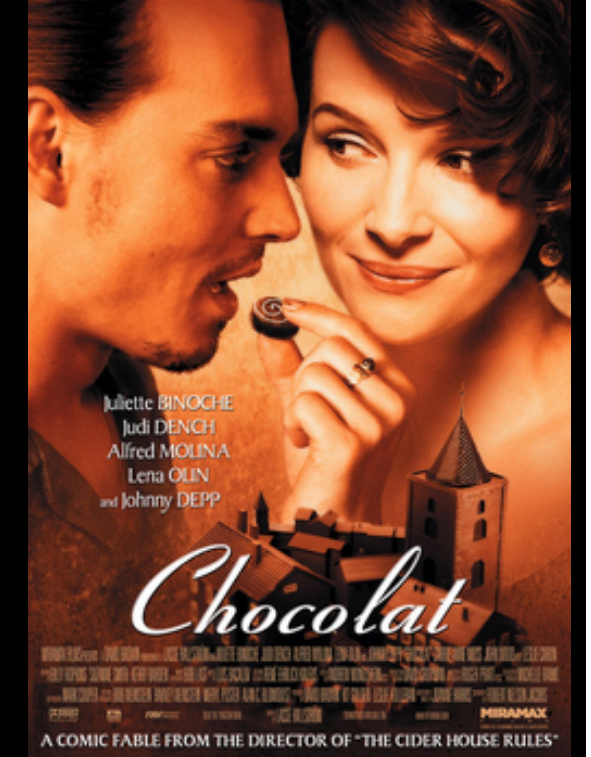
The Oscar-nominated film adaptation of Chocolat, featuring Hollywood heavyweights Johnny Depp, Juliette Binoche and Dame Judi Dench, was also immensely successful. Joanne tells me she was delighted with the casting, direction, music and overall aesthetic. “It feels a long time ago now and, at the time, it was rather surreal. The cast and crew were all great and made me feel very welcome.”
The film was shot in Flavigny-sur-Ozerain in Burgundy’s Côte-d’Or, and Beynac-et-Cazenac and Sarlat-la-Canéda in the Dordogne, among other places. “I was mostly on set but not on location, although I know Flavigny quite well. It’s a very small village, known mostly for its manufacture of aniseed dragées. None of the interiors were filmed there as all the buildings were too small to contain the equipment.”
I asked Joanne if she had any tips for Brits contemplating making the move to France? “Moving to France sounds like a great idea but be prepared for the challenges you’re likely to encounter,” she advises. “Bureaucracy is often daunting, and you’ll need a good knowledge of French and the systems in place that will either help or hinder your progress.
“Try to befriend officials in your area – the mayor, for example – and ask for help when you need it. Although properties in need of refurbishment can seem wonderfully good value, the actual work required to get them into shape may cost much more than in England, and may need to correspond to the strict building regulations of the region that are designed to keep their character.”
Can we look forward to indulging in more mouth-watering books in the Chocolat series? “Maybe… I try not to look too far ahead. But something tells me that Vianne has more stories to tell. As soon as I know what they are, you’ll be the first to know!”
Join Joanne at her scent–sampling/chocolate-tasting events and more at joanne-harris.co.uk
The unique mix of legal, financial and tax advice along with in-depth location guides, inspiring real life stories, the best properties on the market, entertaining regular pages and the latest property news and market reports makes French Property News magazine a must-buy publication for anyone serious about buying and owning a property in France.