How French Government Works – Part 1: Regions, Departments and Communes

The structure of government in France is notoriously complex– Sarah Daly explores the system and how to work with it
Throw your expectations out of the window.” This is the advice that Claire Godfrey gives to anyone dealing with government bodies in France.
As the representative for the southwest of France (an area the size of Austria) for the British Community Committee of France, former chief executive of The Jersey Chamber of Commerce and Industry and a strategic consultant to businesses and individuals, Claire has over 40 years of experience of working with French government at various levels. “People tend to expect the system to be based on what they know,” she says, “but this is France, not the country from which they’ve moved. To succeed, you need to do things the French way.”
This is a sentiment echoed by Diana Hounslow. She was director of Tourisme Pas-de-Calais for many years, while her husband, Jean-Paul Mortreux, was head of cabinet to the Pas-de-Calais council chairman, responsible for implementing the departmental president’s political vision effectively.
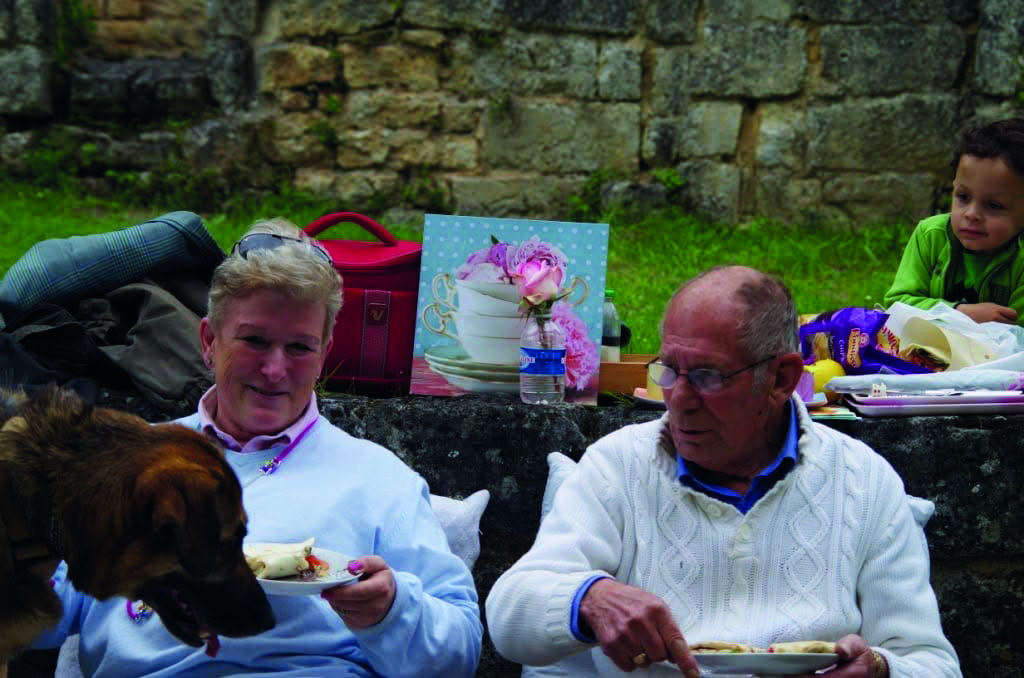
Claire Godfrey has more than 40 years of experience working with the French government
“The first thing to understand is that France operates under a different system than you may be used to,” Diana says. “Power is highly decentralised, so decisions are not made solely by the national government. Many key decisions are taken at the local level, not only by municipalities (communes), but also by inter-municipal authorities (intercommunalités). Anyone wishing to settle in France needs to understand how these different levels of government work together.”
Local level
So, what are the different levels of government and how do they interact? As Diana points out, local politics and administration play a vital role in keeping things moving. Regional and local authorities carry out many of the practical functions of government, using their own budgets and speci c expertise. The system isn’t the same across the country: the cities of Paris and Lyon, the historic region of Alsace and France’s overseas territories all operate slightly differently. If you are planning to live in one of these areas, there will be local aspects of administration and responsibility that it is worthwhile getting to know. Across most of France, however, there are well-defined functions carried out by regions, departments and communes.
One of the biggest concepts to understand when moving to France is the role of the mairie, or town hall. Each town, commune or – in the case of Paris, Marseille or Lyon – arrondissement municipale, will have its own mairie, which operates at a very local level. A maire (mayor) together with a municipal council, is responsible for the smooth running of the mairie.

Diana Hounslow and her husband, Jean-Paul Mortreux, who has worked in local government, off er their advice
Mayors have a wide range of responsibilities relating to housing, planning and social care across nearly 35,000 communes across France.
In reality, individual communes will deal with all sorts of issues that relate specifically to its inhabitants. In our case, the mairie was a vital point of contact when 80% of our village’s inhabitants were displaced by flooding. Among many other things, they hosted advisors who helped residents deal with insurers, provided a boat to allow people to access their homes (yes, really!) and even held on to post for residents.
Under more normal circumstances, mairies look after pre-schools and primary schools, manage public services and local government employment, support business start-ups and deal with street lighting and road markings.
In rural communities, you or your neighbours are very likely to know the maire. In urban areas, this is less likely to be the case. It’s still worth introducing yourself to the team at your local mairie though, to help you to integrate into the local community, whether you are a permanent resident or a second-home owner. If things go wrong, as they did in our commune, knowing each other smoothes the path to getting help.
“If you’re moving to France, a very simple approach is to make a list of all the questions you have and then arrange a meeting with the mayor or the town hall clerk in the commune where you are planning to settle,” Diana suggests. “They will be able to guide you and explain the procedures you need to follow based on your situation.”

French mayors wear a tricolour sash, and are responsible for local administration
Regional government
At a higher level, France is made up of 18 administrative regions (including five overseas territories). Each has a regional préfecture, an academie (covering schools, universities, vocational training and professional development) and a health board. Regions bear responsibility for transport (and any ports and airports in their areas). They deal with planning, land use, the environment and economic development at a strategic level, as well as participation in certain European programmes and administration of EU funds. Tourism, heritage, sport and culture, among other things, are managed at a shared regional, departmental and even local level.
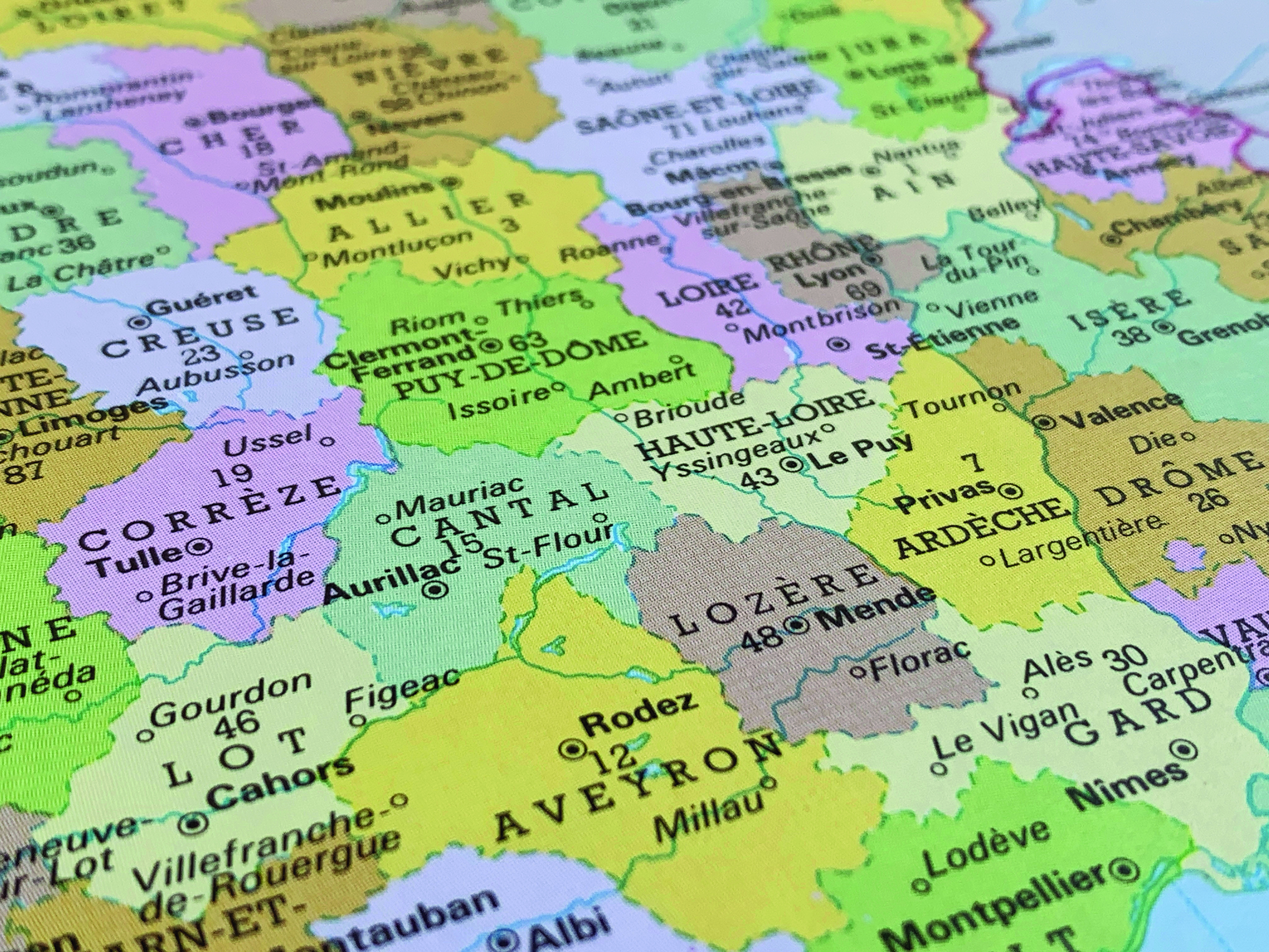
Administrative map of Central France showing departments, major cities and prefectures
Departments
Within its regions, each of France’s 101 départements has its own préfecture, run by a préfet, that will deal with residency permits and visa applications, as well as other administrative processes. In addition, the department is responsible for services for children, older people, those with disabilities and management of Revenu de solidarité active (RSA) benefit for those on low incomes. It deals with maintenance of local roads, some local transport, emergency services and the management of collèges (middle schools).
Departments are also tasked with keeping alive regional languages, in some areas, through public education programmes. (See page 111 for a map showing the different regions and departments.)
Smaller units of administration
Each department is made up of arrondissements and cantons, roughly equivalent to boroughs and districts. These create more manageable local areas. Each arrondissement will have a sous-préfecture, which will deal with public order and protection, police administration, management of large gatherings and the security of public spaces. The sous-préfecture may also have additional roles delegated by the departmental préfet.
Individual communes also often join together to create a communauté d’agglomération, which may mirror the canton or arrondissement. This achieves economies of scale and allows them to pool resources for functions that would otherwise be the responsibility of each individual commune.

Luxembourg Palace, home of the French Senate of the Fifth Republic since 1958
Fifth Republic
The national government is currently led by President Emmanuel Macron, of the Renaissance party, and Prime Minister Sébastien Lecornu. This is France’s fifth republic since the Revolution in the 1790s. It was established by Charles de Gaulle in 1958 and has over 500 deputies, nearly 350 senators and many judges and magistrates. The National Assembly and the Senate propose, negotiate and vote on laws and the legislative tier of government also upholds existing laws and evaluates public policy. The French government drives political policy and directs the administration, while judges and magistrates exercise judicial powers.
Where to get help
Speaking French, even if you are not fluent, is a huge advantage when dealing with French administration.
Claire, who worked with the French authorities to develop the Withdrawal Agreement Residency Permit (WARP) for the British who were living in France prior to 31 December 2020, has some advice: “In negotiations, I was taught that in order to meet someone halfway, you need to go three-quarters of the way yourself.
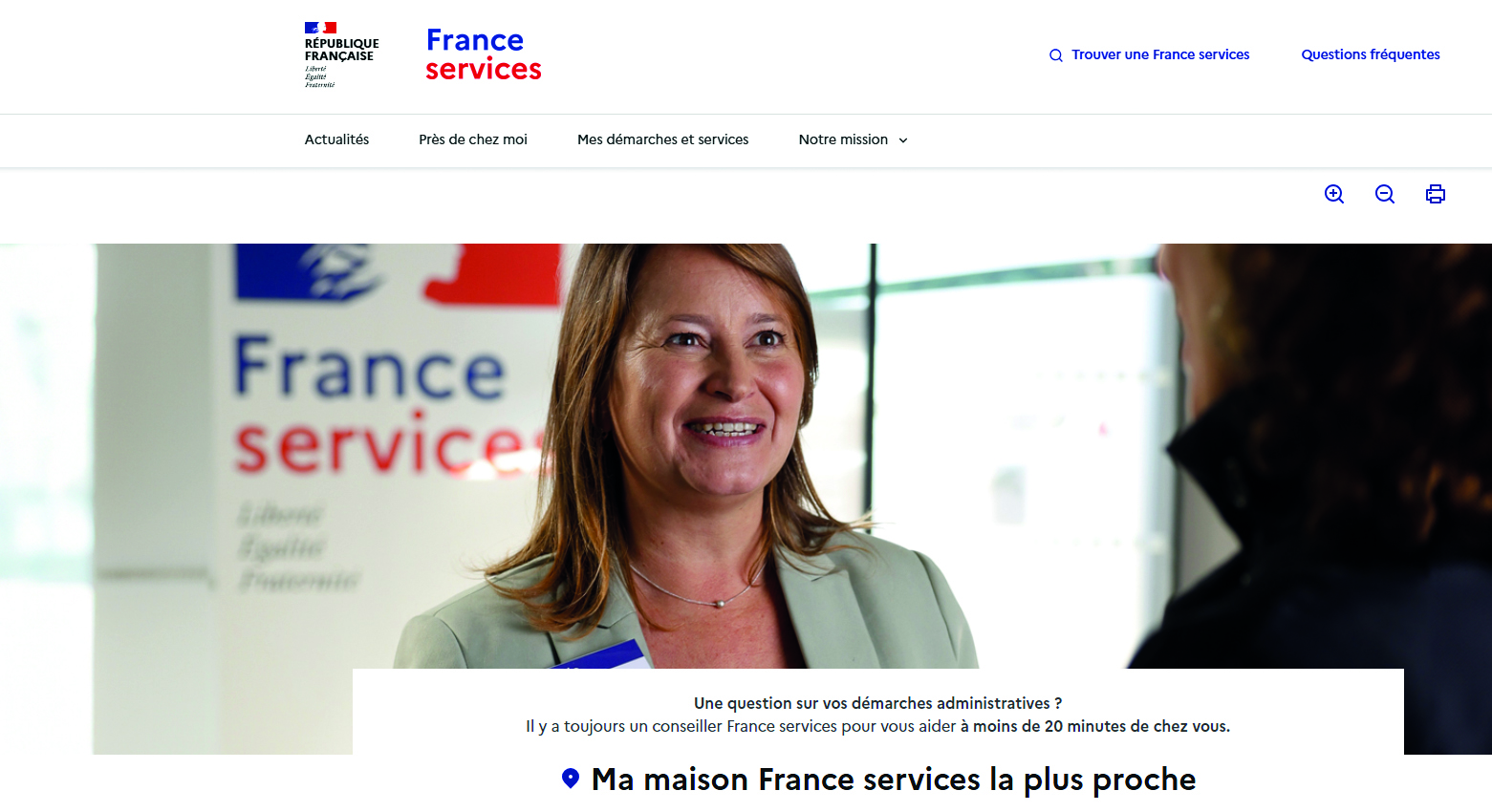
France Services at france-services.gouv.fr can assist with red tape
“You need to make the effort to understand how the system works. For instance, you will rarely get anywhere with an email unless you’ve been specifically told to approach an issue that way. Make an appointment in person if you can and if you don’t speak French take someone with you who does.”
Claire also advises that before contacting any French authorities, you need to make sure you’re very clear about what you want to achieve. “If you aren’t getting anywhere with a particular administrative process, you may need to find the person responsible for it, put your query in writing and send it by registered delivery.
“Be specific about the outcome you are hoping to achieve: if all you do is complain, you’re not going to get very far.”
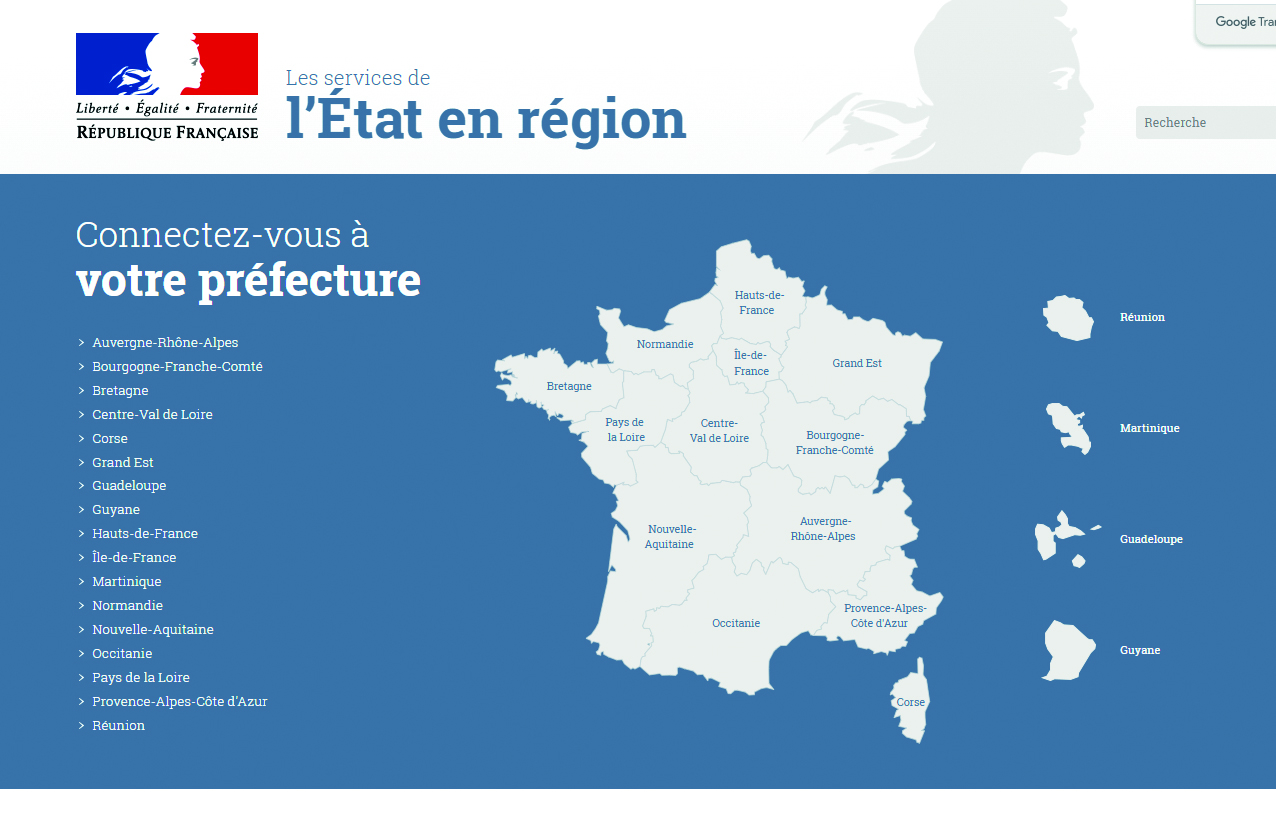
The webpage at prefectures-regions.gouv.fr will help you find your prefecture
Claire also warns against accepting help from hand-holders without doing due diligence. Most administrative processes in France are actually relatively simple and rarely expensive, she tells me, and there is a lot of support available if you know where to look. “Hand-holders may charge you a lot of money to act as a go-between between you and the authorities,” she says. “There have been many cases of people losing a lot of money by trusting the wrong person.”
Official Support
France Services, run by the French government, offers free assistance with tax returns and child support, health, disability and pension queries and legal issues. It also advises on energy-saving schemes and benefits. With 2,800 offices across France, you can book a face-to-face meeting or consult them over the phone. It is unlikely that they will speak English though, so ask this when you contact them, and take someone you trust along to translate for you. They are also not yet used to helping with the relatively new WARP titre de séjour.
It is easy to assume that you have a mountain to climb when you embark on French administration, but I’d argue that any unfamiliar country and culture will always bring challenges. In France, a lot is done face to face, you often need paper copies of documents you have never needed before and it can be time-consuming. Since moving to France, however, I’ve met some truly wonderful French administrators who have gone out of their way to help me navigate the system.
Help exists if you know where to look. For instance, our local finance office offers appointments to assist with the completion of tax returns. The officer I met worked well into her lunch break one day to help me finalise ours, even submitting it on my behalf. My stress levels had been stratospheric at the thought of missing the deadline. She removed that stress completely with a competence and good grace that I’ve met far more often than not.
You can’t assume the officials you meet will speak English, but if you make an effort to speak French, many will work with you to help you achieve what you need to.
Lead photo credit : Historic Paris city hall facade with French and European Union flags. Paris, France - October 13, 2025.