
From Long-Stay Visa to French Residency: What You Need to Know
Sponsored Content
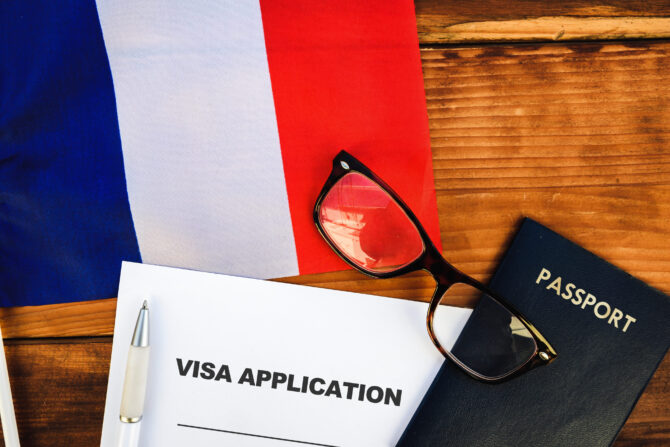
If you are planning to move to France, understanding the visa and residency process is one of the most important steps. From proving your financial resources and arranging healthcare to validating your visa and applying for a titre de séjour, here is what you need to know.
12-month non-working visa leading to residency: the VLS-TS visa
For those moving to France without working, the VLS-TS long-stay visa is one of the main routes towards residency.
There are three key requirements for a successful long-stay visa application.
1. Financial resources
You will need to prove that you have sufficient financial resources to support yourself while living in France.
For an individual, this means a minimum of around €1,800 gross per month in income, or approximately €22,000 for the year.
If you do not have a regular income, savings, investments, shareholdings, ISAs or similar financial assets can be used instead, provided they are equivalent to the annual requirement. A combination of income and savings is also acceptable.
For a couple, the requirement is around €2,500 gross per month, or the equivalent in savings, or a combination of the two.
It is also possible for one person to financially provide for other members of the group.
2. Private health insurance
You will need compliant private health insurance for the duration of your visa.
The dates of your policy should correspond with the dates of your visa, so it is important to make sure the cover is arranged correctly before submitting your application.

3. A verified French address
You will also need to provide evidence of a French address covering the full 12 months.
This could be:
- a property you own
- a property you rent
- accommodation with family or friends, supported by written confirmation
- two consecutive six-month rental agreements
A series of short-term Airbnb reservations is rarely accepted as sufficient evidence of a permanent address.
The stages of the visa application process
The French long-stay visa application process involves several stages.
1. Complete your online application
The first step is to submit your application online.
If several family or group members are travelling together, applications can be prepared for everyone who will be making the move.
2. Book your TLScontact appointment
In the UK, TLScontact has been appointed to handle the physical application process on behalf of the French Consulate.
Applicants need to attend an appointment at one of the TLScontact centres in London, Manchester or Edinburgh.
There is also an “Apply Anywhere” option, where TLScontact can arrange to meet you at your home or another convenient location, although this service comes at an additional cost.
3. Submit your documents and passport
Once you have attended your appointment, your application dossier and passport are sent to the French Consulate in London for a decision and, if successful, the issue of your visa.
You cannot submit your application directly to the French Consulate. Applications must be handled through TLScontact.
4. Make sure your dossier is complete
The exact documents required will depend on your personal circumstances.
Errors, missing documents or omissions can result in an application being refused, and the reason given may not always explain exactly what was missing.
For example, a refusal may simply state that one or more required documents were absent, without specifying which ones.
For this reason, some applicants choose to use a specialist professional to help prepare their dossier, particularly if their circumstances are more complicated.
5. Receive your passport and visa
Once the application has been processed by the French Consulate, your passport and visa are returned to TLScontact.
You can then collect your passport, or arrange for it to be returned by courier for an additional fee.
Self-employed working visa leading to residency
VLS-TS “entrepreneur/profession libérale” visa
The application process for a self-employed working visa is similar, but there are additional requirements that need to be dealt with first.
1. Prepare a viable business plan
You will need to prepare and submit a viable business plan demonstrating that your proposed activity will generate enough income to support you and, where relevant, other members of your household.
The business plan and supporting documentation must be in French, with translations provided for official documents where necessary.
The plan needs to contain enough detail for the assessor to judge whether the business is genuinely feasible.
Typically, the key information can be presented in a four- or five-page business plan.

Importantly, the business must also be based at a specific address. It cannot simply be described as being based “somewhere in France”, even if you are planning to work remotely.
2. Apply for the visa once the business plan is approved
Once the business plan has been accepted, you can move on to the working visa application itself.
This should not be done before the business element of the application has been approved.
What happens after you arrive in France?
Obtaining your visa is only the first stage. Once you arrive in France, there are several further steps to complete.
Validate your visa
Your visa must be validated after your arrival in France.
For most long-stay visas, this needs to be completed within three months of your arrival, although those arriving on a working visa should generally complete the process sooner.
Healthcare: the first steps
Once you are resident in France, you can begin the process of joining the French healthcare system.
Depending on your circumstances and visa type, this may involve dealing with French immigration and healthcare authorities and providing the required supporting documentation.
Apply through CPAM
The next stage is to apply through your local CPAM (Caisse Primaire d’Assurance Maladie).
Once your application has been processed, you can receive a French social security number and, subsequently, a Carte Vitale, giving you access to the French healthcare system.
Working visa holders
If you have moved to France on a working visa, your business should be registered as soon as possible after your arrival.
Registering the business will also start the process of entering the French social security and healthcare system.
S1 certificate holders
The process is different for those who are entitled to healthcare through an S1 certificate, so S1 holders should follow the procedure that applies specifically to their situation.
Applying for your titre de séjour
If you want to remain in France after your initial visa expires, the next step is to apply for a residence permit, known as a titre de séjour.
The process normally starts online and may be followed by a visit to your local prefecture.
Many of the documents required for your original visa application will also be needed when applying for residency, so it is worth keeping copies of all your paperwork.
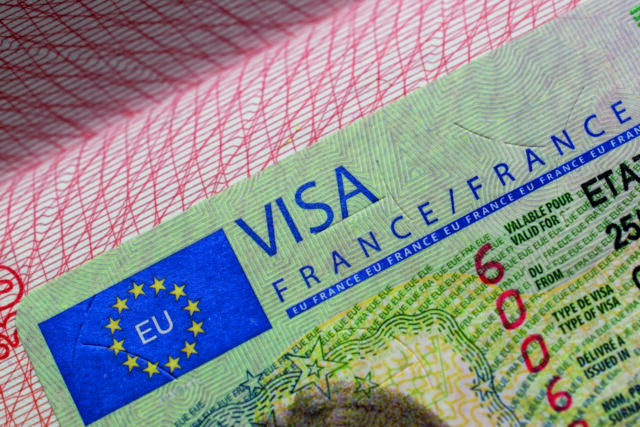
Residency can then be renewed, provided you continue to meet the necessary conditions.
After five years of legal residence in France, you may become eligible for a longer-term residence card, depending on your individual circumstances and the conditions that apply at the time.
Need help with your French visa or residency application?
The visa and residency process can be complex, and the exact requirements depend on your personal circumstances.
Navigate France can assist with preparing your visa dossier, checking the required supporting documents, helping with business plans for self-employed applications and guiding you through the next stages of residency once you are in France.
Provided you meet the relevant requirements, Navigate France also offers free resubmission in the event of a visa refusal.
Find out how Navigate France can help with your move to France.
Information correct at the time of publication in September 2026. Immigration and residency rules can change, and individual applications are assessed on their own circumstances. Always check the latest guidance from France-Visas and the relevant French authorities before applying.
Lead photo credit : Shutterstock
Share to: Facebook Twitter LinkedIn Email
More in carte vitale, CPAM, entrepreneur visa France, France visa application, french healthcare, French Residency, French visas, long-stay visa France, moving to france, Navigate France, profession libérale visa, residency in France, titre de séjour, TLScontact France, Visas and Residency, visitor visa France, VLS-TS visa
Related Articles



Leave a reply
Your email address will not be published. Required fields are marked *