
Preparing Your Pool for Winter
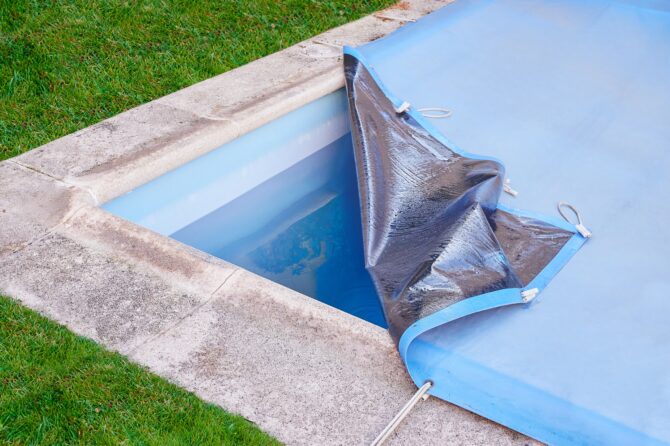
Preparing your pool for winter is an essential job if you want to protect the pool and its equipment and make reopening in spring much easier. Exactly how you winterise will depend on your pool type, your treatment system, and your local climate, but the basic principles are the same throughout France: clean the pool thoroughly, balance the water, protect the equipment, and secure the pool properly.
In many parts of France, owners choose between active winterising, where the filtration system continues to run for short periods during the colder months, and passive winterising, where the system is shut down and drained. In colder or more exposed areas, passive winterising is often the safer option.
When should you winterise your pool?
In France, pools are usually winterised in late autumn, once the water temperature has fallen and stabilised at around 12°C and you are unlikely to use the pool again that season. In milder regions this may be as late as November or December, while in colder or higher areas it may need to be done earlier. Winterising too soon, while the water is still warm, can encourage algae and bacteria; leaving it too late increases the risk of cold-weather damage.
Cleaning
- Thoroughly clean the pool, including the floor, walls, steps and waterline. Remove leaves, dirt and any deposits before winter sets in.
- Check that the water chemistry is properly balanced before closing the pool. For most pools, this means making sure the pH is in the correct range and adjusting it if necessary.
- If you have a chlorine pool, carry out a shock treatment in line with the product instructions, then leave the filtration system running long enough for the treatment to circulate fully.
- Add a suitable winterising product if appropriate for your pool type. These products are designed to help limit algae, staining and the build-up of impurities over winter.
- Clean or backwash the filter before shutting the pool down for the season.
Now is a good opportunity to scrub the waterline, where oils, sun cream and grime often build up during summer.
Water level
For pools that are being fully winterised, the water level is often lowered to below the skimmer openings, but this depends on the design of the pool and the winterising method used. If you are using active winterising and monitoring the pool regularly, lowering the water level may not always be necessary.
If there is a real risk of frost, it is sensible to take precautions against ice damage. This is often done using purpose-made winter floats or other protective devices designed to absorb pressure from expanding ice. Older improvised methods are still sometimes used, but purpose-made products are usually safer and more reliable.
Keep an eye on the water level through winter, especially after prolonged rain.
Equipment
Once the water has been treated and circulated, it is time to protect the equipment.
If you are carrying out passive winterising, drain the pump, filter, heater, heat pump and exposed pipework so that water does not freeze inside and cause damage. Most items have drain plugs for this purpose. Store plugs, caps and small fittings somewhere safe so they do not get lost.
If your equipment is housed in a frost-free plant room, or if you are using active winterising with the system left operational, you may not need to drain everything fully, but all equipment should still be checked and protected according to the manufacturer’s guidance.
If the pool has a salt chlorinator, UV unit, automatic dosing system or other specialist equipment, these should also be cleaned and winterised correctly before shutdown.
Covers and protection
Remove and clean your summer cover before storing it somewhere dry, or leave it protected on its roller if that is the recommended storage method.
Then fit your winter cover or debris cover to keep out leaves and dirt. It should be properly tensioned and checked again after a few days, particularly after wind or heavy rain.
It is important to remember that an ordinary winter debris cover is not necessarily a safety cover. In France, private in-ground pools must be protected by an approved safety device such as a barrier, alarm, safety cover or shelter. A simple leaf cover does not automatically meet that requirement. Safety covers that comply with the relevant French standard are treated differently from basic winter covers.
Hints and tips
- Do not leave winterising until the water is already very cold and dirty. Closing the pool while the water is still clean and balanced will make life much easier in spring.
- If you are using active winterising, run the filtration periodically during the winter, especially in very cold spells, to help prevent freezing in exposed pipework.
- Check the pool occasionally throughout winter rather than forgetting about it completely. Covers can loosen, water levels can rise, and debris can still accumulate.
- Saltwater pools, chlorine pools and bromine pools may all need slightly different winter products or closing procedures, so always use products suited to your treatment system.
- If you have a more natural or chemical-free pool, do not treat it in the same way as a conventional chlorinated pool. Follow the advice for that specific system.
Winterising your pool properly will help protect the structure, preserve the equipment and make spring opening much quicker and easier. A little time spent at the end of the season can save a lot of work and expense later on.
One final point to bear in mind is safety. In France, any private in-ground pool that is not covered by an approved safety device must be protected by one of the legally recognised systems, and the lack of one can result in a substantial fine.

Want more help with your France property journey? Join Membership, search our Property Portal, subscribe to French Property News, and follow our YouTube channel for the latest advice and updates. Join us at the French Property Exhibition for expert advice and property inspiration.

Lead photo credit : Shutterstock
Share to: Facebook Twitter LinkedIn Email
More in Pool maintenance, swimming pool, swimming pools
Related Articles

Leave a reply
Your email address will not be published. Required fields are marked *
REPLY
REPLY
REPLY
REPLY
REPLY
REPLY
REPLY