
Moving to France Long Term: Which Visa Do You Need and What Happens Next?
Sponsored Content
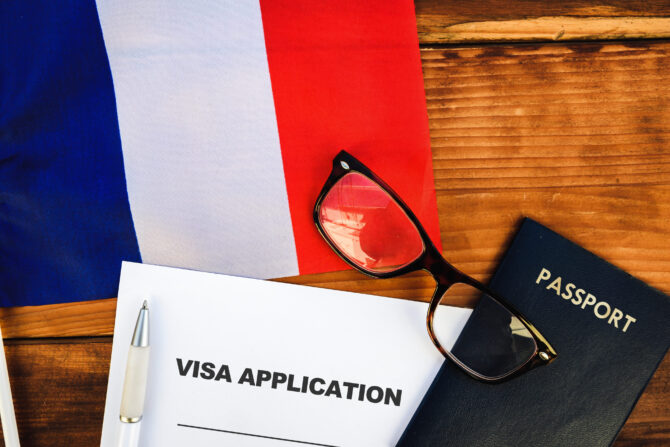
Planning to move to France? From choosing the right long-stay visa to registering for healthcare and renewing your residency, here are the essential steps to understand before you make the move.
For British citizens moving to France post-Brexit, spending more than 90 days in the country generally means applying for a long-stay visa. Two of the most common routes for would-be residents are the long-stay visitor visa, for those who will not work in France, and the entrepreneur/profession libérale visa, for those planning to run a business or work on a self-employed basis.
Both can provide a route to longer-term residence in France, but getting the initial application right is important.
The long-stay visitor visa (VLS-TS)
If you want to live in France for more than three months without carrying out any professional activity, you will normally need a visa de long séjour valant titre de séjour (VLS-TS) marked visiteur.
Unlike a short-stay tourist visa, a VLS-TS acts as your residence permit during its period of validity, provided that you validate it after arriving in France.
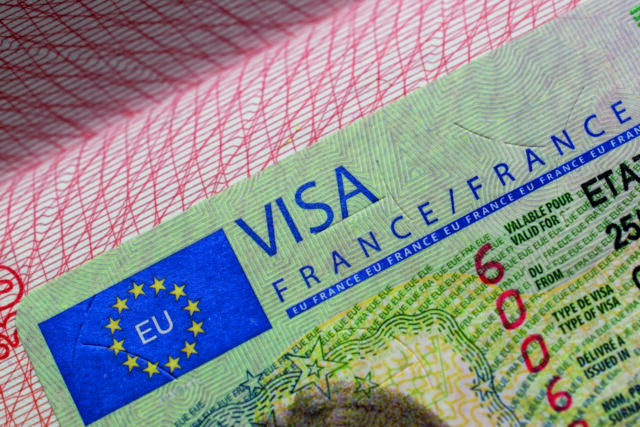
There are three areas that applicants should pay particular attention to.
1. Financial resources
You must demonstrate that you have sufficient financial resources to support yourself in France without working.
These resources might come from a pension, regular income, investments, savings or financial support from another person. A combination of different sources can also be used.
There is not a simple, universally published France-Visas figure covering every couple or family, and applications are assessed according to individual circumstances, including accommodation costs. As a useful guide, the financial benchmark used for visitor residence applications has traditionally been linked to the French minimum wage.
Since 1 June 2026, the French minimum wage (SMIC) is €1,867.02 gross, or an indicative €1,477.93 net, per month for a full-time worker.
Because thresholds and documentary requirements can change, applicants should always use the personalised checklist produced by the official France-Visas visa wizard rather than relying solely on figures quoted in older guides.
2. Private health insurance
Applicants must provide evidence of suitable medical cover for France.
For a visitor visa, this normally means comprehensive private health insurance covering the period for which it is required. France-Visas specifically asks long-stay visitor applicants to demonstrate appropriate medical cover alongside their resources and accommodation.
Keep a close eye on the dates of your policy: they should correspond with your intended period of residence.
3. Proof of accommodation in France
You will also need convincing evidence of where you intend to live.
This might be a property you own, a long-term rental, or accommodation provided by relatives or friends. The exact documents required depend on your circumstances and will be set out in your personalised France-Visas checklist.
A clear and stable accommodation arrangement will generally make for a stronger application than a collection of tentative holiday bookings.
How to apply for your French long-stay visa
For UK residents, the application begins online through France-Visas.
Once you have completed the application, you will receive a personalised list of the supporting documents needed for your particular circumstances. You then create a TLScontact account and book an appointment to submit your documents and biometrics.
TLScontact currently operates French visa application centres in London, Manchester and Edinburgh, and UK residents are free to use any of the three. Visa decisions themselves are made by the French Consulate General in London.
At your appointment, you will submit your application dossier, passport and biometric information. Your application is then transferred to the Consulate for a decision.
It is worth checking every document carefully before your appointment. Visa requirements vary according to the applicant, and missing or incorrect supporting evidence can delay an application or lead to a refusal.
France-Visas advises UK applicants to allow sufficient time: applications can be made up to 180 days before the proposed journey, and applicants are currently advised to allow at least 20 working days for the overall process, although individual processing times vary.
Moving to France to work for yourself
If you want to work in France rather than live there as an inactive resident, you need a visa that permits professional activity.
One of the principal options for freelancers, consultants and people setting up their own business is the VLS-TS entrepreneur/profession libérale.
The basic application process is similar, but considerably more information about your proposed professional activity will be required.
Showing that your business will work
If you are creating a new business, France-Visas requires you to demonstrate that the project is economically viable.
This typically means preparing detailed evidence explaining what the business will do, where and how it will operate, the expected customers or market, anticipated turnover and costs, and how the activity will support you financially.
If you are entering an existing liberal or self-employed activity, France-Visas states that you must be able to demonstrate financial resources equivalent to the French minimum legal wage for a full-time worker.
As of 1 June 2026, the gross monthly SMIC is €1,867.02.
Applicants should also check whether their intended profession is regulated in France, as additional qualifications, registration or professional authorisation may be required.
What happens when you arrive in France?
Obtaining the visa isn’t quite the end of the paperwork. There are several important steps to complete after your move.
Validate your VLS-TS
A VLS-TS must be validated online after you arrive in France.
For most VLS-TS holders, this must be completed within three months of arrival. However, France-Visas currently instructs holders of an entrepreneur/profession libérale VLS-TS to apply for validation within 15 days of arriving in France, so working visa holders should act promptly.
The procedure is carried out online through the French government’s ANEF system and usually involves paying the relevant tax.
Registering for French healthcare
The route into the French healthcare system depends on whether you are working, inactive or covered through another country.
For a non-working resident who does not have an S1, entitlement to France’s universal healthcare system, Protection Universelle Maladie (PUMa), will generally arise after three months of stable and legal residence.

Applications are made through your local Caisse Primaire d’Assurance Maladie (CPAM), normally using form S1106 and supporting evidence of identity, legal residence and civil status. Once your rights are opened, the process of obtaining your permanent French social security number and Carte Vitale can begin.
This is separate from any OFII medical examination or certificate that may be required as part of certain immigration or residence-card procedures.
If you start working or establish a self-employed activity in France, the position is different: people carrying out a professional activity are generally affiliated to the French social security system through that activity rather than waiting three months.
S1 holders follow a different procedure, so UK state pensioners and others entitled to an S1 should check the rules that apply specifically to them.
From a visa to a titre de séjour
If you intend to stay in France beyond the expiry of your VLS-TS, you will need to move on to the appropriate French residence permit, or titre de séjour.
For holders of a visitor VLS-TS, applications are currently made online through ANEF. The official window for applying is between four and two months before your existing visa or residence permit expires.
Expect to provide many of the same documents you used during your original visa application, including evidence of your address, financial resources and ongoing eligibility for your chosen residence category.
Visitor residence cards are generally issued for one year and can be renewed, provided you continue to meet the requirements.
What happens after five years in France?
Five years is an important milestone, but obtaining longer-term residency is not automatic.
Depending on your nationality, residence history and circumstances, after five years of continuous legal residence you may become eligible to apply for a long-term EU resident card (carte de résident longue durée-UE), rather than simply continuing with annual residence permits.
There are additional qualifying conditions, including requirements relating to legal and continuous residence, resources and integration, so it is important to check the rules applying to your individual situation before applying.
The key to a successful move: start early
France’s visa system is perfectly manageable, but it rewards preparation.
Start gathering financial statements, civil-status documents, insurance certificates and accommodation evidence well before your intended move. Anyone hoping to establish a business should allow additional time to build a convincing case for the viability of the proposed activity.
Most importantly, check your individual requirements using the official France-Visas system before submitting your application: visa rules, financial thresholds and administrative procedures can and do change.
Need help with your French visa or residency application?
Moving to France comes with plenty of paperwork, and getting your application right from the start can make the process far less stressful. Navigate France can guide you through the visa and residency process, helping you understand the requirements, prepare your supporting documents and avoid common application mistakes.
Find out how Navigate France can help with your move to France.
Information correct at the time of publication in September 2026. Immigration and residency rules can change, and individual applications are assessed on their own circumstances. Always check the latest guidance from France-Visas and the relevant French authorities before applying.
Lead photo credit : Shutterstock
Share to: Facebook Twitter LinkedIn Email
More in moving to france, visas
Related Articles



Leave a reply
Your email address will not be published. Required fields are marked *